






Your basket is empty

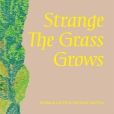
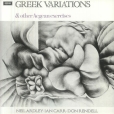
‘Their ability to harmonize together is stunning, their reedy voices coming together and pulling apart amid delicate fingerstyle guitar and concertina deployed in just intonation, which imparts a deeply resonant, almost glowing harmonic presence. It’s all quite subtle, and if you only listen to the way the voices of Cater and Rasten blend you might even miss it—but the full sonic spectrum is what distinguishes and, in certain ways, connects it to traditional practice… Although the album is pure balladry, unfolding with exquisite patience, each song contains nifty little flourishes or instrumental elements that set them apart, such as the slide guitar and wheezy bass harmonica on For the Ear That is No More, or the slow peal of trumpet on Death and the Lady, courtesy of Rasten’s partner in Pip and Oker, Torstein Lavik Larsen. (Peter Margasak, Nowhere Street).
‘All done with such grace and elegance, without a note wasted or any required. Wonderful… faultless and deeply considered’ (Glenn Kimpton, KLOF).
Three high English and Scottish ballads, and three original settings of European folk tales.
Matt gatefold cover; gloss spot varnish.
Check it out!

Policing The Beats: Black music, racism and criminal injustice
Lambros Fatsis
Manchester University Press
Calling all HJ massive: here is a terrific, vivifying guide to your record collection, and a political kick up the bum. Within ten minutes of engaging with this book, you’ll sprout a fresh pair of ears and a fifth lobe, or your money back.
This is a riveting, bracingly militant account of the racist British policing of Black Atlantic musical culture, from slavery days bang up to date. Extended sections consider the suppression of African drumming and dancing; calypso, and reggae sound systems; rap and drill.
The writing is deep, wide-ranging and richly erudite, but accessible and unstuffy. Compellingly, Lambros takes it all personally, and crucially his book blazes with love for a bunch of our favourite music: a long, diverse playlist in the back ricochets from Count Ossie and Salah Ragab through to A Tribe Called Quest and 24-Carat Black.
It joyously celebrates Black music as a reparative safe space, but also a key to getting to grips with the world; a contagion of ‘creole planetarity’, in the words of Paul Gilroy’s foreword, ‘capable of facilitating and intensifying political mobilisation, collective refusal and acting in concert. It can do this because it has promoted and amplified meaningful, relational life amidst a general haemorrhaging of meaning…’
‘The healing force of the universe,’ in Albert Ayler’s phrase. ‘My sanctuary… my life,’ as Gary Bartz put it. ‘Songs in the key of life.’
Very warmly recommended.
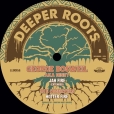
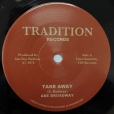
Storming, stomping, insurgent Niney. Stunning record.
‘I think it was 1979, or 1978. That rhythm, I record it at Channel One, and take it to Perry. So when me go down there and record it with Perry, I would have to get it mixed down so it would fit Perry’s 4-track Teac. So this is where now I voice it, and Scratch mix it, mix the voice. Then we put back the rhythm on the thing, and go back down to Channel One, and then Ranking Barnabas mix it. So it’s really Scratch, Barnabas and Scientist work on that song. That’s why you hear Scientist develop the foot and all those… double drumming you see there. It was Sly, Sly was the one who play that drum. Sly, Fullwood, Tony Chin, Chinna, Bobby Ellis, Dizzy the guy that play Riot for Keith Hudson, and Tommy McCook.’
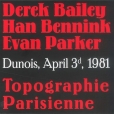
Live recordings made at Théâtre Dunois, Paris, in April, 1981.
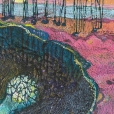
‘Dora’s signature, sublime, open-hearted refinement of modern classical, folk and ambient is at its most colourful and rhythmic in this suite of keyboard instrumentals; an aural mille-feuille, in dramatic contrast with her previous, melancholic vocal works.
‘Atmospheric drone miniatures underpin flowing, cyclical arpeggios, spiralling into an unpredictable dream space of melodic polyphony. Drawing on an essay by Hartmut Rosa, the music mulls over conceptions of the acceleration of time and the experience of alienation. It reveals the inescapable pulsation of time as at once mesmerizing and unsettling.’