
Your basket is empty

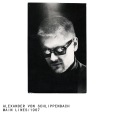
Incendiary large-ensemble music in the manner of Globe Unity.
Mani Neumeier contributes wild percussion to It’s Up; Peter Brötzmann squares off against a trio of trios — three basses, three pianos, three drummers —in Three. The most compositionally complex works are Schlippenbach’s: the title track and Turn 14.
Other participants include drummers Jaki Liebezeit and Sven-Äke Johansson, bassists Peter Kowald, Uli Trepte, and Buschi Niebergall, pianist Fred Van Hove, and saxophonist Gerd Dudek.
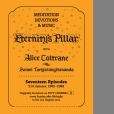
Drawn from the Coltrane archive, here are seventeen episodes of Alice Coltrane’s weekly programme Eternity’s Pillar, broadcast very late on Sundays by the LA television station KTTV, 1985-1986. Nine hours overflowing with devotional wisdom, meditation, and music.
‘Coltrane appeared seated on a set decorated with flowing curtains, musical instruments, peacock feathers and objects of spiritual significance. She’d play piano, harp or keyboard, sometimes singing bhajans accompanied by her followers or performing instrumental versions of old gospel hymns.’
Also included is a 15-minute segment from a 1970 episode of the National Education Television Black Journal, featuring an interview with Alice at home in Dix Hills, NY, and footage from a Glen Cove performance with Pharoah Sanders, Reggie Workman, Bill Wood, and Rashied Ali.
Plus a full-colour 80-page book containing a detailed episode guide, Alice Coltrane’s written responses to questions about Eternity’s Pillar, a new interview with Michelle Coltrane, a remembrance by Jaya Lakshmi Moss, and three new essays.
‘Transportive, regardless of whether one has any interest in the spiritual message… a unique, fascinating treasure trove’ (The Wire).
Hold tight, rudy, and take a deep breath, here’s a glimpse of Alice taking off, in a rather garish ad.
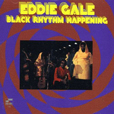
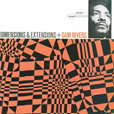
His heady sophomore Blue Note, from 1969. Elvin Jones and Jimmy Lyons pick up where Ghetto Music left off. Funky grooves injected with a gospel street choir and late-sixties free-form freakery.
‘Classic Vinyl.’
Jakob Bro, Brian Blade, Craig Taborn, Chris Cheek, Jesper Zeuthen, Anders Christensen, Larry Grenadier & Marcus Gilmore, playing compositions by Paul Motian and Jakob Bro.
The album was recorded in a single session at New York’s Power Station with engineer James Farber, following a week-long residency at the Village Vanguard.
‘Danish guitarist and composer Jakob Bro is celebrated for his pure reflective expression and penchant for celestial textures, effortlessly distilling and refining quiet sonics. At the Village Vanguard, he leads an impressive group – featuring two bassists and two drummers – for a nearly week-long residency.
‘The perfectly poised, ambient-leaning soundworld that characterizes Bro’s compositions was discomposed and distended by this octet, probing thrilling sounds and providing ample opportunity to create spontaneously. It was an exhilarating jazz night with some of the most esteemed players out there.’ (Jazztrail.net)
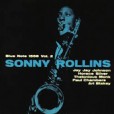
With Jay Jay Johnson, Art Blakey, Paul Chambers… and Horace Silver and Monk sharing piano duties, and playing together in a ten-minute version of Misterioso. Lovely mono.
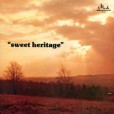
Pianist James Edward Manuel’s only release; amongst the deepest custom-press jazz recordings of them all.
Jaman studied under greats like Horace Parlan. Gigging on the Buffalo club scene, one of his early trios included the renowned bassist John Heard and drummer Clarence Becton, till both were poached one night by a visiting Jon Hendricks. Other sidemen include Sun Ra Arkestra bassist Juini Booth and Ahmad Jamal regular Sabu Adeyola.
Pressed in tiny quantities by the Mark Records custom service in 1974, and issued with a stock landscape cover, Sweet Heritage presents a soulful mixture of covers and originals. In particular, the flying, spiritual sound of Free Will and the upful, Latin-tinged In The Fall Of The Year — both Jaman compositions — have turned the LP into a legendary collector’s classic.
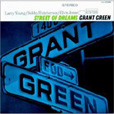
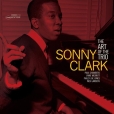
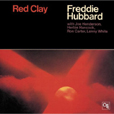
With Larry Young, Elvin Jones, and Bobby Hutcherson.
‘Young is exceptional, very much on form, and Hutcherson makes an enormous contribution to a slower-paced and more meditative session than he’d normally favour’ (Penguin Guide to Jazz).
‘Bittersweet and beautiful, Street Of Dreams will be enjoyed by anyone who loves Idle Moments’ (All About Jazz).

‘By turns gleeful, sensitive, urgent and ruminative, this is a brilliant set that plays to the trio’s formidable strengths… Hearteningly delightful contemporary music-making’ (The Guardian).
‘A spare, de-cluttered, étude-like qualitymusic of sometimes unassuming but penetrating emotion and structural focus… full of the detail given to artists with powers of judgment to match the command of their instruments’ (Jazzwise).
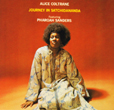
On harp and piano — with Pharoah Sanders (soprano sax), Vishnu Wood (oud), Rashied Ali (drums), Cecil McBee (bass), Charlie Haden (bass), Majid Shabazz (bells, tambourine), Tulsi (tamboura).
Transcendent jazz from 1970; full fathom five deep but compellingly accessible. Our favourite of all her records, and over the decades our first recommendation as an introduction to her work.
According to AC’s sleeve note, ‘Anyone listening to this selection should try to envision himself floating on an ocean of Satchinandaji’s love, which is literally carrying countless devotees across the vicissitudes and stormy blasts of life to the other shore.’
We ship worldwide. The postage rates for your order are displayed before payment, which is processed using Paypal. You can pay using your Paypal account or any of the following cards. No need to join Paypal.