


Your basket is empty

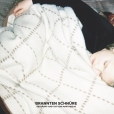
‘Recordings from early 2025, while Johnny was bed-bound in an assisted living facility with multiple sclerosis. He speaks into an iPhone laid gently on his chest, in remarkably tender and emotive form. Love in all its permutations. The tangled, but caring nature of familial love, to the anguish and euphoria of romantic connection. Johnny has a remarkable ability to pose questions, and answers, that reflect the truest of realities, without cliche.
‘Joel Nelson nimbly helms the nearly entirely electronic backdrop, with Buchla Music Easel bubbling up between Johnny’s stream of consciousness. At times, Broadcast’s fuzzed out ballads come to mind, while at others, early Oneohtrix Point Never’s gauzy, distant drones cast anchor beneath the slippery syntax.’
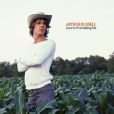
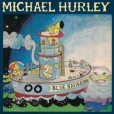
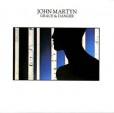
Twenty-one songs, running right back to 1971: assured, lovely, intelligent, good-humoured singer-songwriting, mixing up Americana, folk, pop, art rock, and gentle experimentalism.
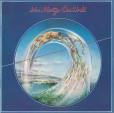
Originally released in 2007 this redux edition includes new masters from a recently found pristine tape reel and was remastered by Timothy Stollenwerk at Stereophonic Mastering in Portland, OR. Revised artwork; extensive liner notes by Arthur’s partner Tom Lee.

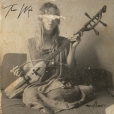
Microtonal folk music mixed with electronics and noise.
The first record was rave-reviewed. ‘I was transported to secluded valleys where age old traditions are the passionate expressions of a community, here re-energized by the chillingly sensitive electronic wizardry of Anders Hana and Morten Joh’ (Songlines). At home in Norway even the tabloids picked it up: ‘Gorrlaus has the same intense and monotonously suggestive sound hunt as early Kraftwerk, at the time they played Ruckzuck’ (VG).
And now II is a next step further in the same direction, more deeply attuned to diverse materials derived from field recordings and other research, with finer nuance and detail… and more fiddle.

Jessie Marino with Inga Margrete Aas & Pinquins
Murder Ballads Vol II: The Positive Reinforcement Campaign
Motvind Records
‘Marino uses the language of folk music traditions to witness and retell our current reality through a feminist lens, with traditional American Sacred Harp hymns and murder ballads at the core. Improvisation, experimentation and group-singing re-draw these traditional songs — populating them with new sonic languages which reflect on contemporary ravages of contempt, greed, jealousy, violence, and utter disregard.’
With the Norwegian percussion trio Pinquins, and bassist Inga Margrete Aas; plus guests
Emilia Dorr (voice), Weston Olencki (trombone), and Wendy Eisenberg (guitar).
Nine tunes copped from the archives of the legendary 78s collector Harry Smith — ‘pointedly taken from regions shaped by major US conflicts since Anderson’s birth in 1970. While her fascinating liner notes track what is lost and found when trying to translate these compositions, their universal musicality still cuts through. Opener Quodlibet is beautiful: an intricate, minor-key medley of Uzbek tunes originally performed on the dambura (a fretless lute), on which Anderson adds bluegrass techniques to counter her inability to play quarter-tones on her guitar. Her take on a qawwali vocal tune, Hamd, is also a highlight, her stacked guitar layers ringing with warmth and emotion. Gisela Rodríguez Fernández adds violin to Sarvi Simin, a shimmering tune from Soviet-era Afghanistan, while a Yemeni tune, Zar, intended to exorcise evil spirits from the sick, sees Anderson and Fernández constantly rearranging five notes without repetition. Dark ambient moods are also conjured in Pair of Duduk, on which Anderson shifts the drones of Armenian woodwinds on to reverb-heavy guitar and bassy synths, while in Vietnamese tune Whistle Song, transferred from bamboo flutes to electric piano, the composition’s closeness to minimalism sings out.’
Wonderful. Here’s to volume two.

‘Dissonant, ghostly, and otherworldly, summoning complex emotions with sparse tools…
‘The songs are nested in tape hiss and arranged with vocal harmonies she layers like falling snowflakes and drones that fill up the crevices of your lungs. It has the tactile intimacy of 1970s folk musicians like Vashti Bunyan and Karen Dalton, music that feels tied to the natural world it dreams of…
‘This out-of-time music comes to us when the natural world is deteriorating and the ever-present internet is a tool of mass surveillance and a lens to witness multiple global atrocities at once. In her endeavor to exalt such a bleak world, Zuniga seems to be battling herself. She acknowledges that “memory always sees the loved one smaller” and then also shares “why I remember,” citing “white ripe strawberry bruise / beats in the heart” as her reason. She lays bare her pain but ends the record with a wordless composition of stormy static and crystalline piano notes titled To Live Happily. Zuniga allows these disparate perspectives to coexist without overexplaining. A star can be shining now and gone tomorrow, a memory beautiful and still insufficient. Her comfort with dissonance creates a sense of expansiveness and richness to songs that often only feature a handful of instruments at a time’ (Pitchfork).
Something special. Very warmly recommended if psych-folk from the same amphora as Joanne Robertson is your poison.
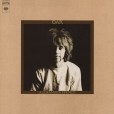
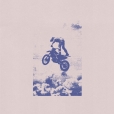
Legendary stoner folk by former Jefferson Airplane and Moby Grape member (who dropped some LSD and motorcycyled from California to the Nashville studio in his pyjamas).
We ship worldwide. The postage rates for your order are displayed before payment, which is processed using Paypal. You can pay using your Paypal account or any of the following cards. No need to join Paypal.