
Your basket is empty

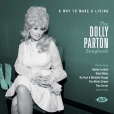
Over the last sixty-odd years Dolly Parton has written almost every major hit she has ever had (and quite a few minor ones, too). Her brilliant songs are covered here by everyone from Betty LaVette and Percy Sledge to Ru Paul and Nana Mouskouri. The booklet has some lovely, rare photos, and rich, track-by-track notes.
Eight poetic songs attuned to the early 1970s chanson of Brigitte Fontaine, performed by Mauricio Amarante and Marine Debilly Cerisier.
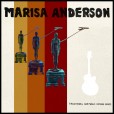
Nine tunes copped from the archives of the legendary 78s collector Harry Smith — ‘pointedly taken from regions shaped by major US conflicts since Anderson’s birth in 1970. While her fascinating liner notes track what is lost and found when trying to translate these compositions, their universal musicality still cuts through. Opener Quodlibet is beautiful: an intricate, minor-key medley of Uzbek tunes originally performed on the dambura (a fretless lute), on which Anderson adds bluegrass techniques to counter her inability to play quarter-tones on her guitar. Her take on a qawwali vocal tune, Hamd, is also a highlight, her stacked guitar layers ringing with warmth and emotion. Gisela Rodríguez Fernández adds violin to Sarvi Simin, a shimmering tune from Soviet-era Afghanistan, while a Yemeni tune, Zar, intended to exorcise evil spirits from the sick, sees Anderson and Fernández constantly rearranging five notes without repetition. Dark ambient moods are also conjured in Pair of Duduk, on which Anderson shifts the drones of Armenian woodwinds on to reverb-heavy guitar and bassy synths, while in Vietnamese tune Whistle Song, transferred from bamboo flutes to electric piano, the composition’s closeness to minimalism sings out.’
Wonderful. Here’s to volume two.
“The traditional songs of the UK are rich with storytelling, and you can find songs with examples of almost any kind of situation or person you can think of. While people of the African diaspora have been present in these islands since Roman times, their histories are little known – and these histories don’t tend to appear in the folk songs of these islands.”
Angeline about her song Unknown African Boy (d.1830): “I learned that slave ships regularly passed by the Isles of Scilly and several were wrecked. A local newspaper article of the time listed some of the items washed up on shore: palm oil, elephant tusks, boxes of silver dollars and gold dust, and the body of an unknown ‘West African boy – estimated age around eight’. The boy is buried in St Martin’s churchyard, Isles of Scilly. I wrote this song from the perspective of his mother.”
And about Cruel Mother Country: “In 1775 and 1776, enslaved Africans in the US were encouraged to put their lives at risk by escaping to join the British army. They were assured the Queen of England was Black – the Black Queen in question was Queen Charlotte of Mecklenberg-Strelitz, wife of King George III. We may never know the truth about Queen Charlotte’s ancestry, but we do know that gossip about it was rife at the time. The promised homeland these enslaved Africans risked their lives in exchange for never materialised. Most became homeless on the streets of London.”
Alex Neilson and Martin Carthy are amongst the supporting musicians.
Harry Smith’s monument.
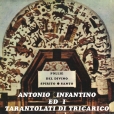
Startling 1975 excursions into Tarantism — a kind of hysteria ostensibly triggered by spider bites, for which dancing is the only cure, with its own set of cultural traditions based in Basilicata, Apulia, Sicily.
Obsessive, hypnotic chants, rhythms, and drones, mixing together folk, avant-gardism, and psych, with shots of Dylan and North African drumming.
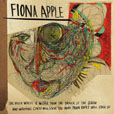
Superb fourth album, bare but sparkling, steeped in her vaudevillian take on Americana, rawly confessional and beautifully voiced as ever — a mid-thirties heartful of fierce discontent.

The civil rights anthem turned Northern floorfiller.
‘The world needs more people like Barbara, someone who is willing to follow her conscience. She is, if the term must be used, a hero’ (Bob Dylan).
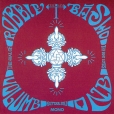
His gone, meditative 1965 debut, already steeped in Eastern modalities and Indian mysticism. The opener is based on a Ravi Shankar raga; Bardo Blues is a musical rendition of the Tibetan Book Of The Dead.
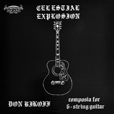
His only solo album, from 1968, when he was on the Greenwich Village circuit, plaiting together blues and Eastern styles in the same neck of the woods as Fahey, Basho et al, but in his own way.
We ship worldwide. The postage rates for your order are displayed before payment, which is processed using Paypal. You can pay using your Paypal account or any of the following cards. No need to join Paypal.