Your basket is empty

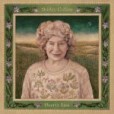
Deluxe LP edition, with gold foiling on the sleeve, a four-page booklet, 140g vinyl.
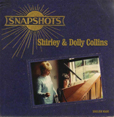
Shirley and her sister recorded in concert in the late 1970s; and a handful of demos from the 1960s.
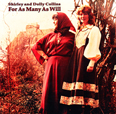
Their last album, from 1978 — with a stunning reading of Richard Thompson’s Never Again, fine trad like Lord Allenwater, Gilderoy, The Moon Shines Bright, and a medley from John Gay’s The Beggar’s Opera.
‘The Voice of the People’.
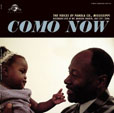
Following Alan Lomax, Daptone placed a small local ad, asking singers to show at Mt Marian Church a certain Saturday. This marvellous record of acappella gospel is the result, including everyone who showed up.
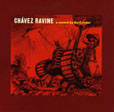
Politically indignant, sorely poignant, musically prodigal — Tex Mex through cartoon-Chinese reggae through Brecht ‘n Weil — elegy for local LA neighbourhoods like Chavez Ravine, swept away by 1950s capital.
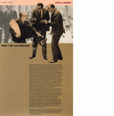
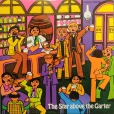
Street pranks and put-ons — ‘terrorizations’ — from early sixties San Francisco; also a DVD of the pair’s The Impostors TV show, too far ahead of its time to get past this ‘64 pilot.
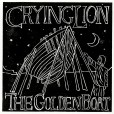
Refreshing, rootedly odd, mostly unaccompanied four-part-harmony singing recorded in Govan Old Parish Church, Glasgow, by members of Trembling Bells and Muldoon’s Picnic. Elements of Sacred Harp, Gregorian chant, medieval madrigal and English folk, with poetic influences including Maya Deren, Saint John The Divine and Dennis Potter — a unique blend of the visionary and the earthly, the intimate and glorious.
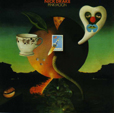
Silk-screened sleeve.

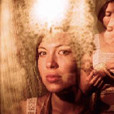
‘Dissonant, ghostly, and otherworldly, summoning complex emotions with sparse tools…
‘The songs are nested in tape hiss and arranged with vocal harmonies she layers like falling snowflakes and drones that fill up the crevices of your lungs. It has the tactile intimacy of 1970s folk musicians like Vashti Bunyan and Karen Dalton, music that feels tied to the natural world it dreams of…
‘This out-of-time music comes to us when the natural world is deteriorating and the ever-present internet is a tool of mass surveillance and a lens to witness multiple global atrocities at once. In her endeavor to exalt such a bleak world, Zuniga seems to be battling herself. She acknowledges that “memory always sees the loved one smaller” and then also shares “why I remember,” citing “white ripe strawberry bruise / beats in the heart” as her reason. She lays bare her pain but ends the record with a wordless composition of stormy static and crystalline piano notes titled To Live Happily. Zuniga allows these disparate perspectives to coexist without overexplaining. A star can be shining now and gone tomorrow, a memory beautiful and still insufficient. Her comfort with dissonance creates a sense of expansiveness and richness to songs that often only feature a handful of instruments at a time’ (Pitchfork).
Something special. Very warmly recommended if psych-folk from the same amphora as Joanne Robertson is your poison.
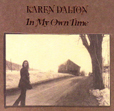
‘My favourite singer in the place was Karen Dalton. Karen had a voice like Billie Holiday’s and played the guitar like Jimmy Reed’ (Bob Dylan).
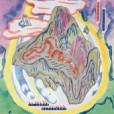
‘As always, there is a true touch of otherness to Delphine’s voice and approach. While most of the melodies are homespun, there is an abiding oddness to the electronic squiggles, keyboard swathes and found sounds that sit behind everything. At times it sounds as though she’s reciting nursery rhymes from another planet… and there’s an lazy jazziness to Mocke’s guitar playing that sets everything off quite beautifully’ (The Wire).