
Your basket is empty

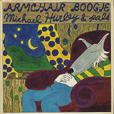
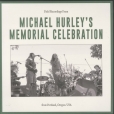
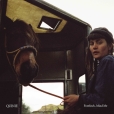
Wonderful album from 1969. Michael Hurley is an American original who first recorded for Folkways in 1965; more recently for Honest Jons’ Lal Waterson tribute, Migrating Bird. Play-and-play-again stuff.
Eight poetic songs attuned to the early 1970s chanson of Brigitte Fontaine, performed by Mauricio Amarante and Marine Debilly Cerisier.
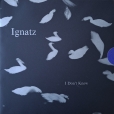
Ignatz is the alter-ego of Belgian musician Bram Devens, who has released a string of albums for labels like (K-RAA-K)³, Ultra Eczema, Fonal, Mort aux Vaches, and Okraïna, over the last twenty years.
Devens recorded this wonderful, haunted music at home in Landen, on the family piano.
There is pervasive, ambient Dub, mesmerically shifting; sometimes aghast. Somewhere in the swirling mist are the guitarist Hans Reichel, and blues pianists like Jimmy Yancey, amongst other ghosts. Time Well Spent even musters a kind of motorik energy, determinedly mis-firing.
It is quite unlike any other piano record.
Beautifully presented, too, to the customary high standards of this label.
Check it out!
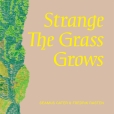
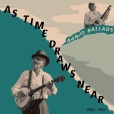
‘Their ability to harmonize together is stunning, their reedy voices coming together and pulling apart amid delicate fingerstyle guitar and concertina deployed in just intonation, which imparts a deeply resonant, almost glowing harmonic presence. It’s all quite subtle, and if you only listen to the way the voices of Cater and Rasten blend you might even miss it—but the full sonic spectrum is what distinguishes and, in certain ways, connects it to traditional practice… Although the album is pure balladry, unfolding with exquisite patience, each song contains nifty little flourishes or instrumental elements that set them apart, such as the slide guitar and wheezy bass harmonica on For the Ear That is No More, or the slow peal of trumpet on Death and the Lady, courtesy of Rasten’s partner in Pip and Oker, Torstein Lavik Larsen. (Peter Margasak, Nowhere Street).
‘All done with such grace and elegance, without a note wasted or any required. Wonderful… faultless and deeply considered’ (Glenn Kimpton, KLOF).
Three high English and Scottish ballads, and three original settings of European folk tales.
Matt gatefold cover; gloss spot varnish.
Check it out!
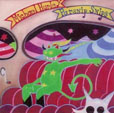
Beautiful, stoned, outsider American folk, remastered from the original tapes (with superior sound quality to the super-rare original). From the eight years between First Songs LP in 1964 and Armchair Boogie.
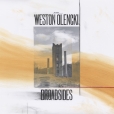
‘A psychoacoustic odyssey through the American South, influenced as much by Dock Boggs as by Luc Ferrari. This isn’t ‘avant-folk’ as per, but more expansive avant-garde compositions using components of traditional music as tools for storytelling. There are banjos, but they bounce around the stereo field in hypnotic patterns; there are autoharps, but they’re bowed, left detuned by time and humidity, and augmented with sounds of screeching cicadas.
‘Check out the haunted, ambient interpretation of the murder ballad Omie Wise, featuring fourteen different versions of the song time-stretched and overlaid with pedal steel by Tongue Depressor’s Henry Birdsey. It’s a wild listen!’