



Your basket is empty


Microtonal folk music mixed with electronics and noise.
The first record was rave-reviewed. ‘I was transported to secluded valleys where age old traditions are the passionate expressions of a community, here re-energized by the chillingly sensitive electronic wizardry of Anders Hana and Morten Joh’ (Songlines). At home in Norway even the tabloids picked it up: ‘Gorrlaus has the same intense and monotonously suggestive sound hunt as early Kraftwerk, at the time they played Ruckzuck’ (VG).
And now II is a next step further in the same direction, more deeply attuned to diverse materials derived from field recordings and other research, with finer nuance and detail… and more fiddle.
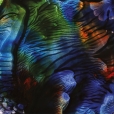
‘The French jazz magazine Citizen Jazz acclaimed Marthe’s debut album Asura, in 2021, singling out her ‘ability to hold disparate idioms together, to mix a whole bunch of influences (musical or not) in the crucible of her own personality, of her own history, to bring out a great personal and extraordinary whole, a fresh and singular music which belongs only to herself.’
‘This follow-up maintains the same life-affirming energy. It explores new nooks and crannies in the same wonderful universe. Again, it ranges widely, with the same free approach to composition. Some of the tracks make it impossible to keep your dancing feet still, while others give room for introspection and reflection.
‘Herlighetens Vei — Path of Glory — conveys a humble and respectful attitude to Life. It avers that human existence is sacred and mysterious. Keep an open and alert mind, and the mystery will naturally unfold before you.’

Three ravishingly soulful, wondrous ragas in the Hindustani Indian classical manner, superbly played on sarod and tabla.
Mohini is an enchantress, sometime slayer of demons.

Jonas Cambien, Magnus Skavhaug Nergaard, Dag Erik Knedal Andersen
The Ear Behind the Airport
Motvind Records
‘Strung between Cambien’s razor-sharp prepared piano, and drummer Andersen’s surgical pointillism, Nergaard grounds the music in fresh bass science. The trio transitions fluently from enveloping drones — drawing from British improv — to ecstatic grooves that nod towards free jazz.
‘Though a debut album, the sound is exceptionally well-balanced. An energised calm fills the music with nerve and momentum, combining contemplativeness and expressivity. An extraordinary sense of consonance and texture creates an inviting tactility; something you can dive deep inside. The music sounds mature, but not remotely complacent. Rough and direct, yet eloquent and generous; both patient and restless, it stands firm.’
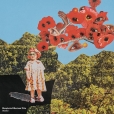
‘Warm, mysterious and alluring, the Trio’s debut album maintains a balanced interaction at once intimate and almost limitlessly expansive. The leader’s unmistakable tone and improvisational verve are naturally a focal point, but there is no doubt that we are dealing with a proper band. Cellist Joel Ring and drummer Øystein Aarnes Vik are masterfully light-footed and tight, calmly driving the music forward, filling it with colour and texture… and still there is room for the influential Norwegian pianist Jon Balke, who guests on three tracks.
‘The compositions are strong, immediate and captivating. For all its eccentricities, the music has a broad, timeless appeal, running from the distant past far into the future. It takes you by the hand, to show you that the world is still a magical and enchanted place.’

Jessie Marino with Inga Margrete Aas & Pinquins
Murder Ballads Vol II: The Positive Reinforcement Campaign
Motvind Records
‘Marino uses the language of folk music traditions to witness and retell our current reality through a feminist lens, with traditional American Sacred Harp hymns and murder ballads at the core. Improvisation, experimentation and group-singing re-draw these traditional songs — populating them with new sonic languages which reflect on contemporary ravages of contempt, greed, jealousy, violence, and utter disregard.’
With the Norwegian percussion trio Pinquins, and bassist Inga Margrete Aas; plus guests
Emilia Dorr (voice), Weston Olencki (trombone), and Wendy Eisenberg (guitar).

Four portions of lonesome country, by Toody Cole from Dead Moon, and The Rats.
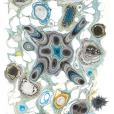
‘Luminous meshes of colours and textures, vaulting between free jazz, dub, raga, ambient, and ritual music. Riveting polyrhythms underpin towering arrangements for flutes, synths, and processed acoustic instruments. The drumming and psychoactive, ceremonial melodies evoke the fourth world of Don Cherry, Jon Hassell, Popol Vuh et al. An alchemical, Buddhist/Taoist/Hindu slant guides the narrative.’

Sensational fusion of modal jazz and flamenco, with members of Tete Montoliu’s group, and the mighty Paco DeLucia, dazzling on electric guitar. Hotly recommended.
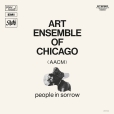
For John Corbett ‘one of the most luminous albums of creative music ever made’, this forty-minute work by the four-piece — Roscoe Mitchell, Joseph Jarman, Lester Bowie, Malachi Favors — is surely the apex of the fourteen studio albums recorded by the Art Ensemble during their two years’ sojourn in France.
‘Still-startling music, which uses space, dynamics, and a wide range of emotions expertly’ (AllMusic).
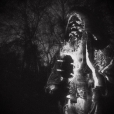
‘After many requests to reissue the seldom heard cassette EPs and VHS releases, Akuphone compiled this archival release which illuminates Ak’Chamel’s early development from 2008 as enigmatic practitioners of post-apocalyptic folk and ritual psychedelia. These recordings capture the group’s signature sound in its most primal form: thoroughly fucked lo-fi production, warped tape hiss, detuned instruments, and melancholic hysteria captured on cassette.’
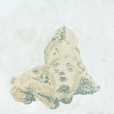
‘Among the most influential European ensembles of the 21st century, this chamber group’s work on ECM and Hubro has redefined the boundaries between jazz, contemporary composition and folk music, developing a highly distinctive language built on restraint, timbral nuance and collective interplay…
‘Over time, the Ensemble has developed a language that is immediately recognizable — marked by reduction, clarity and a deep attention to sonic detail. While each release has its own character, the underlying aesthetic remains consistent: a focus on the inner life of sound itself. Rather than foregrounding gesture or virtuosity, the music draws the listener toward the smallest elements, where meaning emerges gradually through texture, spacing and timbre. The listening experience becomes one of concentration and proximity, where each sound carries weight, and the accumulation of detail forms a larger whole. References may be sensed — to early polyphonic music, Norwegian folk traditions, or more recent experimental practices — but these are absorbed into a singular musical language that resists categorization.
‘Non Sonett advances the group’s integration of electronics as a fundamental part of the sound world. Each musician engages with electronic elements alongside their acoustic instruments, creating a layered and dynamic sonic environment. At times, this leads into extended, exploratory passages reminiscent of analogue musique concrète; at others, electronics operate almost imperceptibly, subtly altering and extending the acoustic textures in real time.’
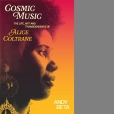
‘The significance of Alice Coltrane’s presence in 20th century music cannot be overstated. Andy Beta’s Cosmic Music is a remarkable detailing of this visionary woman’s vocation in devotion to a sanctified art. From her childhood playing piano in the community of Pentecostal and Baptist churches, where ecstatic transcendence was at the heart of practice, to her engagement with the Detroit Jazz scene, and finding a kindred spirit in a life shared with the great John Coltrane, her music expressed a timeless expression of both divinity and dignity’ (Thurston Moore).
‘Alice Coltrane was co-architect of some of the most spiritually profound and formally challenging music ever made. The way Andy Beta tells it, it is one of the greatest adventures of the 20th century’ (David Keenan).
‘If Alice had been the wife of a Detroit auto worker, she’d obviously be a nonentity’; ‘a sincere but virtually talentless lady who married the right man’ (Down Beat, 1977).
Clearly written and thoroughly researched — wide-ranging and stuffed with interest — it’s a must. Warmly recommended.
Hardback; 450 pages.