
Your basket is empty


Jessie Marino with Inga Margrete Aas & Pinquins
Murder Ballads Vol II: The Positive Reinforcement Campaign
Motvind Records
‘Marino uses the language of folk music traditions to witness and retell our current reality through a feminist lens, with traditional American Sacred Harp hymns and murder ballads at the core. Improvisation, experimentation and group-singing re-draw these traditional songs — populating them with new sonic languages which reflect on contemporary ravages of contempt, greed, jealousy, violence, and utter disregard.’
With the Norwegian percussion trio Pinquins, and bassist Inga Margrete Aas; plus guests
Emilia Dorr (voice), Weston Olencki (trombone), and Wendy Eisenberg (guitar).

Four portions of lonesome country, by Toody Cole from Dead Moon, and The Rats.
‘Luminous meshes of colours and textures, vaulting between free jazz, dub, raga, ambient, and ritual music. Riveting polyrhythms underpin towering arrangements for flutes, synths, and processed acoustic instruments. The drumming and psychoactive, ceremonial melodies evoke the fourth world of Don Cherry, Jon Hassell, Popol Vuh et al. An alchemical, Buddhist/Taoist/Hindu slant guides the narrative.’
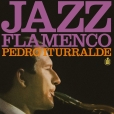
Sensational fusion of modal jazz and flamenco, with members of Tete Montoliu’s group, and the mighty Paco DeLucia, dazzling on electric guitar. Hotly recommended.
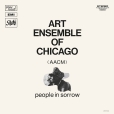
For John Corbett ‘one of the most luminous albums of creative music ever made’, this forty-minute work by the four-piece — Roscoe Mitchell, Joseph Jarman, Lester Bowie, Malachi Favors — is surely the apex of the fourteen studio albums recorded by the Art Ensemble during their two years’ sojourn in France.
‘Still-startling music, which uses space, dynamics, and a wide range of emotions expertly’ (AllMusic).
‘Among the most influential European ensembles of the 21st century, this chamber group’s work on ECM and Hubro has redefined the boundaries between jazz, contemporary composition and folk music, developing a highly distinctive language built on restraint, timbral nuance and collective interplay…
‘Over time, the Ensemble has developed a language that is immediately recognizable — marked by reduction, clarity and a deep attention to sonic detail. While each release has its own character, the underlying aesthetic remains consistent: a focus on the inner life of sound itself. Rather than foregrounding gesture or virtuosity, the music draws the listener toward the smallest elements, where meaning emerges gradually through texture, spacing and timbre. The listening experience becomes one of concentration and proximity, where each sound carries weight, and the accumulation of detail forms a larger whole. References may be sensed — to early polyphonic music, Norwegian folk traditions, or more recent experimental practices — but these are absorbed into a singular musical language that resists categorization.
‘Non Sonett advances the group’s integration of electronics as a fundamental part of the sound world. Each musician engages with electronic elements alongside their acoustic instruments, creating a layered and dynamic sonic environment. At times, this leads into extended, exploratory passages reminiscent of analogue musique concrète; at others, electronics operate almost imperceptibly, subtly altering and extending the acoustic textures in real time.’
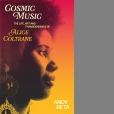
‘The significance of Alice Coltrane’s presence in 20th century music cannot be overstated. Andy Beta’s Cosmic Music is a remarkable detailing of this visionary woman’s vocation in devotion to a sanctified art. From her childhood playing piano in the community of Pentecostal and Baptist churches, where ecstatic transcendence was at the heart of practice, to her engagement with the Detroit Jazz scene, and finding a kindred spirit in a life shared with the great John Coltrane, her music expressed a timeless expression of both divinity and dignity’ (Thurston Moore).
‘Alice Coltrane was co-architect of some of the most spiritually profound and formally challenging music ever made. The way Andy Beta tells it, it is one of the greatest adventures of the 20th century’ (David Keenan).
‘If Alice had been the wife of a Detroit auto worker, she’d obviously be a nonentity’; ‘a sincere but virtually talentless lady who married the right man’ (Down Beat, 1977).
Clearly written and thoroughly researched — wide-ranging and stuffed with interest — it’s a must. Warmly recommended.
Hardback; 450 pages.