






Your basket is empty

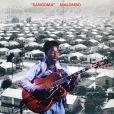
‘In 1978, SA guitar genius Tabane stood at a crossroads. Fresh from three years’ touring in the United States, where he graced the Newport Jazz Festival alongside Miles, Herbie, Pharoah and co, and with a newly signed international distribution deal, he harnessed this momentum to a new, larger band setting, capturing a rare intensity.
‘Sangoma — ‘spiritual healer — bridges contradictions: expansive yet intimate, celebratory yet haunted by exile and return. Tracks like Sangoma, Hi Congo and Keya Bereka are not simply recordings but living testaments, songs that would remain in Tabane’s repertoire for decades. Unlike the moody, immersive character of much of his work, here Tabane is on the move — urgent, restless, uncontainable. ‘Maskanta wa tsamaya’, ‘ass-kicking’.
‘More than four decades on, Sangoma is both an historical document and a timeless invocation. A landmark in SA musical history. From his home in Mamelodi to the world and back again, Tabane’s spiritual healing endures — raw, electric, and unbowed.’
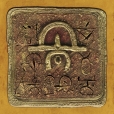
Bringing together two generations of South African guitar mastery: Madala Kunene, ‘King of the Zulu Guitar’, now in his mid-seventies, and his protege Sibusile Xaba, whose playing interweaves multiple South African guitar lineages in an original, spiritualised fusion.
Recorded in Zululand in the town of Utrecht, at a cultural centre called Kwantu Village. “It’s such a broad word, but the elders teach us that Ntu is basically an energy, almost chi, an energy, a force that all living beings have within them. It’s a living energy, so kwaNTU is almost the place of this energy.”
‘A beautifully expansive collection of interweaving, finger-picked melody, husky vocalisations from elder Kunene and thrumming hand percussion’ (The Guardian).
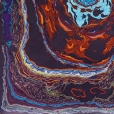
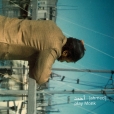
‘Based in the south of France, Beduneau builds intricate self-playing installations and DIY electronics. Bringing a fresh and personal perspective to electronic and electroacoustic music, his work is intent on opening up dialogues about the social construction of disability, and other norms and conventions.
‘‘Clairon’ refers both to a medieval trumpet and to the beloved with whom this music was first shared, as a kind of impressionistic, though deeply moving sound-diary, during the stillness of the pandemic. The movement of air, pressure, resonance, and the physical properties of the trumpet are reimagined; organic ASMR tones, synthesized bird calls, and pirouetting melodies of pipes and bells score an imaginary biodome where chaos and harmony coexist.
‘Striking, singular, and boundary-pushing.’
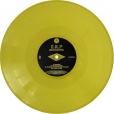
‘Pure machine soul for late-night heads.’
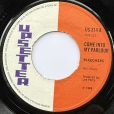
Red felt tip marking on the B-side label. Click through for an image.
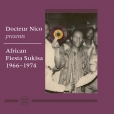
Docteur Nico & African Fiesta Sukisa
Docteur Nico Presents African Fiesta Sukisa 1966-1974
Planet Ilunga
A dazzling mixture of stone classics and gems buried deep in the Sukisa catalogue. Excellent booklet.
‘While exploring the Hawaiian guitar with its clear, airy, plangent, psychedelic effluvia, he continues to replicate the piano comping technique, and adds two missing strings to his bow: a simulation of the sanza (likembé or thumb piano), whose sounds he reproduces right down to the noisemakers of the tiny tin rings, on the one hand, and the sounds of the Luba balafon on the other… Docteur Nico is a genius of our time, whose style makes him the supreme exponent of the most important guitar school in Congolese music. He is recognized by his peers as the greatest African solo guitarist of all time.’
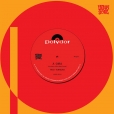
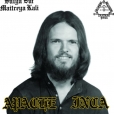
The Tenderness Trio was sisters Jussara and Jurema Silva, and their brother Robson.
From 1973, A Gira is dedicated to nature, spirituality and mindfulness, by way of a tribute to a Candomblé deity, with mesmerizing polyrhythms from the start, soaring vocals and beautiful playing. As the sisters put it — “It has the dancing, the expression, the lyrics and musical relaxation. Something very Brazilian.”
B/w a surprise version of Gato Barbieri’s Last Tango In Paris.
Ace.