
Your basket is empty

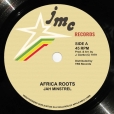
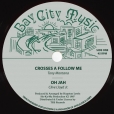
The dub is a militant, clattering, tearaway, raw monster-slayer, with Johnny Clarke at the controls, for his own label. Total murder.
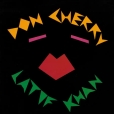
‘Sangam means ‘meeting place’ in Sanskrit. Don obviously knew exactly what he wanted to do, and Latif immediately understood, his fingers fizzing across the tablas at frightening speed… It was Don who suggested that Latif overdub new tabla parts to enrich and add complexity to the first takes. We could reasonably have expected to spend the night doing this because this was the first time the percussionist had done this. It took him all of five minutes to get used to listening to the first tracks over the headphones before playing them without the slightest mistake. When we got to the timpani, which he was playing for the first time, his keen sense of pitch and tone once again did miracles. During one take, just for the fun of it Latif started to play a fairly slow, disconnected duple time, moving on to three and then four… all the way up to 19 by which time his fingers were whizzing invisibly across the skins, leaving us in awe and him looking as if he didn’t know what the fuss was all about. All this just made Don even keener to impress his musical companion for a day…
‘Of course, the subtleties of this album call for greater analysis, for example the meeting between the Malian doussou n’gouni and Indian tablas, the Hammond organ taking over from the tampura, 5 1/4 time as if it were the easiest thing in the world, the reinvented Indonesian gamelan… and the lyricism of the pocket cornet.’
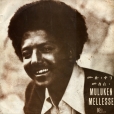
This is fire. Ring the alarm.
The opener is MM’s first recording, aged seventeen; a 45 on Amha Records. The remainder revives his 1976 LP for Kaifa, produced by Ali Abdella Kaifa aka Ali Tango, and featuring such mainstays of the scene as trumpeter Shimèlis Bèyènè, Dawit Yifru on keys, and the great Tilayé Gèbrè on saxophone and flute. In the teeth of the burgeoning Red Terror of the Derg junta, this LP was the swansong of Swinging Addis, and arguably its absolute masterpiece.
Intense, roiling Ethiopian afrobeat. Utterly killer; hotly recommended.
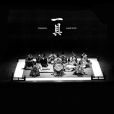
‘Japanese classical music and dance, traditionally performed by families of musicians linked to the ancient Imperial court, and later passed down in Buddhist temple ceremonies and Shinto shrines, Gagaku is the oldest of the Japanese performing arts, with a history more than a thousand years old. Founder and director of the Reigakusha ensemble, Shiba Sukeyasu descends from the Koma clan, dating back to the end of the 10th century. The recordings partly reflect repertoires borrowed from Chinese music between the 5th and 9th centuries.
‘The eternal breath of the flutes (ryuteki and hichiriki) creates a sort of suspension of time, together with the hypnotic and hallucinatory atmosphere of the mouth organs (shō). The meditative tone of the string instruments (bika and koto) that punctuate the voids and silences is impressive, as is the enigmatic percussion section, with the tolling of the gong (shōko) and the calibrated beats of the drums (taiko and kakko).’
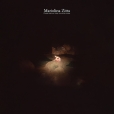
‘Mariolina Zitta began working with natural sounds at the end of the 1980s, developing a passion for speleology. Her encounter with Walter Maioli was fundamental, guiding and influencing her definitive research into sound archaeology and the primitive sources of musical acoustic phenomena. In these recordings Mariolina conducts a magical ritual as a cave priestess, celebrating the icons par excellence of the mysteries of the night: bats. The specific frequencies of the calls of these fascinating creatures are recorded with special detectors used by ecologists, creating an organic synthesizer. The fusion with the sounds of natural objects (stones, stalactites, logs, bone whistles, Tibetan bells, mouth bows, trumpet shells) and the vocal modulations of harmonic singing allow us to travel into a still unexplored sound dimension, through an evocative experience of total sensory listening. It is an arcane landscape filled with pure vibrations, magnetic resonances and aquatic sounds; an ancestral enchantment on the border between consciousness and dreams, a symbolic liturgy of primordial reverberations, echoes and whistles.’
An edition of 200 copies.
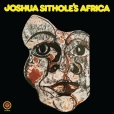
‘Masterful arrangements, inventive rhythms, rich harmonies, and a perfect balance of flute and saxophone interplay. Funk, Jazz, Gospel, Afro, and traditional elements all merge seamlessly into something unique and timeless.’
“South African spiritual funk gem. slick guitar, banks of horns” - Chris Albertyn (Matsuli).
“Dynamic South African funk. An album that will make you want to dance from start to finish” - Franck Descollonges (Heavenly Sweetness).
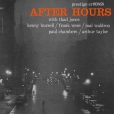
A classy, rock steady sextet — the rhythm section is Art Taylor and Paul Chambers — presenting four compositions by Mal Waldron.
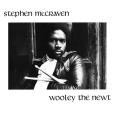
This expert drummer spent long stints with Archie Shepp and Sam Rivers; and he’s played with scores of other jazz greats, like Mal Waldron, Charles Tolliver, Yusef Lateef, Billy Harper, David Murray, and so on. He toured Europe with Marion Brown in 1977 — recording La Placita live in Willisau — and the following year cut Wooley The Newt for the saxophonist’s Sweet Earth label. His son Makaya sampled it recently on We’re New Again, his Gil Scott-Heron rework.
Free, grooving, spiritual jazz. Check it out.

Music from the Amha label run by Amha Ashete, driving force of modern Ethiopian music.
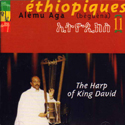
With virtuoso self-accompaniment on the beguena — an oversize ten-string lyre, the oldest instrument played in Ethiopia: religious songs as well as traditional fables, folk tales and poems.
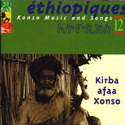
The music of the Konso — a tribe from the Sudanese border country — to do with daily chores, sacred or ritual matters, and entertainment. Flutes, bells, harps, horns, xylophones, drums.
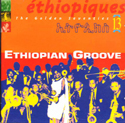
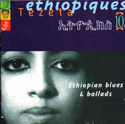
Another survey of the golden age of modern Ethiopian dance music — bound up with the production of vinyl records — between 1969 and 1978.
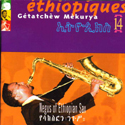
Starting in the early fifties, long before Ayler and Ornette, Mekurya’s stroke of genius was to give improvisatory voice on his saxophone to the ‘shellela’ singing style — epic, harsh, war-like.
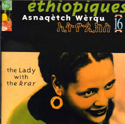
Self-taught on krar-lyre, favourite instrument of the azmari; and — alternately poignant and sarcastic — the last great singer, story-teller and free-thinker to carry on their tradition of poetic cut-and-thrust.
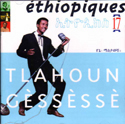
For Ethiopians, their greatest singer of all time; with music arranged by Mulatu Astatqe for the Army Band, the Exhibition Band, the Police Orchestra, the Bodyguard Band.
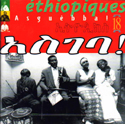
The sequel to Volume 2 in this series, and featuring many of the same singers, accompanied by the messenqo (one-string fiddle), the krar lyre, the kebero drum and the accordion.
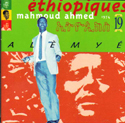
Alemye, from 1974.
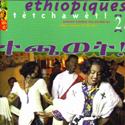
The azmaris were originally wandering minstrels, roaming the Abyssinian countryside. These varied snapshots of the musical life of Addis Ababa in the 1990s are offered as a kind of homage to them.
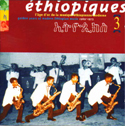
Sublimely tilted like Sun Ra, rocking like James Brown at the Apollo, the tracks here by police bands are a reminder that Ethiopia at the time had no independent modern groups.
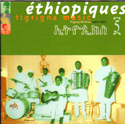
The music of Tigray and Eritrea — where the majorities speak the Tigrigna language — is rhythmically and melodically different from Ethiopian music.