




Your basket is empty

‘Recordings from early 2025, while Johnny was bed-bound in an assisted living facility with multiple sclerosis. He speaks into an iPhone laid gently on his chest, in remarkably tender and emotive form. Love in all its permutations. The tangled, but caring nature of familial love, to the anguish and euphoria of romantic connection. Johnny has a remarkable ability to pose questions, and answers, that reflect the truest of realities, without cliche.
‘Joel Nelson nimbly helms the nearly entirely electronic backdrop, with Buchla Music Easel bubbling up between Johnny’s stream of consciousness. At times, Broadcast’s fuzzed out ballads come to mind, while at others, early Oneohtrix Point Never’s gauzy, distant drones cast anchor beneath the slippery syntax.’
This is terrific.
Brimming with saudade, an atmospheric, engrossing, organic blend of the gorgeous folk music of northern Ecuador’s indigenous communities, and tentative, crafted, soulful electronica.
‘Mala Fama is a Kichwa sound-artist from Ibarra, Ecuador, inhabiting — and creating — multiple worlds at once, while being rooted in Indigenous pride and power. Jichushka is a Kichwa word meaning lonely, or abandoned. Here, grief is re-cast as a pathway to liberation.
‘The album was recorded between 2016-2022. Home studio sessions facilitated close collaboration with a network of artists drawn from Andean musical lineages such as marimba, vallenato, and cumbia — including Afro-Ecuadorian group Duo Anjoa, vocalist Catalina Ortiz from coastal Esmeraldas, Ibarra-based multi-instrumentalist Luis Lema, and Quixosis. The album builds on peaceful ambient compositions as much as heavy sequencing, inviting melancholic remembrances of times and spaces that no longer exist.’
Warmly recommended. Like nothing else. Check it out!
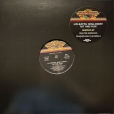
‘When Salsoul boss Ken Cayre handed over the multi-track tapes of Hit and Run to Walter Gibbons in 1976, the burgeoning art-form of the disco edit was liberated from its previous cut & paste routine. Following on from the likes of Grasso, Burgess, Levan, Scott, and Siano, Gibbons had become a lethal beat mixer, with an ‘uncanny sense of mixing that was so accurate it was unbelievable’, according to Francois Kevorkian. After early edit work with Salsoul releases Nice ’N’ Naasty and Salsoul 2001, Gibbons had established himself as a meticulous artist, able to completely rework existing tracks into new extended amalgams of rhythm and sound. Cayre’s multi-tracks conferred the ability to thoroughly deconstruct each of the songs elements, and Gibbons transformed the cut into an eleven minute opus which fellow tape pioneer Tom Moulton would distinguish as being ‘so different from the original that it must be classified as a new record.’ The resulting 12” would go on to sell 300,000 copies; DJs and the dance-floor would now dictate runnings as never before.
‘Whilst Gibbons transformed the original by banishing the strings and brass, Joe Claussell sets out for a different horizon entirely. The lead guitar is exchanged for a clean, chopped chucking; the vocals are promoted to a new spaciousness. The horns presage a rethinking of the rhythm, and by the time the familiar fuzz guitars are welcomed back, the coalescing orchestra has been sustained and revitalized in a complete surrender to time and pulse. As Holloway’s vocals are pulled into non-semantic expression, the track’s foundation is given a final rinse and farewell, before evaporating in delay. This is an iteration every bit inspired and fresh as Gibbons’ landmark mix.’