


Your basket is empty

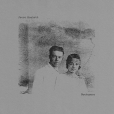
Spectral, nostalgic, highly evocative, sometimes-desolate reflections — alone on the piano, and together with saxophonist and flautist Finn Peters — soaked in Satie, Ravel, and Mompou. Expressive and enchanting, but mournfully distracted, with a tentative, exploratory wonderment which reminds you of Paul Klee’s well-worn idea of a drawing as a line taking a walk. Easy to recommend to those of you who recently enjoyed Mashu Hayasaka’s Etudes LP, on All Night Flight. This is lovely stuff from Jesse, in an unexpected departure from his work with Elmore Judd, the Gorillaz, Nyege Nyege Tapes…
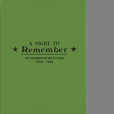
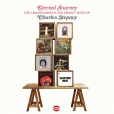
Another cracker of a book. Going on three hundred flyers, one per page; a handful in colour. Poignant loveliness from beginning to end. Click through for a couple more images.
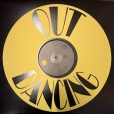
Expertly ecstatic disco-house treatments of Marvin’s Come Live With Me Angel and You Oughta Be Dancin’, by People’s Choice. Prime Leon Ware, prime Tom Moulton, brilliantly filleted and lovingly arranged on the plate.
In short supply. Don’t miss this.

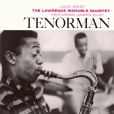
Two spellbinding extended improvisations referring to meteorological and planetary phenomena: evocations of light, wind, clouds, and tidal cycles as shimmering, roaring, rubbing, coalescing and diverging environments of sound; consistent and yet in perpetual flux. The quartet’s signature, singular, honed minimalism subsumes flashes of chaos into winding paths of musical detail; hushed but suspenseful.
Quietly ravishing, stunning music from Norway, by trumpeter Torstein Lavik Larsen, double bassist Adrian Fiskum Myhr, guitarist Fredrik Rasten, and drummer Jan Martin Gismervik.
Gorgeously presented, in a tiny run.
Warmly recommended.
Something else.

One of the foundation stones of northern soul, courtesy of Sherlie Matthews and sisters Brenda and Patrice Holloway.
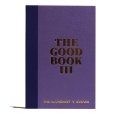
Fifty-six fearless forays deep into the consecrated crates.
ALC does what he does best, with Roc Marciano rocking the pulpit; Budgie wheels back to the UK scene, dazzlingly rallying Knucks, Novelist, JayaHadADream, Joe James, Ragz Originale, Natanya, Qendresa, and full crew.
The CDs are resplendently dressed like a Bible, with foil debossing, the full monty. Lovely stuff.
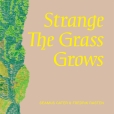
‘Their ability to harmonize together is stunning, their reedy voices coming together and pulling apart amid delicate fingerstyle guitar and concertina deployed in just intonation, which imparts a deeply resonant, almost glowing harmonic presence. It’s all quite subtle, and if you only listen to the way the voices of Cater and Rasten blend you might even miss it—but the full sonic spectrum is what distinguishes and, in certain ways, connects it to traditional practice… Although the album is pure balladry, unfolding with exquisite patience, each song contains nifty little flourishes or instrumental elements that set them apart, such as the slide guitar and wheezy bass harmonica on For the Ear That is No More, or the slow peal of trumpet on Death and the Lady, courtesy of Rasten’s partner in Pip and Oker, Torstein Lavik Larsen. (Peter Margasak, Nowhere Street).
‘All done with such grace and elegance, without a note wasted or any required. Wonderful… faultless and deeply considered’ (Glenn Kimpton, KLOF).
Three high English and Scottish ballads, and three original settings of European folk tales.
Matt gatefold cover; gloss spot varnish.
Check it out!
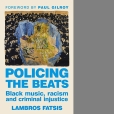
Policing The Beats: Black music, racism and criminal injustice
Lambros Fatsis
Manchester University Press
Calling all HJ massive: here is a terrific, vivifying guide to your record collection, and a political kick up the bum. Within ten minutes of engaging with this book, you’ll sprout a fresh pair of ears and a fifth lobe, or your money back.
This is a riveting, bracingly militant account of the racist British policing of Black Atlantic musical culture, from slavery days bang up to date. Extended sections consider the suppression of African drumming and dancing; calypso, and reggae sound systems; rap and drill.
The writing is deep, wide-ranging and richly erudite, but accessible and unstuffy. Compellingly, Lambros takes it all personally, and crucially his book blazes with love for a bunch of our favourite music: a long, diverse playlist in the back ricochets from Count Ossie and Salah Ragab through to A Tribe Called Quest and 24-Carat Black.
It joyously celebrates Black music as a reparative safe space, but also a key to getting to grips with the world; a contagion of ‘creole planetarity’, in the words of Paul Gilroy’s foreword, ‘capable of facilitating and intensifying political mobilisation, collective refusal and acting in concert. It can do this because it has promoted and amplified meaningful, relational life amidst a general haemorrhaging of meaning…’
‘The healing force of the universe,’ in Albert Ayler’s phrase. ‘My sanctuary… my life,’ as Gary Bartz put it. ‘Songs in the key of life.’
Very warmly recommended.