

Your basket is empty

Live at the Lila Eule 2018.
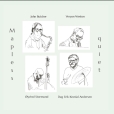
John Butcher, Veryan Weston, Oyvind Storesund, Dag Erik Knedal Andersen
Mapless quiet
Motvind Records
‘We proceed along a musical timeline in the same time as we are all making it up, the musical references being around us both in the past and the present as we share what we are doing in a new situation with others who are doing the same but differently and thus continually modifying our own continuum.’
Al Ghaba!
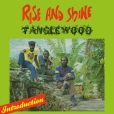
The only LP by this vocal trio; originally out on Creole in 1985. Recorded at Dynamic Sounds and Music Mountain; produced by B.B. Seaton.
Glads and Culture vibes.
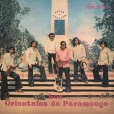
Wild, psychedelic, salsa-spiced, Peruvian cumbia.
In the late 1960s, the coastal city of Paramonga, just a three-hour drive north of Lima, gave rise to a vibrant music scene shaped by surf, rockabilly, and tropical sounds. Blending cumbia with guaracha, salsa, and guaguancó, and emerging styles like chicha —with their psychedelic guitars, Fender amplifiers, hot percussion, and wah-wah pedals — Los Orientales would shape the musical identity of the region.
Drawing from the LPs Con Sabor Tropical in 1972 and Tremendo Ritmo the following year, plus numerous 45s, this is a comprehensive review of the sound and spirit of Los Orientales de Paramonga at their peak.
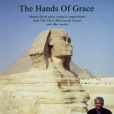
‘You’re never too old to learn something new. Reed credits bebop with keeping him and his friends out of reform school because they were too busy listening to records to get into trouble. Finding fame as a writer, he returned to music circuitously, eventually taking the plunge at aged 60 to study jazz piano. Diagnosed with prostate cancer in 2006 he hastily assembled a quintet to fulfil a lifelong ambition of recording an album. He made the record (and recovered). Cash-strapped during COVID, he became a composer to generate funds money for his plays, enlisting his daughter Tennessee as narrator.
‘These humble origins and a genuine love and natural talent for music are what underpins The Hands Of Grace. Consisting of works written for Reed’s play The Slave Who Loved Caviar alongside new original compositions, it brings in close friends and family to accompany his casual, unvarnished playing style that’s so genuinely heartfelt it feels as if you could be sat alongside in their living room. The music carries a lived-in simplicity yet it also holds something ambiguous that draws it away from the predictable. Music papers rustle, a living room chair is dragged up to the keys whilst Reed’s wife Carla contributes violin and daughter Tennessee recites her poetry on standout How High The Moon. This is a poignant family affair with no-one left out, ending on a touching tribute and voicemail from their late daughter Timothy.’

‘These seriously playful/playfully serious gentlemen share the same vibe: a strong sense of speed and importance, paired with a kind of childlike curiosity for what lies behind the next bend. Alternating between baritone saxophone, flutophone, slide flute, clarinet and bass clarinet, phrases are repeated and elaborated, questions, answers, rhetoric, ornamentation, criticism, and free flow, all this and more can coexist when it comes from the same source.
There is a lot of commotion in this music, a lot of pressing and panting. But there are also feelings in the brutality, a brutal finesse that leads us from one sonic landscape to another. Not like a hike, more like a run through forests and scrubs, down steep slopes and up through narrow gorges…’
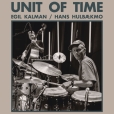
‘Hans Hulbækmo and Egil Kalman have long been a playful and creative rhythm section, with one foot in free jazz and the other in folk music. They’ve played together in the Marthe Lea Band and other projects, and since last year they’ve delved into the folk music of Norway and Sweden — all set in an experimental duo format. Drums and jaw harp (Hans) meet modular synth and double bass (Egil).
‘Unit of Time draws from the rhythmic details of folk music, as the basis for minimalist compositions full of improvisation. It’s not all about the groove, though. Some melodies are interpreted straightforwardly enough, but the unconventional instruments give the music a new depth. Unusual timbres and sonic phenomena emerge, mesemerizingly.’
The Chicago-based poet and singer heads up a spicy gumbo of jazz, folk and soul.
‘By merging ferociously honest poetry with various black musical traditions, Tate stands as heir to Chicagoan Oscar Brown Jr., the veteran urban griot whose lyrics long have decried racism and social injustice’ (The Chicago Tribune).