

Your basket is empty

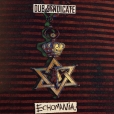
‘Style Scott and Flabba Holt, bedrock of the mighty Roots Radics, holding together the monstrous rhythms, while Adrian Sherwood works his magic at the controls. Features guest appearances from Lee Perry, Michael Franti, and Talvin Singh.’
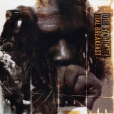
‘From 1996, with Style Scott gathering even more crack Jamaican players together for the rhythms, featuring musicians who between them had done time in the likes of the Roots Radics, Soul Syndicate, Joe Gibbs’ Professionals, and Bunny Lee’s Aggrovators.
‘This incredible legacy is augmented by Adrian Sherwood’s work at the mixing desk back in London, overdubbing the London-based Skip McDonald and Akabu, and working his sonic magic on the raw material, a true transatlantic dub collaboration.’
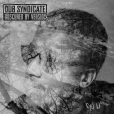
‘A brand new set of Dub Syndicate excursions utilising rhythms from their classic 1989 - 1996 period. Adrian Sherwood has gone back to the original tapes, working his mixing desk magic to find new angles on the timeless pulse of Lincoln Valentine ‘Style’ Scott, with fresh overdubs from Cyrus Richard (Dub Asante Band). Featuring new dubs of tracks originally found on albums such as Time Boom X De Devil Dead and Stoned Immaculate.’
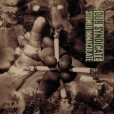
‘Probably the best known Dub Syndicate album, this 1991 set was recorded between Jamaica and London, with the rock solid rhythms of band leader Style Scott augmented by a number of additional players, including guitar from Skip McDonald, vocals by Lee Perry and Akabu, samples of the late, great Prince Far I, and keyboards from Keith Levene.’
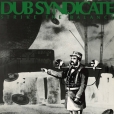
‘Another great set, with vocal contributions from mainstay Bim Sherman on a cover of Lloyd & Devon’s Cuss Cuss, and Shara Nelson (just prior to Blue Lines) on a version of Serge Gainsbourg’s Je T’aime. Originally released in 1989 and coinciding with the beginnings of Dub Syndicate as a touring unit.’
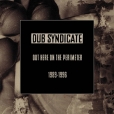
‘A follow-up to the Ambience In Dub anthology of the early Dub Syndicate albums, this box-set picks up the story in the late 1980s, with Style Scott coming more to the forefront of the project as bandleader and co-producer, and the group emerging as a live entity, mirroring the trajectory of Bonjo Iyabinghi Noah of labelmates African Head Charge.
‘This was also the period of their greatest popularity, with a series of classic albums that combined the best of Jamaican musicianship and the wild studio experimentation of Adrian Sherwood, resulting in music that appealed to ravers and dreads alike.
‘The four albums from that period — Strike The Balance (1989), Stoned Immaculate (1991), Echomania (1993) and Ital Breakfast (1996) — plus Obscured By Version, a special bonus album Sherwood has concocted out of new productions based on classic Dub Syndicate rhythms.’
With a 32-page booklet.
“Transportées is an electroacoustic work. From archaic to electronic trance, a musical thread runs from Brittany to Tunisia. We follow a trance-like path through recordings, traces of oral traditions. At the root of this composition is my taste for archives and my fascination with songs that have been captured, recorded and fixed. With my microphones, I follow a documentary and musical path that, between Brittany, Germany and Tunisia, crosses the first sound recordings fixed on flat discs, oral transmission, the energy of the return to the homeland and a K7. On this K7, a mother passes on an endangered repertoire to her son, who records it. Transportées starts with this K7.”

‘From 1972, the third and last album by this group formed in Johannesburg’s Alexandra township in 1968, announcing a shift away from early Memphis soul influences towards a pioneering African-driven jazz sound, and laying the foundations for the afro-fusion scene spearheaded by groups like Batsumi, The Drive, and Harari.
‘Black Soul features a who’s who of musicians from great South African bands over the decades: Zacks Nkosi, the renowned bandleader of the Jazz Maniacs and long-time member of the African Swingsters in the 1940s and 50s; kwela star Little Kid Lex Hendricks, known for his Columbia recordings of the late 1950s; Zack’s son Jabu Nkosi, who would go on to play with The Drive, Roots and Sakhile; and Banza Kgasoane later a member of The Beaters, Harari, and then Mango Groove.’
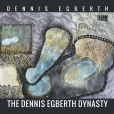
‘If you love the era in which electronic elements began to enter contemporary jazz, during the late ‘60s and ‘70s, you’ll LOVE what Sweden’s Dennis Egberth has been creating.
‘A blend of cosmic composition and chilled ambient and electronic sounds, with floating, irresistible, melodic bass lines, and long, modal build-ups that come alive with exploding lyricism.
‘The drummer is joined by Fredrik Ljungkvist on tenor sax and clarinet, Niklas Barnö on trumpet, Alexander Zethson on Wurlitzer, Linus Hillborg on electronics, and double bassist Joe Williamson.’
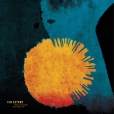
‘This improvised, telepathic collaboration between underground legend Rob Mazurek and modular-synth maestro Alberto Novello is a dizzying, psychedelic space ritual. A delicate weft of harmony and melody on trumpet — plus atmospheric bells and samples — rides a loose rhythmic, timbral magic carpet, way out into uncharted dimensions of sound.’
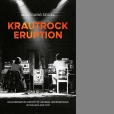
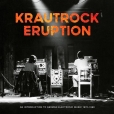
‘A rousing counter-narrative to the usual depictions of Krautrock, which paints a vivid picture of the old Federal Republic of Germany, with all its contradictions. What is now celebrated as Krautrock emerged in this environment, as an attempt to provide the revolution with a soundtrack. This is a vivid, fly-on-the-wall account of the squats, demos and first concerts of bands such as Cluster, Tangerine Dream and Ash Ra Tempel; also a judicious consideration of the influence of minimalist composers such as Steve Reich and Philip Glass, the origins of many Krautrock musicians in jazz, and the role of the synthesiser.’
Great reviews: ‘compelling,’ says Mojo; ‘passionate and revealing,’ says Record Collector.
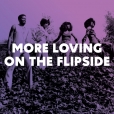
The long awaited follow-up to the superb compilation Loving On The Flipside, from ten years ago.
‘Contained within this anthology are some of the greatest soul ballads that go sweet with a beat. Most of these songs have never been compiled. Some have never been issued in any form. Some, like the Ledgends entry here, have been sampled to great success (in that case for Freddie Gibbs and Madlib’s Deeper). Some haven’t been sampled, but, like Herb Johnson’s entry, are patiently awaiting their day.’