

Your basket is empty


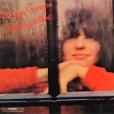
Sublimely beautiful, emotionally wide-open meditations on a wonky piano, exploring the same spare, enraptured equivocacy — getting lost in order to find or recover something — which you hear in Satie, Mompou, Cage, Duke, Monk, Masabumi Kikuchi…
‘Mashu leaves nowhere to hide, his playing is poised and coolly controlled, focusing on the beauty of simplicity and purity.
‘The lo-fidelity plays a part too, these recordings are clearly diaristic, caught close up, granular and beautifully blown out in places, adding a level of cohesion to a genuinely special suite of music that melts so effortlessly into the everyday.’
Very warmly recommended.
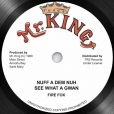
Angry, tear-up digi, both sides.
Two scorchers from 1989; blazing out of Annotto Bay, on the northeastern coast of JA.
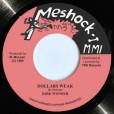
Upful, true-born-scuffler sing-jaying over a crisp, late-eighties Mansfield McClean rhythm.
Life is for living, but watch your step; ‘dollars weak but life is sweet’.
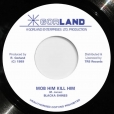
Grittily slice-of-life reasoning by Shines aka Mark Anthony James. This is the 1989 do-over, produced by Roland Gordon.

Lucid, engaging chat over deft, vibesing digi; produced by Roland Gordon in 1990.
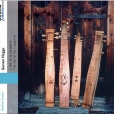
Invigorating, soulful music; warmly recommended.
The langeleik is a box zither with one melodic string, and three to eight accompaniment strings or drones. Gunvor was taught by her grandmother. Here she is joined occasionally by two violinists and a a second zither.
The compositions are mostly traditional and centuries-old. The drones draw you in deep; the melodies take flight. Rapturous waltzes, giddying dance music, aching laments, sublime evocations of nature…
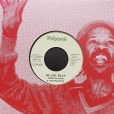
A reissue of the 7” issued by ABC in 1974.
Two songs co-written by McKinley Jackson and Lamont Dozier’s brother Reggie; produced by Jackson.
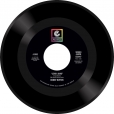
A double header from the Detroiter. Both highly-sought-after sides are reissued here for the first time.
Only previously issued as a UK promo 7”, Lend A Hand became one of the biggest ‘modern’ Northern Soul tracks of all-time after spins at venues like the Highland Room at the Blackpool Mecca, and Wigan Casino. The track was first championed by DJ Colin Curtis in 1974.
From 1969, Come See What’s Left Of Me is on the mellower side of Northern Soul, but still a dancer, and another classic. First ushered onto the Northern scene at the Stafford All-Nighters back in 1985.
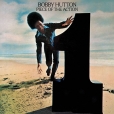
Gorgeous, open-hearted Detroit soul music from 1973.
Beautifully produced by Dee Ervin, with vocal accompaniments by Patti Hamilton from The Lovelites, Jean Plum and co.
Newly transferred from the original master tapes, and restored.
The CD adds the sides Hutton cut earlier for Blue Rock (where his collaborators included the genius likes of Donny Hathaway and Joshie Jo Armstead), and also his 7” follow-up to the LP: everything from 1969 to 1974 is here.
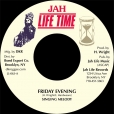
Upful, infectious, buzzing dancehall vibes, flirtatiously mashing in lines from Sunfire’s boogie classic Young, Free & Single, over the same murderously bumping digi rhythm as Frankie Wilmott’s I Won’t Give Up.
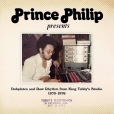
Prince Philip Presents
Dubplates And Raw Rhythm From King Tubby's Studio 1973-1976
Prince Philip / Digikiller
A stupendous haul of sound-system specials and inspired experiments conjured from some of the greatest reggae rhythms of all time, from the inner sanctum of King Tubby’s studio in the mid-seventies (where Philip Smart was second engineer).
Seething with lethal touches of Tubby; dotted with head-spinning walk-ons for Hugh Mundell, Johnny Clarke, Jacob Miller and co; steeped in the genius of young Augustus Pablo, Smart’s childhood friend.
A staggering turn-up. Utterly crucial.
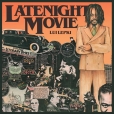
The first disc contains his 1982 LP — irresistible early dancehall — plus contemporaneous twelves sparring with the likes of Cornell Campbell and Barrington Levy. The second rounds up some Joe Gibbs heavy-hitters by other deejays and singers, from the same period.
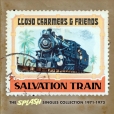
Lloyd Charmers productions, from 1968 into the early seventies: B.B. Seaton, The Gaylads, Ken Parker, U Roy, I Roy, Max Romeo… Alton Ellis’ killer version of It’s A Shame…
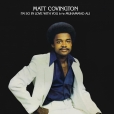
Ravishing two-step rare groove from 1983; sophisticated, swinging, and heartfelt.
Backed with a bustling, super-infectious, boogie-down tribute to Muhammad Ali. Hot like classic Fatback, and sure to rock the house.
Lovely stuff, both sides; nattily sleeved.
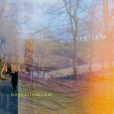
‘The latest wonderful album from Chester’s Carl M Knott, after a series of superb releases for labels such as Mortality Tables, Waxing Crescent Records, and Subexotic Records, including the marvellous Kullu from earlier this year.
‘Wonky acoustic guitar, broken electronics, and a warm, otherworldly space; at once strange and experimental, yet melodic and somehow comforting. Intimate and evocative, deeply personal; at once bucolic and bang-up-to-date, like Kraftwerk dreaming about sheep.’
“We enjoy spending time in the woods with our young children, creating stories about the ‘eye tree’. This tree, with thousands of eyes, watches over us and cares for us like family. We make fox medicine and cherish these blissful moments. The music reflects these times, seen through the colors of an old, fuzzy reel — orange, red, and yellow with blurred edges, like an old photo scorched by the sun.
“I feel a deep spiritual connection to the countryside; the hands of Arcadia cradle me when I feel sad. Some of the album was created during times of sadness when I felt death was close and the lines between worlds were blurred. This feeling — that anything can happen and that life is delicate and can be taken away in a flash — permeates the music.
“The song titles are stories and memories of my family, filled with hazy pinks, yellows, reds, and oranges.”
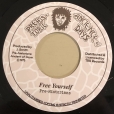
Terrific, heavyweight, nyabinghi roots from 1975, with Spear’s Swell Headed somewhere at the back of its mind.
Produced by Junior Smith, founding member of The Itals; also Elias Stewart; both from Savanna-la-Mar.
An outstanding revive. It’s a must.