




Your basket is empty


Hotly recommended by our friends Rush Hour in Amsterdam: ‘Starting off with the positively upbeat Umgababa by Kippie Moketsi and the infectious soul jazz of Pat Matshikiza’ s Dreams Are Wonderful (also featuring Kippie Moketsi) proceedings mellow out on side B, only to get extra heavy on the C-side with the sample-ready fusion groover Night Express off their crazy rare 1976 album of the same name and the irresistibly funky Blues for Yusef by Lionel Pillay, two of the many highlights on this action-packed thriller.’

‘With just four long, leisurely, percussion-drenched tracks, it’s a latin-jazz jam-band dream, with none other than Joe Henderson adding smoky tenor that ratchets up the intensity and mystery, and fusion avatars Stanley Clark and Lenny White super-charging the grooves. Think of it as a direct descendant of In A Silent Way, but with a lysergic twist and Miles’s tentative phrases replaced by Gasca’s brash, sassy blasts.’ (Jazzwise)
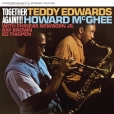
We love this LP; it’s an old favourite. You can hear Teddy adjusting the influences of Hawk and Bird to meet the challenge of Rollins and Coltrane. You can’t go wrong with any of his West Coast albums from 1960-67, for Pacific, Contemporary and Prestige. Classy, bluesy, no frills West Coast jazz; cultured but tasty and with-it. This one has the warmth, purposefulness and swing of a classic Blue Note. Phineas Newborn plays a blinder, too.
Here’s the Penguin Guide: ‘One of the best mainstream albums of its day… beautifully and almost effortlessly crafted.’
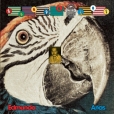
Fabulous big-band tropical jazz — cumbias, porros — from 1950s and 60s Colombia.
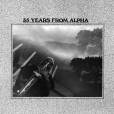
The long-awaited reissue of Deadly’s 1982 solo LP.
This great saxophonist played with everyone from The Abyssinians through Prince Far-I to Bob Marley. Designed as a showcase record for his unique talents, producer Adrian Sherwood assembled a crack team of his singers and players at the time for this set, including Style Scott, Bim Sherman, George Oban, Lizard Logan, Crucial Tony and Bonjo Iyabinghi Noah. Also dropping by is Headley’s fellow Alpha-alumnus Rico Rodriguez.
The CD includes two previously unreleased recordings.
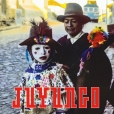
‘Since the 16th century, the Ecuadorian province of Esmeraldas has been home to a unique Afro-Indigenous culture originating in the integration of the Indigenous Chachi and Nigua peoples with African Maroon communities. Juyungo documents significant Esmeraldan artists and bands playing the Afro-Ecuadorian folklore of the province, as well as including some older field recordings. Based mostly on the marimba, whose origins lie partly in the African balafon, partly in Indigenous percussion instruments, the music is laced with call and response chants, ambient insect and bird noise, the filigree finger-styles of the Andean guitar tradition and the panpipes of the mountains. This is resonant insider roots music at its headiest — the mystic revelation of Esmeraldas, gully deep and lustral.’ Francis Gooding, The Wire.
The fifth in our series of LPs compiling classic music from Ecuador. Customary Honest Jons runnings: a beautiful gatefold sleeve; superior pressing, with vivid, intimate sound; full-size, sixteen-page booklet, in colour throughout, with detailed, fascinating, bi-lingual notes, and stunning photographs.
The music is transfixing, magical; not like anything else. From start to finish, this album is continuously, profoundly immersive; a kind of journeying, trippy meditation about slavery and cultural resistance, identity and mix, places and spaces, futures and pasts. It’s inscrutable to net-surfing, algorithms, Shuffle. But for a taste try the insurgent marimba roller Agua Largo, jet-propelled by Rosa Huila’s rapturous blend of African spiritualist and Christian chant. ‘Healing music,’ Zakia called it on Gilles Peterson’s BBC show recently. And the ravishing pasillo Kasilla Shungulla — ‘calm your heart’ in the Quichua language — a duet between the Peruvian master-guitarist Raúl García Zárate and viola da gamba by Juan Luis Restrepo from Medellin, recorded in a baroque church in Buzbanza, Colombia.
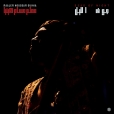
‘Son of Maalem Mahmoud Guinia, Maalem Houssam Guinia is one of Morocco’s most exciting young Gnawa masters.
‘Dead of Night was recorded live on the night of 3rd January 2022, in a relaxed session in a Casablanca residence. It captures Houssam at his most natural, singing and playing the Gnawa songs that have been with him since his birth, completely solo and free without percussion or backing vocals. Houssam says these are the songs he knows best; the music his father would play and sing late into the night in their home when he was an infant.
‘Raw, deep, spiritual Gnawa in its purest form.’
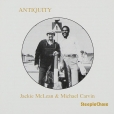
A scorcher.
Rawly emotional, politically charged drums-saxophone duets, with a rough-and-ready, carnivalesque, spirited energy. McLean is in full flight.
The closer Deicomahleeah has been reissued by both Floating Points and Jazzman, in the last few years.
Carvin is the percussionist on Expansions; the drummer on Pharoah’s Elevation and Doug Carn’s Infant Eyes.
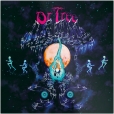
The legendary jazz-funk album recorded in Auckland, New Zealand, in 1971, mapping ‘the same territory as such acolytes of Miles Davis’s late- 60s explorations as Return To Forever, Weather Report, and Tony Williams Lifetime. Experimental studio techniques combine with blazing artistry, juxtapositioning trippy electronic textures and improvised jazz, creating a hypnotic kaleidoscope of sound.’
Lovely job as usual by Wallenbink: heavyweight tip-on gatefold sleeve featuring archival photographs; sound restoration and remastering at Abbey Road (including previously unreleased recordings and outtakes); 180g vinyl. A limited edition of six hundred: half for NZ; just three hundred copies for the rest of the world.
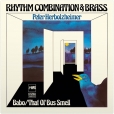
‘The Romanian trombonist and composer Peter Herbolzheimer led one of the most hard-swinging, innovative, successful European big bands in history. Lineups included Art Farmer, Herb Geller, Dieter Reith, Sabu Martinez… This 45 presents two brassy, funky highlights from his 1973 album Wide Open.’
AAA transfers from the mastertapes; handsomely sleeved.
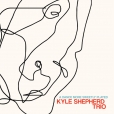
Radiant, probing piano-trio-jazz by this celebrated ensemble, reaching out in all directions from bluesy, funky, South African roots.
‘It just came down to playing some tunes that we like and we can flow with, so that we can be inspired and express ourselves in a very natural organic way,’ says Kyle. ‘We walked away from the from the studio feeling like – you know, we actually really enjoyed playing this record!
‘With this record, I felt less attached to any sort of predetermined concepts except that we would play some music that I wrote that we like – a selection of things that we like to play. It felt like a bit of a tonic – every musician gets a chance to breathe through the music, and the music just flows and moves as organically as we could make it.’
Ten Shepherd originals, plus a reading of Massive Attack’s Teardrop and a deconstructed take on Journey’s Don’t Stop Believing.
The album’s title nods to William Kentridge, with whom Shepherd collaborated on Waiting For Sybil.
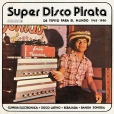
Bangers drawn from the bootleg compilation LPs — ‘pirata’ — which were all the rage in 1980s Mexico City, The hottest, rarest hits from Peru, Ecuador, Colombia, and beyond — edited, tweaked, EQ-manipulated and pitched-down, to suit the sonideros running the city’s mobile soundsystems.
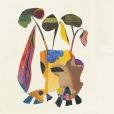
‘Their first collaborative recording: four beautifully recorded excursions, threading crystalline drum-work through a sparkling haze of guitars and electronics.
‘The opener Dessus begins with Reidy’s distinctive just-intonation guitar figures, shimmering over a delicate substratum of Befli’s brushwork and bass drum accents. As in all of Reidy’s recent work, the guitarism evades cliché via unfamiliar tuning and electronic processing. Hanging almost inaudibly in the background for much of the piece, a rush of synthetic tones surges into the foreground to end it. Oben is built from kinetic patterns of picked guitar arpeggios, locking into irregular grooves with Belfi’s drums, which move from elegant rolls and cymbal patter to driving closed hi-hats and explosive rock interjections. Around the traditional instruments and across the stereo field, electronic sounds swarm and swirl, fizzing and popping in a sun-drenched soundscape that at points suggests both vintage analogue synth destruction and glitching harmonies. Alto begins in similar territory but turns proceedings up a notch, eventually settling into a propulsive 6/8 groove of shifting drum accents, manically strummed 12 string acoustic, and burbling synth chords.
‘The B side is dedicated to the fifteen-minute Up, where the strategies adopted on the other pieces are put in the service of a more relaxed, slowly unfolding epic. Anchored by a steady pulse throughout, the piece combines chiming guitars, dubbed-out bass lines and constantly adjusted percussive details into a complex flux of sound. Change is at once so subtle and so ever-present that, at any given moment, the listener can never be entirely sure quite how they got there.’