Your basket is empty

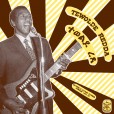
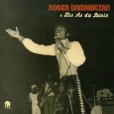
Drawn from his six monumental singles for the Philips, Amha and Yared labels between 1970-73, revolutionising traditional Eritrean music via the innovations of amplified kirar, electric guitar and horns. Thick, deep declarations and considerations of love over a mixture of sombre and joyous tunes (with the hand-clapped beat often shifting into double-time near the end).
Co-released with Mitmitta Musika in Addis Ababa; handsomely presented in a tip-on sleeve, with extensive liner notes, translations and exclusive photos.
Fab.
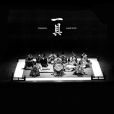
‘Japanese classical music and dance, traditionally performed by families of musicians linked to the ancient Imperial court, and later passed down in Buddhist temple ceremonies and Shinto shrines, Gagaku is the oldest of the Japanese performing arts, with a history more than a thousand years old. Founder and director of the Reigakusha ensemble, Shiba Sukeyasu descends from the Koma clan, dating back to the end of the 10th century. The recordings partly reflect repertoires borrowed from Chinese music between the 5th and 9th centuries.
‘The eternal breath of the flutes (ryuteki and hichiriki) creates a sort of suspension of time, together with the hypnotic and hallucinatory atmosphere of the mouth organs (shō). The meditative tone of the string instruments (bika and koto) that punctuate the voids and silences is impressive, as is the enigmatic percussion section, with the tolling of the gong (shōko) and the calibrated beats of the drums (taiko and kakko).’
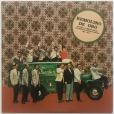
Tear-up cumbias from this mighty label’s treasure-rooms, handsomely sleeved.
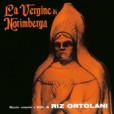
Taut horror soundtrack from 1963: dramatically orchestral, with jazzy intervals.
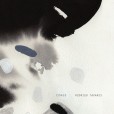
The guitarist’s debut album, inspired by a road trip through Brazil, taking in a Sun City Girls show in a remote former gay club, and a visit to a spiritual healer. He leads upright bass, drums, vibraphone, saxophone and percussion.
‘I decided that I would try to forge, in my own way, from my references, from my universe and from the collective intelligence and sensibility that surrounded me, fundamental melodies, repetitive, minimal, hypnotic rhythmic and harmonic patterns that would be crossed by some sort of improvisation, something that referred to a reality that existed before my individual history, that linked to the life of other places and other times.’
‘unique and beguiling…evocative and profound… music of rare depth’ (The Wire).
‘taps into the common ground between meditative, ambient and trance musics… delightful’
(Chris May, All About Jazz).
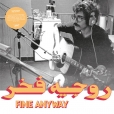
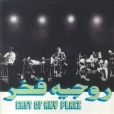
Moody, elusively different, singer-songwriter folk, recorded in Beirut in the late-1970s by this treasured secret of the Lebanese underground, collaborator of Issam Hajali and Fairuz.
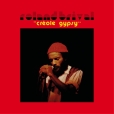
‘Musician, poet and painter Roland Brival’s 1980 album is a lost classic of Caribbean spiritual jazz. Recorded with a group of Martinique’s top musicians, and combining the bèlè percussion traditions of the island with free flowing saxophone, rhodes flourishes and languorous bass, the album was rejected by Roland’s label of the time, and was ultimately self released in miniscule quantities to a small local audience. Themes of créole identity and colonial injustice combined with universal ideas of love and longing sung in Créole, English and French sound like an Antillean answer to Gary Bartz and Jon Lucien, underpinned with the insistent rhythms of the ti bois percussion. Long unheralded in the English-speaking world, Créole Gypsy is a key piece of the jigsaw of Caribbean music.’
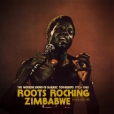
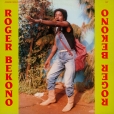
An insurgent blend of rock, rumba, soul and traditional grooves.
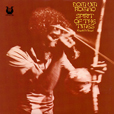
Including never-before-released recordings by legends like Thomas Mapfumo and Oliver
Mtukudzi, amongst many others.
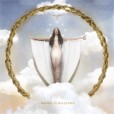
Dazzling, smash-hit, fully-fledged blend of flamenco, reggaeton and post-Timbaland r&b, with a Middle Eastern flavour to the singing. It’s the re-telling of a medieval story about a woman locked in a tower by her husband, and her escape. There’s even an Arthur Russell sample.
Lost in the Christmas rush here, but so nice we’re serving it twice.
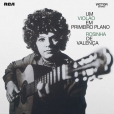
From 1971, A Guitar in the Foreground is Rosinha’s best record. Classic, chilled Bossa shot through with her scintillating guitar-playing.
Check this version of Summertime for her instrumental virtuosity. (Tyler, the Creator burglarised it for Tomorrow, on Chromakopia.)
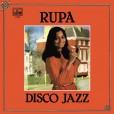
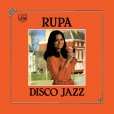
‘Barely disco and hardly jazz, Rupa Biswas’ 1982 LP is the halfway point between Bollywood and Balearic. Tracked in Calgary’s Living Room Studios with a crack team of Indian and Canadian studio rats alike, Disco Jazz is a perfect fusion of East and West; sarod and synthesizer intricately weaving around one another for thirty-seven transcendent minutes, culminating in the viral hit Aaj Shanibar.’