

Your basket is empty

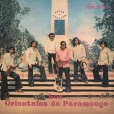
Wild, psychedelic, salsa-spiced, Peruvian cumbia.
In the late 1960s, the coastal city of Paramonga, just a three-hour drive north of Lima, gave rise to a vibrant music scene shaped by surf, rockabilly, and tropical sounds. Blending cumbia with guaracha, salsa, and guaguancó, and emerging styles like chicha —with their psychedelic guitars, Fender amplifiers, hot percussion, and wah-wah pedals — Los Orientales would shape the musical identity of the region.
Drawing from the LPs Con Sabor Tropical in 1972 and Tremendo Ritmo the following year, plus numerous 45s, this is a comprehensive review of the sound and spirit of Los Orientales de Paramonga at their peak.
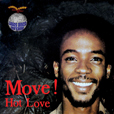
Storming vintage boogie from the Afrodisia studio, loose and thunderous, with killer freaky effects and old-school rapping. You can hear Eno’s Edo roots in Papa French’s scorching horns chart. Leroy Burgess goes to Lagos…
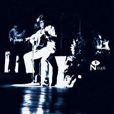
Consider it a Nicaraguan take on Herbie’s Mwandishi — this psychedelic swirl of Latin jazz and pan-American funk, marrying Lovo’s out guitarism with the fine percussion-work of Jose ‘Chepito’ Areas, from Santana.
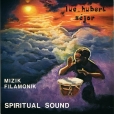
Luminous, intensely committed, magical spirit music from late-seventies Guadeloupe, rooted in brilliant gokwa drumming.
It opens with two instrumentals — Penn é Plézi was the theme tune for Radio Guadeloupe’s funeral notices from 1980 to 1992 — before a call for cultural realignment. Then a three-part suite: Primyé Voyaj evokes the appalling tribulation of Africans deported as slaves to Guadeloupe; Dézyèm Voyaj addresses the Bumidom programme driving young Guadeloupeans towards the mirage of prosperity in sixties France; Twazyèm Voyaj closes the cycle with the emigrants’ return from Europe.
Deep, fabulous music.
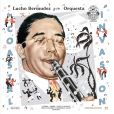
Brassy, infectious Afro-Amerindian cumbia, porro, gaita, and mapalé from Colombia’s Caribbean coast, which injected a modern, jazzy, big-band sound into regional Afro-Colombian traditions, and took the country by storm.
The Orquesta Del Caribe, recorded in Medellin, 1946-1961: a legs-eleven blaring trumpets, soaring saxophones, meandering clarinets, rattling and pounding percussion, plus singer Matilde Diaz, led by the maestro Bermudez, widely considered Colombia’s most influential composer of all time.
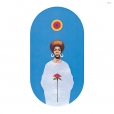
‘With just four long, leisurely, percussion-drenched tracks, it’s a latin-jazz jam-band dream, with none other than Joe Henderson adding smoky tenor that ratchets up the intensity and mystery, and fusion avatars Stanley Clark and Lenny White super-charging the grooves. Think of it as a direct descendant of In A Silent Way, but with a lysergic twist and Miles’s tentative phrases replaced by Gasca’s brash, sassy blasts.’ (Jazzwise)
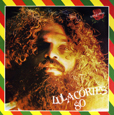
From 1980, Recife, Brazil: ‘crazed ethno folkrock; magical, gentle, jungle folk psych zones; hard-hitting, coke-dusted fuzz rock; insane mutant disco dancefloor groove; tweaked Americana; acid vocal raga trance.’
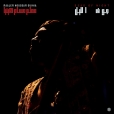
‘Son of Maalem Mahmoud Guinia, Maalem Houssam Guinia is one of Morocco’s most exciting young Gnawa masters.
‘Dead of Night was recorded live on the night of 3rd January 2022, in a relaxed session in a Casablanca residence. It captures Houssam at his most natural, singing and playing the Gnawa songs that have been with him since his birth, completely solo and free without percussion or backing vocals. Houssam says these are the songs he knows best; the music his father would play and sing late into the night in their home when he was an infant.
‘Raw, deep, spiritual Gnawa in its purest form.’
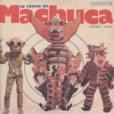
The darkest and most amazing of Rafael Machuca’s productions — dubbed ‘the B-Movies of Colombian music’ for their proliferation of ad hoc lineups and crazy artwork — fusing local and African rhythms with the swirling organs and psychedelic guitars of underground rock, at the birth of Champeta.
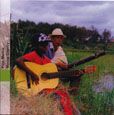
Various songs — and valiha zither, made from a bamboo trunk, the sodina flute, the angorodao accordion, the kabosy lute, and the amponga tany, a ground zither made of plant rope, wood, and shit.
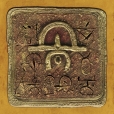
Bringing together two generations of South African guitar mastery: Madala Kunene, ‘King of the Zulu Guitar’, now in his mid-seventies, and his protege Sibusile Xaba, whose playing interweaves multiple South African guitar lineages in an original, spiritualised fusion.
Recorded in Zululand in the town of Utrecht, at a cultural centre called Kwantu Village. “It’s such a broad word, but the elders teach us that Ntu is basically an energy, almost chi, an energy, a force that all living beings have within them. It’s a living energy, so kwaNTU is almost the place of this energy.”
‘A beautifully expansive collection of interweaving, finger-picked melody, husky vocalisations from elder Kunene and thrumming hand percussion’ (The Guardian).

The vocalist of Salah Ragab’s Cairo Jazz Band; recorded in 1979.
A one-of-a-kind mix of funk, disco, Latin and jazz, steeped in traditional and contemporary Egyptian styles, featuring compositions and production-work by Hany Shenoda, from Al Massrieen.
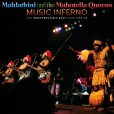
Sixteen newly-discovered recordings from the Incredible Beat Of Soweto tour of the UK in 1988-89, including smash hits like Thokozile, Lilizela, Kazet, and the rest.
Bees-knees, overproof-vibes mbaqanga.