
Your basket is empty


Ravishingly beautiful, achingly precious songs and instrumentals, sumptuously presented: the Royal Court Orchestra in 1906 through to a hauntingly soulful Hafez setting by Moluk Zarrabi of Kashan, from 1933.
‘a terrific soca compilation… a vital contemporary follow-up to London Is the Place for Me’, Village Voice; ‘*****, Compilation Of The Month’, Touch; ‘chaotic and compelling… an ace selection’, Time Out.
‘So it is that Honest Jon’s has (again) unearthed an episode of black music history in Britain: these are tough cuts — in no way easy listening, but absolutely essential’ (**** The Observer).

Modern Nigerian music starts here.
‘*****’, Mojo; ‘these songs leap out of the past like madeleines soaked in palm wine’, The Observer; ‘impeccably curated and packaged’, The Wire.
‘*****’, The Times, Independent On Sunday, Daily Telegraph, What’s On, Evening Standard, The Independent. ‘Marvellous pop — catchy, fun, young, effortless’, The Times; ‘one of the delights of the age’, Songlines.
‘an exquisitely poignant, evocative record’, Daily Telegraph; ‘wonderful… album of the year’, Sunday Times; ‘simply a classic album. Music by the people, for the people,’ The Voice.

London Is The Place For Me
2: Calypso And Kwela, Highlife And Jazz From Young Black London
Honest Jon's Records
‘superlative’, Mojo; ‘sensational’, The Observer; ‘hugely evocative and poignant’, Daily Telegraph; ‘*****’ The Times, Metro; ‘sheer joy from start to finish’, Sunday Telegraph.

London Is The Place For Me
5 And 6: Afro-Cubism, Calypso, Highlife, Mento, Jazz
Honest Jon's Records
More open-hearted, bitter-sweet, mash-up postcards to the here and now, from young black London.
Proper Brit Pop.



Still deeper forays into the musical landscape of the Windrush generation.
A dazzling range of calypso, mento, joropo, steelband, palm-wine and r’n'b. Expert revivals of stringband music, from way back, alongside proto-Afro-funk.
An uproarious selection of songs about the H-Bomb and modern phones, prostitution and Haile Selassie, mid-life crisis and the London Underground, racism and solidarity, the Highway Code and a 100% West Indian Royal Wedding.
For example some frantic British-Guianan joropo music-hall about Eatwell Brown from Clapham, who starts out biting off a piece of his mother-in-law’s face at a party, then devours everything in his path… a chunk of Brixton Prison, a Union Jack, a policeman’s uniform. Or Marie Bryant — collaborator of Lester Young and Duke Ellington — taking time off from skewering the South African PM Daniel Malan at her West End revue, to contribute some arch, swinging filth about uber-genitalia.
Superior sound, courtesy of Abbey Road, D&M and Pallas; lovely gatefold sleeve; full-size booklet, with full notes, and fabulous previously-unseen photographs, including a set from the family archive of Russ Henderson (who led the first, impromptu Notting Hill Carnival march, in 1966).
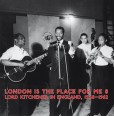
The genius of Lord Kitchener has been the mainstay of our series.
In this volume devoted to his post-war London recordings, Kitch plays his many roles with signature aplomb and poised subtlety.
First there is the hooligan chantwell, up for anything in the hurly-burly of carnival proper; and then the casual reporter, firing off postcards to Trinidad about taxis, flashy booze, fast women and football in Manchester, with homesickness and grievance nestled just behind the optimism, pride and tentative senses of belonging.
There is the bearer of news from home, in detailed accounts of murders, tales of stupid local coppers, and reminiscences about food and particular mango trees; the political thinker, considering racism and Africa; and the diarist, with his vivid tales of infidelity, and disclosure of the break-up of his marriage, and his desire to get away.
One foot in the UK, the other in Trinidad; but the man himself somewhere in-between. Kitch In The Jungle, nobody around. A ‘diasporic explorer’; a key twentieth-century witness, alongside such hallowed figures as Samuel Selvon and Edward Kamau Braithwaite.
Though in frustration Kitch would sometimes take over double-bass duties himself, the musicianship of Rupert Nurse, Fitzroy Coleman and co is top-notch. The original glorious sound is down to Denys Preston, recording for Melodisc, often at Abbey Road Studios (where we transferred and restored the 78s compiled here).
Presented in a lovely gatefold sleeve, with a full-size booklet containing superb, specially-commissioned sleevenotes by Kitch biographer Anthony Joseph, and fabulous, previously-unseen photographs.
London Is The Place For Me
7 And 8: Calypso, Palm-Wine, Mento, Joropo, String Band; Kitch In England
Honest Jon's Records
The latest volumes in this much-loved, highly-acclaimed series presenting the music of the Windrush milieu: the post-war, London recordings of West Indians and West Africans, in the first wave of modern migration to Britain.
‘One of the delights of the age’ (Songlines).
’Superlative’ (Mojo); ’superlative’ (Independent); ’sensational’ (Observer).
‘Hugely evocative and poignant’ (Daily Telegraph); ’sheer joy from start to finish’ (Sunday Telegraph); ‘a witty and joyous testament’ (Guardian).
‘Impeccably curated and packaged’ (Wire).
***** Mojo, ***** Times, ***** Independent, ***** Daily Telegraph, ***** Evening Standard, ***** Metro.
Presented as a luxurious mini-book — all paper, no plastic — with suspended card sleeves for the discs. Forty pages of fabulous, previously-unseen photos and full notes, including a terrific, specially-commissioned essay by Kitch biographer Anthony Joseph.

Haunting, ravishing blends of western art song, blues and jazz with traditional and classical Japanese music. Wonderful.

‘Deep and haunting; a dense tapestry of layered percussion, time-warped tape loops, and spiralling drumgita figures, all underpinned by hypnotic improvisations from Brazilian pianist Rafael Dos Santos. Privately pressed in 1982, it is both ecstatic and unsettling, a landmark recording in black British experimental music.’
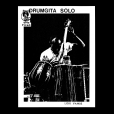
A reissue of Vambe’s privately pressed album from 1982.
‘Occasionally, you find music outside the commercial mainstream, outside of everything – the music of visionaries, eccentrics, inventors, loners. Moondog, Daphne Oram, Harry Partch are from this mould. And so too is Lori Vambe.
‘A self-taught drummer, inventor, and sonic experimentalist, who moved from Harare to London in 1959, Vambe is a unique figure in British music. The creator of his own instrument, the drumgita (pronounced ‘drum-guitar’) or string-drum, Vambe intended to create a kind of music that had never been made in order to pursue access to the fourth dimension. The album plays with time, mixing hypnotic, trance-like drumgita pieces with the same segments played backwards. You can hear echoes of African drumming traditions, minimalist repetition, and tape-manipulated musique concrète— but ultimately, the album defies genre. It is a solitary voyage, spiritual and futuristic.’