
Your basket is empty

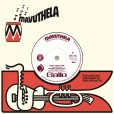
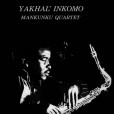
Sowetan soul jazz — ‘marabi jjive’ — originally out in 1972, by the greatest of all mbaqanga outfits, and the house band of Gallo Africa’s Mavuthela Music subsidiary from its launch in 1964 right through to 1977. Featuring Teaspoon Ndelu, West Nkosi and Michael Xaba on saxophones, and Marks Mankwane on lead guitar.
Appetisingly this is the first of seven limited-edition singles drawn by Umsakazo from the golden age of South African township jive. Restored from the original master in Gallo’s Johannesburg tape vault; spiffily sleeved and labelled with the original artwork, with notes and recording details printed on the back.

A stunning survey of the 1970s heyday of this great Japanese singer and countercultural icon.
Deep-indigo, dead-of-night enka, folk and blues, inhaling Billie Holiday and Nina Simone down to the bone.
A traditional waltz abuts Nico-style incantation; defamiliarised versions of Oscar Brown Jr and Bessie Smith collide with big-band experiments alongside Shuji Terayama; a sitar-led psychedelic wig-out runs into a killer excursion in modal, spiritual jazz.
Existentialism and noir, mystery and allure, hurt and hauteur.
With excellent notes by Alan Cummings and the fabulous photographs of Hitoshi Jin Tamura.
Hotly recommended.
This is terrific.
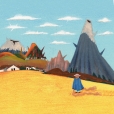
Brimming with saudade, an atmospheric, engrossing, organic blend of the gorgeous folk music of northern Ecuador’s indigenous communities, and tentative, crafted, soulful electronica.
‘Mala Fama is a Kichwa sound-artist from Ibarra, Ecuador, inhabiting — and creating — multiple worlds at once, while being rooted in Indigenous pride and power. Jichushka is a Kichwa word meaning lonely, or abandoned. Here, grief is re-cast as a pathway to liberation.
‘The album was recorded between 2016-2022. Home studio sessions facilitated close collaboration with a network of artists drawn from Andean musical lineages such as marimba, vallenato, and cumbia — including Afro-Ecuadorian group Duo Anjoa, vocalist Catalina Ortiz from coastal Esmeraldas, Ibarra-based multi-instrumentalist Luis Lema, and Quixosis. The album builds on peaceful ambient compositions as much as heavy sequencing, inviting melancholic remembrances of times and spaces that no longer exist.’
Warmly recommended. Like nothing else. Check it out!
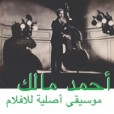
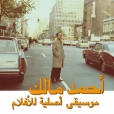
Atmospheric, swinging Algerian soundtrack music from the 1970s, swirling together jazz, psych, funk and muzak, with tasty North African, Arab flavours. An eight-page full-size booklet contains rare photos, an interview with the artist from 1978, and a brief introduction to Algerian cinema.
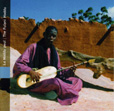
Deep, rough, hypnotic recordings of the Fulani lute (and singing), made by this inspirational French label around Douentza and Bamako, Mali, between 2002-2004.
James Brown and Barry White mixed in with classical Arabic and raï music, and a little house and techno…featuring a knockout version of Shaft.
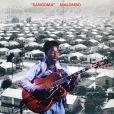
‘In 1978, SA guitar genius Tabane stood at a crossroads. Fresh from three years’ touring in the United States, where he graced the Newport Jazz Festival alongside Miles, Herbie, Pharoah and co, and with a newly signed international distribution deal, he harnessed this momentum to a new, larger band setting, capturing a rare intensity.
‘Sangoma — ‘spiritual healer — bridges contradictions: expansive yet intimate, celebratory yet haunted by exile and return. Tracks like Sangoma, Hi Congo and Keya Bereka are not simply recordings but living testaments, songs that would remain in Tabane’s repertoire for decades. Unlike the moody, immersive character of much of his work, here Tabane is on the move — urgent, restless, uncontainable. ‘Maskanta wa tsamaya’, ‘ass-kicking’.
‘More than four decades on, Sangoma is both an historical document and a timeless invocation. A landmark in SA musical history. From his home in Mamelodi to the world and back again, Tabane’s spiritual healing endures — raw, electric, and unbowed.’
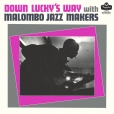
‘Malombo music is an indigenous kind of music,’ says Lucky Ranku. ‘If you listen to it, you can feel that it can heal you, if you’ve got something wrong. It’s healing music.’
Lucky was one of the greatest African guitarists of his generation. The deep and hypnotic Down Lucky’s Way was the Jazz Makers’ third album. Recorded in 1969, it was the first to feature additional instruments, and the first to feature Abbey Cindi on soprano saxophone as well as flute. But more than anything else, Down Lucky’s Way is a transfixing showcase for Lucky Ranku’s sui generis guitar virtuosity.
Quite different from their previous recordings, the album shifted the Jazz Makers’ sound toward mesmerising, extended compositions, layered by organ bass and guitar overdubs. Of all the Malombo Jazz Makers recordings, Down Lucky’s Way is the deepest of mood, and the richest of vision.
The most rare, too: it may not ever have been properly issued. Original copies are outrageously scarce — only a few are known among collectors. Prior to this reissue, Lucky was unaware it had ever been released, and had never seen a copy.
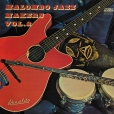
Recorded a year after the debut, continuing the earthy flow of Malombo’s music. The two albums have since been recognised as unique landmarks of South African jazz. Alongside full original artwork, both albums feature a new interview with Julian Bahula.
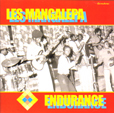
Scintillating East African dance music, from seventies Nairobi. The band’s name mangles ‘marquez le pas’, meaning ‘mark time’: sure enough, the beat is irresistible.

Sublimely convulsive Shangaan electro-gospel by a pastor from Giyani, Limpopo, recorded in 2008, brimming with aching, plaintive, mournful spirituality. However fractured, multi-faceted and fresh the music comes across — that signature whistle and sampled marimba, a little wonky high-life, rough, skittering drum patterns, no bass — the surging vocal lines and harmonies are unmistakably rooted in traditional South African music.
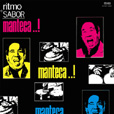
The business — pure, heavy, deep Afro Cuban funk grooves. 1970s bass-driven percussion delirium. Lazaro Pla aka Manteca alongside Nelson ‘El Flaco’ Pardon on timbales and Carlos Potato Valdes on congas.
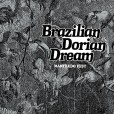
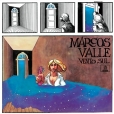
Ace Brazilian funk from 1977, with a flagrant dose of the Herbies.
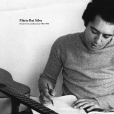
Lovely, rootsy, melancholic, multifarious music from Angola. Check the sublime, chugging proto-house of Kazum-zum-zum, to start, with its twist of Afrobeat; then the hypnotic Fourth World marimba of Kizomba Kya Kisanji; then the expressive soul of Dembita, flowering out of Baden Powell… Warmly recommended.
A stunning new production by the Rhythm And Sound ace, drawn from his recording sessions with a griot clan of Sabar drummers from Kaolack, led by Bakane Seck, with guest players and vocalists.

A next-level three-tracker, intense and roiling, featuring a mesmeric six-minute instrumental, with Thierno Sarr grooving out on the top string of his bass, adding an elusive Manding flavour to the deep Mbalax mix.

A traditional Jola rhythm, with tuned, talking and kit drums swarming across scraps of guitar and the Mboups singing; then a more deeply dug-in, spaced-out funk, spun from a Serer rhythm. With full instrumentals.
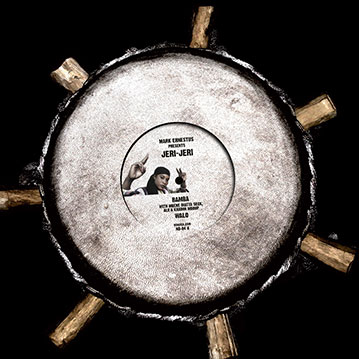
Rock-steady, slow-burning, hard funk, a kind of fatback Mbalax, in no mood to be messed with, with full vocal and instrumental versions; plus two vivid sketches, talking drums to the fore.
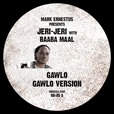
A rolling, resplendent tribute to griot life — ‘gawlo’, Fula for ‘griot’ — spear-headed by none other than Baaba Maal. Expressive interjections by a trio of talking drums are especially lucid on the instrumental.