

Your basket is empty

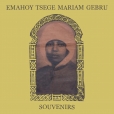
‘Emahoy recorded these songs direct to cassette tape in her family’s home in Addis Ababa in the late 70s. She carried the master tapes with her when she entered permanent exile in Jerusalem in 1985. They stayed in her tiny cell at the Church of Kidane Mehret until her passing, in March 2023, aged 99.
‘I was on my way to see Emahoy and talk about the release of these songs when she passed away. While helping her family clear and pack her belongings, we found the original master tapes, from which this album is produced. Intimate, close, home recordings. You can hear Emahoy’s finger pressing down the stop button, the creak of her piano bench, birds out the window.
‘These are songs of mourning and exile. The Ethiopian Revolution of 1974 had changed her country so radically that Emahoy sang of missing home even though she was still physically in the country.
‘Emahoy wanted badly for these songs to be heard. She was proud of them, and even produced a tiny run of private press CDs sold at the gift shop of the monastery in 2013. But her family and those closest to her advised her against the release, worried about the intense backlash she’d receive for singing as a nun in the conservative Orthodox church.
‘Finally, these recordings get the release they deserve. We hope to do justice to the music and Emahoy’s legacy with this release — packaged in a reflective gold sleeve, with a sixteen-page booklet featuring lyric translations and photos of Emahoy’s life in the monastery in Jerusalem.’
(Cyrus, Mississippi Records).
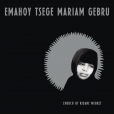
Her 1972 private-press LP, plus two unreleased piano recordings, mapping out a deeply personal take on Ethiopian Church Music.
Here is Emahoy’s most directly sacred and spiritual music-making — and some of her most moving — self-recorded in churches across Jerusalem, on piano, harmonium, and pipe organ.
With extensive biographical notes by Thomas Feng. Beautifully remastered. Old school tip-on jacket with silver-foil stamping. Black or clear vinyl.
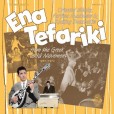
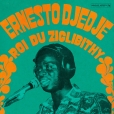
‘Returning from Paris home to Côte d‘Ivoire in 1974, Ernesto began looking for like-minded musicians to form the mighty Ziglibithiens. Diabo Steck (drums), Bamba Yang (keyboards & guitar), Léon Sina (guitar) and Assalé Best (saxophone) would become the core of the group and together with Ernesto they began thinking of ways of combining the rhythms and chants of the Bété people together with makossa, funk and disco. He called his experiment Ziglibithy and his first two albums — recorded at the EMI studios in 1977 in Lagos and released on the Badmos label — took West Africa by storm, turning Ernesto Djédjé into an icon overnight, and one of the all-time legends of African music.
‘The song Zighlibitiens, brought to Colombia by an aeronautical mechanic in the early 1980, would become a huge hit on the Caribbean Coast. Renamed El Tigre by locals soundsystem operators, it attained holy-grail status in Barranquilla and Cartagena. Setting fire to innumerable local parties, it has become one of the most sought-after albums in that part of the world. And so while Ziglibithy has mostly disappeared from the airwaves of its country of birth, on the other side of the Atlantic, its fire continues to shine bright.’

This was the first in our series of Shangaan homages.
A metronomic, clicking beat to drive you crazy; a kind of Motorik lash — dubwise, midrange; moody strings.
Wry, driving, one-of-a-kind genius.

Anatolian funk rock revive.
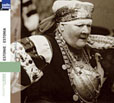
From the south-east corner, with uneasy Estonian identity, and ties to Russia via the Orthodox Church — striking singing about everything, in different lineups, with recordings from the 1930s till up to date.
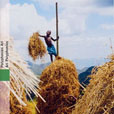
Dramatic, intricate singing from South West Ethiopia — non-verbal, the voice turned inside out, used like an instrument — sometimes with lyre, riffing till death do us part, clapping, flutes from space, bells, and other accompaniments.
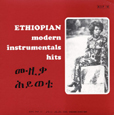
Vinyl selections from CD Volumes 1, 4 and 8… featuring Mulatu Astatke.

Music from the Amha label run by Amha Ashete, driving force of modern Ethiopian music.
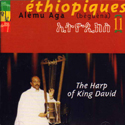
With virtuoso self-accompaniment on the beguena — an oversize ten-string lyre, the oldest instrument played in Ethiopia: religious songs as well as traditional fables, folk tales and poems.
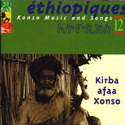
The music of the Konso — a tribe from the Sudanese border country — to do with daily chores, sacred or ritual matters, and entertainment. Flutes, bells, harps, horns, xylophones, drums.
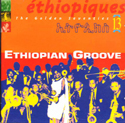
Another survey of the golden age of modern Ethiopian dance music — bound up with the production of vinyl records — between 1969 and 1978.
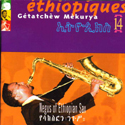
Starting in the early fifties, long before Ayler and Ornette, Mekurya’s stroke of genius was to give improvisatory voice on his saxophone to the ‘shellela’ singing style — epic, harsh, war-like.
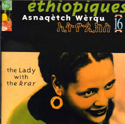
Self-taught on krar-lyre, favourite instrument of the azmari; and — alternately poignant and sarcastic — the last great singer, story-teller and free-thinker to carry on their tradition of poetic cut-and-thrust.
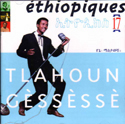
For Ethiopians, their greatest singer of all time; with music arranged by Mulatu Astatqe for the Army Band, the Exhibition Band, the Police Orchestra, the Bodyguard Band.
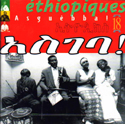
The sequel to Volume 2 in this series, and featuring many of the same singers, accompanied by the messenqo (one-string fiddle), the krar lyre, the kebero drum and the accordion.
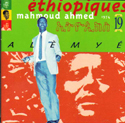
Alemye, from 1974.
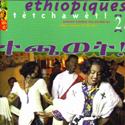
The azmaris were originally wandering minstrels, roaming the Abyssinian countryside. These varied snapshots of the musical life of Addis Ababa in the 1990s are offered as a kind of homage to them.
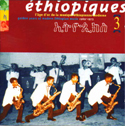
Sublimely tilted like Sun Ra, rocking like James Brown at the Apollo, the tracks here by police bands are a reminder that Ethiopia at the time had no independent modern groups.