

Your basket is empty

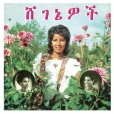
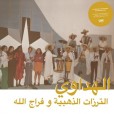
‘Dizzying close harmonies and indestructible grooves on this lost classic from Ethiopia’s Golden Age.
‘Raised in the bustling cosmopolitan milieu of late-empire Addis Ababa, two young women released one single and a full-length LP in 1976, before disappearing from the music business entirely. Originally released on Kaifa, the label responsible for some of the heaviest and funkiest Ethiopian records of all time, Beauties was a hit, selling out in a few days. But it came out at the beginning of two decades of darkness and oppression in Ethiopia, and this is the first full reissue of this overlooked classic.
‘Beauties is at once totally unique and an amalgamation of all that came before it during Ethiopia’s explosive two decades of creativity in the 60s and 70s. Fans of Ethio-jazz will hear Mulatu in the dark, minor-key piano runs, turning in on themselves on songs like Amlak Abet Abet and Metche Neow. Interlocking percussion and rock steady basslines are a signature of the Army Band, which also backed greats like Tlahoun Gesesse and Mahmoud Ahmed. Arranger Teshome Sisay is also an incredible flutist, playing with both sensitivity and swagger on tracks like the majestic Ayinouma.
‘But the vocals are the most stunning part. Aselefech and Getenesh met at the legendary Hager Fikir Theatre in Addis, where centuries-old Ethiopian culture combined with the modern music of the capital’s elite. Trained in traditional music, their dual vocals lead in extremely close harmony, intertwined and infinitely creative in their phrasing.
‘By the time this record was released, the Derg Regime was imposing strict crackdowns on music and artistic expression. Targeted as allies of the deposed Emperor Haille Selassie, the artists (and most musicians) had to keep a low profile. This is one of the last great releases of the Ethiopian Golden Era.’
Startlingly accomplished new jazz from South Africa, teeming with ideas, influences and idioms.
Maybe you remember Asher’s drumming on Angel Bat Dawid’s The Oracle.
Hotly recommended.
Al Ghaba!
The word from Mississippi…
‘Relentless polyrhythms, call and response vocal poetry, melodic and layered horns, flute, and even accordion!!! A huge and rich sonic landscape, propulsive, energetic, and deeply soulful.
‘Every neighborhood in Dakar has its own Assiko band. They’re community groups, open to anyone who wants to join, as opposed to the legendary griot culture that only allows select families to take part.
‘These hyper-democratic bands can kick off a thousand-person street party at any moment. But they also operate as mutual aid groups, neighborhood security, impromptu after-school programs, and repositories of local music and lore.
The Assiko Band of Grand Yoff neighborhood is led by Djiby Ly (Wau Wau Collectif), who takes his role in the community seriously. He’s led iterations of the band for over a decade, and describes in detail each rhythm they play, its roots, travels, and contours. This Assiko band is particularly prolific and popular, and these recordings remind me of a good rock band - loose and rangy, you can hear the humor and warmth amongst the bandmates come through.’
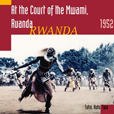
From the court of the Kingdom of Rwanda — abolished nine years later when the Republic was formed: the royal drums and courtly music disappeared along with the Mwami, or ‘king-shepherd’, after five centuries.

A bonkers, irrepressible amalgam of highlife, Twi rap, funk and disco, put over with the passion of a Prince record and the lo-fi charm of early Chicago house music.
The original cassette — self-released in Ghana and Canada in 1994 — was the inaugural post on the ATFA blog.
Yarghul player Atef Swaitat and singer Abu Ali are popular Bedouin wedding musicians extending long family traditions in Jenin and the north of historic Palestine. This stomping, swirling, surging, precious music was recorded at ceremonies across the Galilee throughout the 1970s.
It’s exhilarating, giddying, and immersive.

Lovely traditional Cuban music — bolero, guaracha, merengue, cha cha cha — recorded last year in Havana.
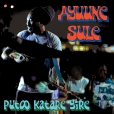
Driving, rawly soulful kologo music from northern Ghana, propelled by double-stringed lute.
African Head Charge front man Bonjo Iyabinghi Noah guests.
Putoo Katare Yire, Wickedness Has No Home.
Terrific.
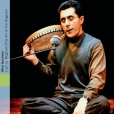
Intense, virtuosic singing in this ancient tradition, accompanied by Qasimov himself playing the daf frame drum and the brothers Mansurov on the tar lute and kamancha fiddle.
‘Simply one of the greatest singers alive, with a searing spontaneity that conjures passion and devotion, contemplation and incantation’ (New York Times).
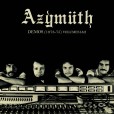
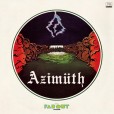
‘On every track the frenetic energy in the studio is palpable, giving the recordings a beautifully personal feel and a sense of the phenomenally creative vision Bertrami, Malheiros and Conti were realising at the time. Fifty years on, Azymuth’s earliest recorded music retains an ineffable, futuristic quality, standing amongst their most captivating and moving work.’