Your basket is empty

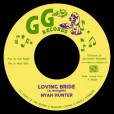
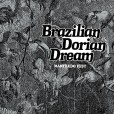
Lovely, wheezing roots, with the same charming frankness and male vulnerability as Jux’ She’s Gonna Marry Me.
Great tunes to spin at wedding parties (cut with Pablo’s Bells Of Death).
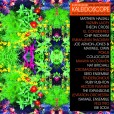
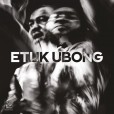
A survey of the burgeoning new UK jazz scene.
‘Shows that while there is commonality in these artists’ approach to music, there is a wide variety of styles – from deep spiritual jazz, electronic experimentalisation, punk-edged funk, uplifting modal righteousness, deep soulful vocals and much more.’
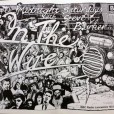
Steve’s truly wonderful radio show On The Wire is being ‘rested’ by the BBC.
Read about it here. Check it out on Mixcloud, live and kicking.
Please write to station manager john.clayton@bbc.co.uk about this heathen foolishness, copying in Head of BBC Local Radio chris.burns@bbc.co.uk.
Chin up, Steve.
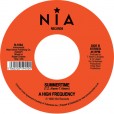
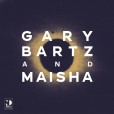
Leroy Burgess & The Fantastic Aleem Brothers.
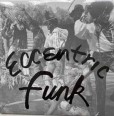
A dozen deadly deep funk burners.
Meditative, devotional music pondering racism and ancestorship, co-produced by Meshell Ndegeocello. Featuring the saxophonist’s usual quartet, plus vocalists for the first time — including Ganavya — who shine.

‘The trio’s sensitive interplay and attention to detail are now unrivalled in jazz… They have developed a naturally cinematic quality that draws on the sense of unease that lurks beneath the everyday’ (Mike Hobart, Financial Times).
It opens with a version of Boubacar Traore’s Baba Drame, and ends resonantly with We Shall Overcome, taking in Bacharach & David and Billy Strayhorn, Monk and Delta Blues along the way.
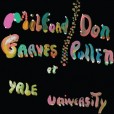
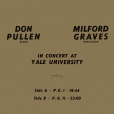
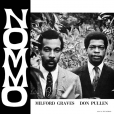
Bringing together two of the most prized, auratic LPs in all of free music, with music as vital and challenging today as it was more than five decades ago.
In Concert At Yale University, Vol. 1 was self-released on the duo’s Self-Reliance Program imprint in 1966. Copies are impossibly rare, especially the first few, which sported hand-painted covers by the musicians. (Several of these are displayed in the CD gatefold, together with a terrific photo of the pair selling LPs at a Nation of Islam convention.)
It was followed by Nommo, the next year.
For a performance at Yale University in New Haven, Connecticut, in spring of 1966, percussionist Milford Graves invited pianist Don Pullen to play duets. The two musicians had worked together in a band fronted by saxophonist and clarinettist Giusseppi Logan, with whom they had recorded two LPs in 1965 for ESP. Graves was already a daunting presence in free music. One step at a time, he was busy transforming the role of drumming in jazz, introducing a new way of dealing with unmetered time and accomplishing this task with technique that was almost inconceivable. His experience playing timbales in Latin bands had been formative, suggesting that the snare could be used as accent rather than beat-keeper, but by the mid 60s he’d worked up a holistic approach to sound and energy that was the most radical of his improvising percussion contemporaries.
For his part, this early setting finds Pullen at his most hard-hitting, and his pianism here lays to rest any allegations of Cecil Taylorism.
A new imprint from the wonderful Okraina label out of Brussels!
These will be double-10”, in gorgeously designed gatefold sleeves, with full-size, eight-page booklets of photographs.
To start, lovely, unusual duets on five-string banjo and steel pan (also slit drums and gamelan). Flowing and meditative; open-air; enjoyably less arsey about folk, soulfulness and melody than much Improvisation. (When Jaki Liebezeit renounced Free Jazz, he said it had too many rules.) For the label it evokes Laraaji and Bill Orcutt.
Check it out!
The basis of these works is a set of scintillating, widescreen improvisations by the Brussels-based pianist Pak Yan Lau (prepared piano, toy pianos, synth, objects and electronics) and Darin Gray (bass, preparations, objects and electronics), who has played alongside Jim O’Rourke for twenty years.
Over time Pak Yan added, layered, twisted, subtracted… including a recording of the underground tram in Albert, Brussels, for example. “I frequent this station all the time,” she says, ‘because my daughter goes to kindergarten there. One day there was an electricity problem, the whole station was humming, beautiful overtones coming out.”
“I liked the contrast between trudge (meaning you kind of move forward with difficulty and obstacles on your feet) and lightly (even in that situation doing it gracefully and lightly). The music on this record has that light/dark–ness.”
‘Mesmerising, fresh, inventive and intense,’ writes Stef Gijssels for The Free Jazz Collective.
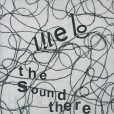
Some words from Dynamo Dreesen…
“Have you ever heard of the Eva EP by Web on Fat Cat Records? A few years ago it was my introduction to Web. I knew Fat Cat Records was interesting and diverse, they were known for releasing mainly experimental electronica and psychedelic folk music. The Eva EP by Web was Fat Cat’s start with their label mission from their record shop in central London in 1996. This EP has it all for me! A fusion of jazzy, bouncy, cosmic balearic, warped synth techno.
“Takuya Sugimoto aka Web while an art student in Osaka around 1993 began recording Detroit Techno, Chicago House, Electro and Electronica. He was helped by Ken Inaoka of Syzygy records, one of the first independent techno record labels in Japan, by releasing his first productions. Takuya then continued to release under several aliases, such as COLOGNe, Dja-zz, Gana, Ura Ura and Sammansa.
“While in Japan in 2019, on a 12 day Dresvn tour I was curious to know what had happened to Web. I asked Saito of Newtone Records in Osaka if he knew anything of him?
“Magically a month later Takuya sent me 16 unreleased tracks produced in 1994/95 stored on dat cassettes and forgotten about until now. Of those 16 tracks, eight became The Sound There.”