

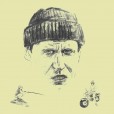

Another knockout compilation by Born Bad (though Souffle Continu has the matter in hand).
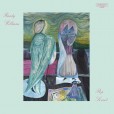
‘In 1969, the Art Ensemble of Chicago arrived at the Théâtre du Vieux Colombier in Paris and a new fuse was lit. Their multi-instrumentalism made use of a varied multiplicity of ‘little instruments’ (including bicycle bells, wind chimes, steel drums, vibraphone and djembe: they left no stone unturned), which they employed according to their inspirations. The group’s stage appearance shocked as well. They wore boubous (traditional African robes) and war paint to venerate the power of their free, hypnotic music, directly linked to their African roots. They were predestined to meet up with the Saravah record label (founded in 1965 by Pierre Barouh), already at the vanguard of as-yet unnamed world music. Brigitte Fontaine’s album Comme à la Radio, recorded in 1970 after a series of concerts at the Théâtre du Vieux Colombier, substantiated the union of this heiress to the poetic and politically committed chanson francaise (Magny, Ferré, Barbara) together with the Art Ensemble of Chicago’s voodoo jazz and the Arab tradition perpetuated by her companion Areski Belkacem…’
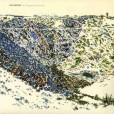
When Cyro Baptista moved to New York in 1980 from his home city of São Paulo, he brought with him an arsenal of percussion instruments, including the cuica (friction drum), surdo (the booming bass drum associated with samba), berimbau (single-string bow with resonating gourd), and cabasas galore, in the next few years deploying them most notably in numerous ensembles curated by John Zorn, who helped set up this studio session in 1982.
As you might expect from someone whose infectious grooves have graced the work of Herbie Hancock, Astrud Gilberto and Cassandra Wilson, Baptista expertly fires off cunning polyrhythms, even traces of thumping samba, with restless fluency. Bailey the wily old fox skirts and eschews the bait, which is quickly conjured away and newly fashioned. The guitarist homes in on the delicious squeaks of the cuica and the twanging drones of the berimbau with truly awesome tonal precision. You could sing along if you wanted, after a caipirinha or two. And he gets almost as many different sounds from his instrument as Baptista can from his kit – check out the stratospheric plings and string-length fret-sweeps of Tonto, which sound more like a prepared piano than an acoustic guitar.
Wonders abound, from the berimbau/bent-string exchanges that open Quanto Tempo to the delightful collision of howling cuica and spiky bebop on Polvo, and the spare, preposterous Webernian samba of Improvisation 3.
These days, ‘improvisation’ often appears without its customary qualifier ‘free’. If there were ever a case to be made for its reinstatement, this album is the best supporting evidence. Freedom means you’re free to get into the groove, free not to, free to play with each other, free to play against each other. Sometimes frustrating, even scary, but more often than not in the hands of these two great masters it’s hilarious, exhilarating and utterly irresistible.
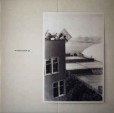
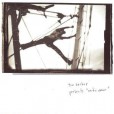
Saxophonist Phillipe Maté has played with the Acting Trio, Jef Gilson and Butch Morris, amongst others; and that’s him on Jean-Claude Vannier’s brilliant L’Enfant Assassin Des Mouches. As the recording engineer of BYG, Daniel Vallancien worked alongside Anthony Braxton, Don Cherry and Sonny Sharrock; for Saravah he recorded Brigitte Fontaine and the Cohelmec Ensemble. From 1972, this free-form saxophone/electronics collaboration is another bonafide classic of the French musical underground, revived with characteristic panache by Souffle Continu.
What a tune. A surging, early-seventies Soul Syndicate rhythm, with a fulgent trombone solo; and succinct, profound reasoning from the Don, at his very best, about thinking for yourself. Rebel music to live by; as clear as a bell. That’s a tough Sleepy on the flip, too. Killer.
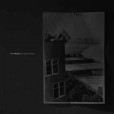
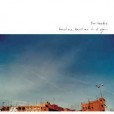
A droning, slo-mo Leonard Cohen cover, and a collaboration with violinist Jessica Moss, from A Silver Mt. Zion; both around twelve minutes. Grouper’s a big fan.