
Your basket is empty

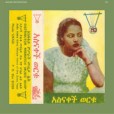
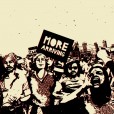
The best Awesome Tapes for ages!
The mighty, game-changing, iconic Asnakech in narcotic, bare-bones performances from 1975. Her singing and virtuosic krar-playing are intensely gripping throughout, accompanied by Hailu Mergia’s cosmic, zonked organ, and Temare Harege’s ultra-minimal brush-work and foot-pedal, like a barely audible drum-machine.
Haunting, intoxicating, wonderful stuff.
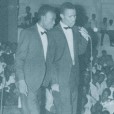
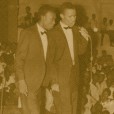
Ace organ-driven rocksteady cut of Love Is A Message, recorded at Treasure Isle on Bunny Lee’s ticket, by youngsters Jacob Miller, Lawrence Weir and Lassive Jones aka Delroy Melody.
They were going by the name The Young Lads, but Jones remembers Striker’s strong advice: “there are too much Lads group, you boys are going to school, you boys are School Boys.”
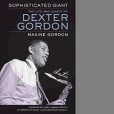
Sophisticated Giant: The Life And Legacy Of Dexter Gordon
Maxine Gordon
University Of California Press
‘An extraordinary gift. Maxine Gordon’s rigorously researched, jazz-inflected, genre-bending account of the many dimensions of this prodigious life provides an occasion to appreciate Dexter’s resounding musical genius as well as his wish for major social transformation’ (Angela Davis).
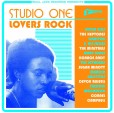
A second helping as sublimely pleasurable as the first, with Prince Buster, Rupie Edwards, Derrick Harriott, Dobby Dobson and Joe Higgs amongst the singers.
‘Enthralling to anyone,’ according to The Guardian.

Precious, timely, moody reflections on migrating from Côte d’Ivoire to Moss, in Norway, over ruff breakbeat funk supplied by the nimble bass-playing of Maimouna’s old man (from Kambo Super Sound), and the expert conga and kit-drumming of Stliletti-Ana (from Jesse, in Helsinki). Even in their delirium, b-boys and girls will savour traces of the Incredible Bongo Band, in the chorus. Over the eight minutes, and going deeper on the flip, the mix lifts off into a cosmic steppers dub, featuring Gilb-r alongside Sotofett on keyboards, with no let up for the dancefloor in energy and vibes.
“It was in 2001 / I got the letter / A letter that said / I would travel to a cold world / Not knowing what would happen / I was full of loneliness / No country / Everyone was different / Not only skin colour / The way people spoke / The way people behaved / That’s the adventure / Obey / This is the story we’re told / The key to success / So we can do everything for our parents / Who need us / Desperate for a better life / That’s the adventure.”
Three knockout EPs, in hand-stamped, poly-lined sleeves.