

Your basket is empty

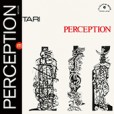
‘By the time Mestari, their third and final album, came out, Perception had four years of questing and originality behind them, developing their own individual language, in which the improvisatory spontaneity did not exclude influences from European folk or classical traditions.
‘Balanced, ethereal and structured, Mestari reinstated the original quartet. It opens infinite perspectives, totally in phase with what was being produced in France at the same time by the Cohelmec Ensemble and the Dharma Quintet.’
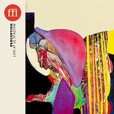
A precious, previously unreleased live recording from 1977, when Jacques ‘Jeter La Girafe A La Mer’ Thollot was drummer.
The opening track of the Ecstatic Computation album, re-imagined by eight friends and long-time collaborators.
‘Kali Malone turns in a slowed-down, austere and eerie version for two Organs; Evelyn Saylor a vocal ensemble conveying its choral, psychedelic and vitalistic nature. Walter Zanetti composes Fantas for electric guitar. Bendik Giske’s reinterpretation for saxophone and voice captures its atmosphere and its psychic meteorology. Carlo Maria resynthesizes for TR808 and MC202, with an eye on the dancefloor. Jay Mitta’s Singeli pitches up the percussion, unleashing the frenetic, shifting matter within the original into euphoric dance. Baseck’s variation is a hardcore rave fantasia; whilst Kara-Lis Coverdale’s take is a phantasmagoria for piano that gently, yet inexorably, captures the relentlessness chimerical qualities of the original, unveiling its spectral backbone.’
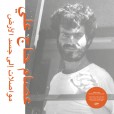
Recorded in exile in Paris, this is the eye-opening solo debut of the leader of the legendary Lebanese group Ferkat Al Ard.
In 1977 Issam was scratching together a living by busking on the Metro. He could afford just one day in the studio, with a pick-up band of musicians from France, Algeria, Iran — and a friend from Beirut called Roger Fahr, who had left Lebanon around the same time.
Back in Beirut by the end of the year, Issam added percussion and other touches. He made no more than one hundred cassettes, with his last, personal copy providing the master for this precious reissue.
In these genre-shattering settings of the Palestinian poet Samih El Kasemou you can hear the roots of Ferkat Al Ard — but “it’s more of just me,” avers Issam.
Melancholic, stripped, acoustic folk crossed with cosmic, funky jazz-fusion, with strong Brazilian influences. It’s packed with breaks, and haunted by the unique sound of the santour.
Demdike Stare and Andy Votel.
Previously unreleased house from southside Chicago, 1989.
Ace soundclash deejaying over a banging digital excursion on Rockfort Rock.
Trumps the Fatis piece.
Chilled, elevated, hypnotic, move-on-up grooving, out of the Miami reggae underground.
“I know how / to milk a cow.”
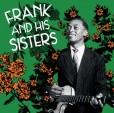
Radiant 1950s Tanzanian pop.
‘As a trio Frank Humplick, Thecla Clara and Maria Regina recorded and toured throughout East Africa and issued a string of instant classics, capturing fans with their beautifully harmonized singing, clever lyrics, and Frank’s stunning guitar work. Imagine the fingerstyle finesse of John Fahey cut with a pure pop melodicism, and combined with the family harmony of groups like The Carter Family, The Roches, and The Beach Boys, set in the golden age of Tanzanian music!’
With a colourful eight-page booklet featuring complete lyrics in English, Swahili and Chaga, as well as previously unpublished photographs, extensive interviews, biographies and anecdotes.
Raw, rocking cannibalisations of Yemeni folk — with dashes of dabke, trance and Mulatu Astatke — at moments using junk made to sound like age-old lutes and percussion.
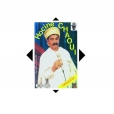
Electrifyingly intense Chaoui music from the Aurès region of Algeria, booted into the future, with drum machines, phased gesba flute and reverbed-out vocals.
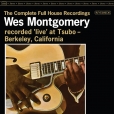
Released to celebrate his centennial, here is the great jazz guitarist live in performance in Berkeley, California, in 1962; with Johnny Griffin, Wynton Kelly, Paul Chambers, and Jimmy Cobb.
All the recordings from these sessions — our absolute favourite Wes Montgomery — including two previously unreleased performances.
‘Montgomery seems never to have played anything lacking his innate mirth and happiness. In that he had an amiable Midas Touch that made his performances uplifting and immediately identifiable. Montgomery had a tangible simpatico with Kelly, both being superb blues and ballads players. When unison playing, the two are of one mind, that of swing and propulsion. Griffin’s presence adds a woody organicness that is both fecund and free (AllAboutJazz)’.