Your basket is empty

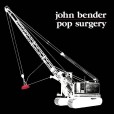
‘Twelve frenetic bursts of scrapyard detournement, meticulously stitched together with dubbed-out vocals and disjointed drum machines, at the limits of bedroom electronica and DIY. Originally released in 1982 on his own Record Sluts label, in a single run of five hundred copies. Recommended to fans of Suicide, 20 Jazz Funk Greats and early Cabaret Voltaire.’
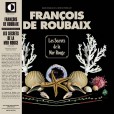
The soundtrack to the French TV series adapting Henri de Monfreid’s account of his travels in the Middle East. The music for the first series in 1967 features various flutes and marine conches; for underwater settings a celesta or a crystal xylophone. For the later 1975 series, de Roubaix composed a new music score, mixing old and new sounds, his EMS VCS3 synthesizer subtly mixed with acoustic instruments.
‘This second AG recording for Treader sees Charles Hayward passing the drumsticks to Rupert Clervaux. Together with Coxon’s simple and insistent guitar themes, the elegant drum-work underpins four extended group compositions, containing a surprising collision of sounds and influences, bringing together Pat Thomas from the Improv scene, Floating Points-collaborator Susumu Mukai, and Alexis Taylor’s mooger-foogered rhodes. Somehow it all crystallises perfectly. The clearest precedent for this engaging recording is Ege Bamyasi-era Can, but really it occupies a position all its own.’
A dreamily odd, Antillean blend of synths, flute and drum machines, featuring a children’s choir. Originally a tiny 1986 pressing in Guadeloupe, revived by the Diggers Digest crew.
Great New York latin soul LP from 1969, with Ricardo Marrero and Bobby Marin — check Barbara With The Kooky Eyes — plus unissued tracks by a supergroup including Tito Puente and Louie Ramirez.
Heavyweight dubs of DEB murder like Words Of The Father by Earl Cunningham, Warning by Desi Roots, Mop & Cry by Freddie McKay, Wood For My Fire by Black Uhuru, Slave Driver by Dennis Brown, Armed Robbery by Junior Delgado, Augustus Pablo doing over Swing Easy…
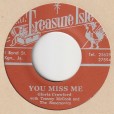
Sweet rocksteady lovers, rather impassively worried about being apart for a while; plus the Supersonics’ slinky, tiptoe classic Our Man Flint (nodding to James Coburn’s piss-take of 007, just then arriving in Kingston cinemas).

‘Deben Bhattacharya (1921–2001) was a highly influential field recordist, poet, filmmaker, musicologist and amateur ethnomusicologist, based in Calcutta and Paris. He produced a vast number of LPs, CDs, videos and radio shows of traditional music from India, Asia, Africa, the Middle East, and Europe.
‘Never before published, Paris To Calcutta features over four hours of music and is Deben’s impressionistic account of a 1955 journey overland, in a converted milk delivery van, from France to India, collecting and exploring music along the Desert Road.
‘With four CDs of recordings, photographs, Deben’s original recording notes, musical transcriptions and more. An amazing glimpse into a time long gone and essential listening for anyone interested in folk and world music traditions.’
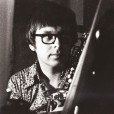
Outstanding post-bop from Norway, including the jazz dance classic Cordon Bleu, and a killer version of Footprints. Erik Andresen on alto saxophone, Roy Hellvin piano, Tore Nordlie double bass and Svein Christiansen drums. Recorded in 1970; originally released on Arne Bendiksen’s Flower label in 1971.
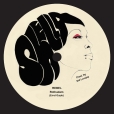
Scorcher!
Rothadam aka Errol Gayle tried out for Bunny Lee before following his brothers from Trenchtown to Toronto in the early-1970s. Here, his fellow-welder Sid Lovejoy also ran a record shop, label and studio, at 917 Bathurst Street; and in 1975 the first iteration of Rebel was unleashed on Sid’s LMP imprint (cut a little slower than this reissue), featuring none other than Leroy Sibbles on bin-wobbling bass; and massive, rearing, swinging horns (and melodica). The brass brings to mind the Otravis crew on Skyjack Version, also with Sibbles, for Half Moon; the hi-hats tick with the same serious-mindedness as at the start of Joe Higgs’ Creation; Rothadam channels Horace Andy to full effect.
Then Gayle reprised the song at Half Moon itself, with the Super Eight Corporation. Producer Oswald Creary passed the second recording — side two here — onto Ron Lewis, to put out on Ron-Lew. It’s more Upsetters in style, with a lighter touch; more limber, smoke-filled and cosmic, with a vibesing spoken intro and tasty percussion.
Both sides are raw, intense, inspiring roots.
Neither came with a dub… so dream on, rudie.
Hotly recommended.
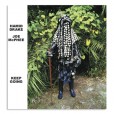
‘The session somehow consolidated their shared energy in an unexpected way — the drummer’s incredible warmth and sense of buoyancy, the saxophonist and trumpeter’s preternatural musicality and quest for social justice. The recording started with McPhee reciting words by Harriett Tubman, resulting in the title track; Drake’s support was an achingly slow Max Roach-like beat. From this inspired, inspiring starting point, the twosome frolicked through a rich program, McPhee donning tenor and alto saxes, and pocket trumpet, Drake turning momentarily to the frame drum. Each musician contributes an introspective solo track. McPhee at one point plays trumpet into an open gong, which gives him otherworldly overtones, a sort of acoustic version of electric Miles…’
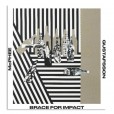
‘As searching and searing as anything either of them has made, these 2008 duets live up to their explosive title. Gustafsson is known for his energy, and it’s here in droves, but there are other nuances brought out by McPhee — a supple sense of melodicism (hey now, Gustafsson is a Swede, so by birthright he’s melodic) and the love of experimental sound-making that McPhee displayed on his sound-on-sound recordings in the late ‘60s…
‘Insanely powerful. We recommend that you prepare yourself for the impact.’

Seven films shot in Mississippi between 1968 and 1975, about the diverse cultural traditions at the roots of the blues.
Black Delta, Parts I and II; Parchman Penitentiary; Give My Poor Heart Ease — Mississippi Delta Bluesmen; I Ain’t Lyin’ — Folktales from Mississippi; Made in Mississippi — Black Folk Art and Crafts; Two Black Churches.
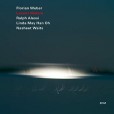
‘Following his ECM debut of duos with Markus Stockhausen, the pianist leads a strong cast through a programme of his compositions and sketches. Whether paying tribute to his mentor Lee Konitz on Honestlee, impressionistically conveying the glittering Melody Of A Waterfall, or generating impactful drama out of fragments of sound on Butterfly Effect, Weber continually draws fresh responses from his players.
‘The strong, grounded bass of Linda May Han Oh contrasts strikingly with Nasheet Waits’s fleet, fluid drumming, setting up new contexts for Ralph Alessi’s elegantly inventive trumpet and the leader’s highly creative piano playing.’
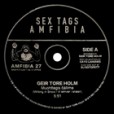
Flexidisc.