Your basket is empty

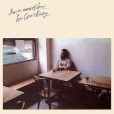
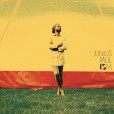
From 1974, featuring knockout rare groove like I Don’t Need Nobody Else and What Do You Want Me To Do.
Limber, feeling and introspective, with full horns and strings setting fine songs and frankly soulful singing.
Lou came through in Detroit as a writer and producer with Barbara Lewis, before signing in his own right to Epic, via the Rags label run by legendary producer Jerry Ragovoy. Hereafter he was briefly a member of The Fifth Dimension.
One of the greatest of all modern soul albums.
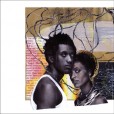
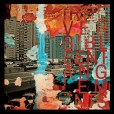
The return of the AACM flautist to the visionary, Afro-futurist science fiction of Octavia Butler, alongside theremin-player Harris, together with fellow Chicago luminaries like cellist Tomeka Reid and trumpeter Ben LaMar Gay.
Tumultuous, visceral musical reflections on Butler’s ideas about Apocalypse, power, hybridity-versus-identity, race and feminism. ‘Writing myself in,’ she called it.
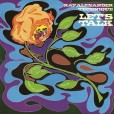
Legendary Harlem soul and funk from 1973 — the RAT was the house-band at the Apollo — with bags of lo-fi charm and sublimated Isaac Hayes to its ‘unabashedly sincere songs that perfectly encapsulate the era’s heady milieu of black pride and cultural awareness, and the plaintive emotion of struggling to realise dreams whilst navigating a city and neighbourhood in decline.’
Painstakingly prepared according to the remit of this series; with excellent notes.
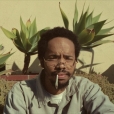
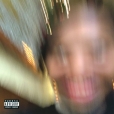
‘Earl is on another level. The way he deploys his skill, humor, and encyclopedic knowledge of hip-hop has made him one of the most effortlessly deep and cool rappers alive’ (Pitchfork).
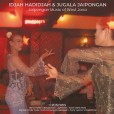
‘Mind-melting West Javanese gong pop, recorded in 2007 at Jugala studios in Bandung, based on a Javanese secular village music and dance tradition known as ketuk-tila, which was transformed into a popular studio music in the early 1960s by the producer Gugum Gumbira, founder of Jugala. With vocals by Idjah Hadidjah, one of the key historic voices of jaipongan, the situation here is disorientatingly heavy, low bpm gong pressure coming straight from the originators. It is a much less dainty affair than classical Javanese gamelan, and less febrile than the fully automatic Balinese variant. Hadidjah’s golden voice sews together shifting polyrhythms that would baffle a watchmaker; the whole is embroidered by rehab and underpinned by Mariana Trench level bass drops. A second disc features a set of thoughtful electronic reworkings’ (Frances Gooding, The Wire).
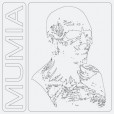
This is terrific.
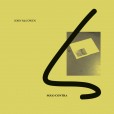
Brazilian post-punk, art rock and DIY from 1988, released here for the first time, by the duo Celso Alves and Kodiak Bachine (whose records with the band Agentss are desperately sought-after nowadays).
Dubwise and rhythmic, percussive and synthy, with tangy Brazilian roots, and a droll humour to its reflections on embalming, LSD and zombies, the music freewheels roughly and vividly from the truffling, chattering, tropical atmospherics of the opener, through to the machine-funk, Romeroesque terrors of the Greenhouse Massacres, to close.
Sung in Portuguese and English, studded with Spanish, French and German, the lyrics are reproduced on an insert. Pressed at Pallas.
Ace. Check it out.
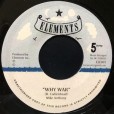
Superb, fat, classic roots production by Michael Forbes, with full horn section, organ, expert percussion and drumming. Strong, heartfelt, resigned singing by Mike Anthony (not to be confused with the much more prolific Lovers singer from Lewisham).
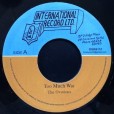
Sublime vocal harmony roots. Pure Abyssinians manners.
George Wright and the boys cut one of our favourite Lovers a few years later… Secret Admirer.
Killer.
Startlingly accomplished new jazz from South Africa, teeming with ideas, influences and idioms.
Maybe you remember Asher’s drumming on Angel Bat Dawid’s The Oracle.
Hotly recommended.
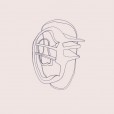
A terrific album by the Hen Ogledd conspirator, and collaborator with the likes of Derek Bailey, Bill Orcutt and Jon Butcher.
A telyn rawn is a harp strung with wound and pleated horse hair. (Tristram Shandy would have a field day.) It’s maybe a millennium old; passing into obscurity around two hundred years ago.
“All the music on this album is improvised. I designed and built a long forgotten instrument, engaged with historical texts and poetry, learnt the techniques and music from the Robert ap Huw manuscript and researched the importance of the horse and horse cults in Welsh culture. All these interventions were a means to improvise historically informed music and re-evaluate the legacy of the harp in Wales but ultimately served as a jumping off point so as to create new possibilities.”
The music is warmly compelling: polyphonic, convivial, rootsy, evocative, often mesmeric, sometimes banging.
Ancient Welsh folk veers into koto and kora, Appalachian dulcimer and Norwegian langeleik; the wheezing, wailing, rocking traditions of drones and sawing from Louisiana to Albania are streamed into the Valleys, and out again, changed.
Handsomely presented, too. Hotly recommended.
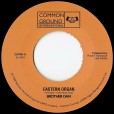
A knockout, proto-Pablo, rocksteady organ instrumental. Dandy Livingstone, surprisingly enough, riding east of the River Nile. Originally out on Trojan in 1968.
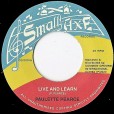
Conscious lovers — Paulette’s own upful, considered advice, delivered with fresh, youthful persuasiveness, and deadly horns. Another killer one-away.
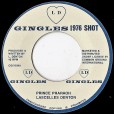
Ace mid-seventies roots and dub. Doomily austere and on-point, with both piano and organ, crisp high-hats, and and wickedly effective backing vocals.
An unmissable one-away, produced and arranged by Denton as the solitary release on his own label.
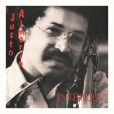
His first LP, recorded for Uno Melodic in 1981, produced by Roy Ayers.
En route the saxophonist had recorded with Mongo Santamaria, Jon Lucien and Dom Salvador. That’s him on James Mason’s Sweet Power Your Embrace; and he played on various Ayers LPs, including Vibrations and Lifeline.
Treasured for its gorgeous, mellow opener.