

Your basket is empty

“I didn’t want to make a bebop record. I wanted to make a modal jazz record and there just aren’t that many on viola. I wanted to speak with a heavier voice, more akin to a tenor saxophone. The viola is darker and thicker. It speaks slower.”
‘Love that, kind of Miguel Atwood-Ferguson, big orchestrations with really low down dirty jazz music” (Gilles Peterson).
Terrific, resilient, rootical lovers, with backing by the Revolutionaries, recorded in the late-seventies by Sonia Pottinger for Sky Note. The same rugged rhythm as Clifton Campbell’s
A New Civilisation, devastatingly contrasted with the sweetness and vulnerability of the singing.

‘An unshackled mind melt of amorphous Berlin School electronics, glistening guitar tones, snatches of disembodied voices and rumblings of percussive melody… an invitation to introspection, turning sky-seeking kosmiche towards a resonant, contemplative core… too busy to be ambient, too zonked to be rock, instead resting on a modern psychedelic perch of its own somewhere in between.’
‘Bisk is back… as cheerfully unhinged as ever… absurd and exhilarating in equal measure. The Japanese producer’s drum programming weaves through knotty thickets of syncopated beats and white-noise bursts, chasing ghosts and dodging potholes. His samples are fragmentary dispatches from far-flung points, and any given musical phrase might shoehorn multiple worlds into wobbly union—free improv with easy listening, kindergarten recess with NASA Mission Control. Beneath each drum hit lies a potential trap door, and his melodies, if that’s what you can call his tangled scraps of electric bass and modal keys, ricochet like pinballs repelled at every turn by shuddering mechanical bumpers’ (Pitchfork).
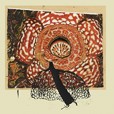
‘Experimental jazz, chanson, bluesy folk and various strains of outsider music permeate a rich layering of music boxes, walkie-talkies and plastic straws, plucked charrango and banjo, kazoos, flutes and snake-charming ocarina, accordion and melodica, found percussion and traditional tuned drums. The moods switch from child-like and epiphanic (Tarzan en Tasmanie, Madrigal for Lola) to babbling (Pocarina), mysterious and dark (Septième Ciel, Rugit Le Coeur) to tender and simple (Rainbow de Nuit, Chevalier Gambette); from murky, suspenseful melancholy (Levy Attend, Eno Ennio) to pensive psychedelia (Un Cercueil à Deux Places). A world of echoes. A tale of tales. You’ll be whistling and humming along on first listen.’
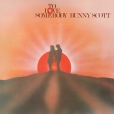
With Lee Perry in 1975.
Kinky Fly is here… plus eight killer bonus tracks.
Mastered from the original tapes.
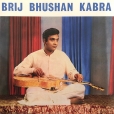
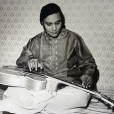
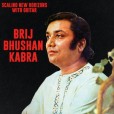
Brilliant, game-changing re-deployments of the lap-slide Hawaiian steel guitar — in this case a Gibson Super 400, modified with a drone string and a high nut to raise the strings off the fretboard like a lap steel — away from Indian popular music, into the service of ragas.
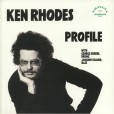
Tangily raw and fresh piano-trio jazz from 1974.
The title track and Triangle are ace, funky jazz-dance. The Journey is gnarlier funk. Robyn’s Lullaby and Nothing New are hazier, evocative, impressionistic.
Tiny pressing.
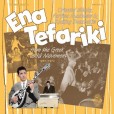
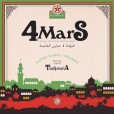
‘A retrospective of the forty-member Somali supergroup featured on Sweet As Broken Dates. Turkish synths, Jamaican Reggae, American brass, Bollywood vocals, Egyptian and Yemeni rhythms, and Chinese and Mongolian flutes all rendezvous in a corner of East Africa that for centuries served as the world’s most brisk trading hub, the midway point connecting Africa, Asia, and the Mediterranean. This is Somali music at its sassy, soulful, synthesized best. The LP comes with a poster inspired by the political banners of 1980s Djibouti; the CD in a hard cover, with a 12-page booklet.’