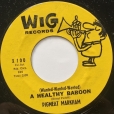
The truly iconic compilation from 1965, when ska was in its full, irrepressible, post-colonial glory.
Hypnotic variations of the compositions of the legendary Mohamed Abdel Wahab, on early electronic keyboards like the Steelphon S900 and the Farfisa, cut with El Shariyi’s hip, whizzy jazz and pop stylings. Ana Wa Habibi is here; and the classic Ahwak, made famous by Abdel Halim Hafez and Fairuz. Originally released by Soutelphan in 1976.
Creole poetry, rootical mysticism and heavy-grooving synths illuminate this survey of the Martiniquan’s first four albums, recorded in France in the late seventies and early nineties, but inspired by the ‘smells and colours… subliminal noises… fruity notes, the memories of funeral wakes, the bombastic organ of the cathedral and the gasps of the drums’ of home.
‘Midonet’s musical world is cosmic, mystical and he has created his own idiosyncratic style around it: not plain folk, not bélé, chouval bwa, beguine or gwoka, but rather a transcendental fusion of all these and a true reflection of his personality.’
‘The piano was at the centre of Feldman’s musical world. Even when he was writing for other instruments he would work at the piano because ‘it slows me down and you can hear the time element much more, the acoustical reality.’ Perhaps more than any of his other piano music Triadic Memories is about that reality, the acoustic space created by the piano’s strings and soundboard, and in Judith Wegmann’s recording that space is within a magnificent Bösendorfer 280VC piano.
‘The score specifies that the piano’s sustaining pedal should be held halfway down throughout the piece, as if the resonance of the instrument is intended to become a means of remembering the music. Feldman was thinking of the way that Cy Twombly would scratch graffiti-like markings into a gesso ‘where the tint changed ever so slightly.’ Feldman wanted a tonal ground and took the idea of ‘a little gesso’ from Twombly, making music that, as he put it, is ’on this very precarious gesso smudge.’ Gesso, smudge, memory.’
The core trio joined by Joe McPhee, playing saxophone and pocket trumpet, in readings of compositions by Don Cherry, PJ Harvey, Ornette Coleman, McPhee himself, James Blood Ulmer and Frank Lowe.
Cosmic jazz excursions on saxophone, flute, electric keys, synths and drums.
Supple, deep and spacious; sparklingly dubwise; intensely percussive.
Precious, early solo work by the veteran sound explorer, instrument builder and improv grandmaster. Intricate and graceful manipulations of the echoes generated by a home-made regiment of glass tubes called Analapos, these recordings tunnel divergently like subterranean streams, while the Koolmees pair take wing with aerial fragility, like a newly formed birdsong.
With guests Kit Downes on hammond organ, and cellist Lucy Railton.
Jazz album of the month, in The Guardian: ‘an unusual path, combining spellbinding singing with wayward improv… Speak Low II foregrounds Cadotsch’s crystal-clear lyricism more than its predecessor without ever cramping the freedoms of her classy improvising partners. She brings a graceful accessibility to a personal and ingeniously offbeat setup.’
Adding songs from Salad Days, Is The War Over, the Final Day single and their Testcard EP; plus a DVD of their final US show, at Hurrah in New York in 1980.