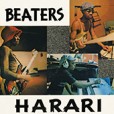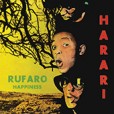


From 1976, the first of the two albums by the Asocial Associates, led by Philippe Doray of Rotomagus.
‘Psychedelic pop, voodoo rock, wrong krautrock, woozy swing… bringing to mind as much Hendrix as Areski, Ash Ra Tempel as Berrocal. No wonder that Nurse With Wound lists Philippe Doray between the Doo-Dooettes and Jean Dubuffet. One of the best albums of experimental song ever recorded.’
The pianist James Edward Manuel’s only release is one of the deepest custom-press jazz recordings of them all.
Jaman studied under greats like Earl Bostic and Horace Parlan. Gigging on the Buffalo club scene, one of his early trios included the renowned bassist John Heard and drummer Clarence Becton, till both were poached one night by a visiting Jon Hendricks. Other sidemen include Sun Ra Arkestra bassist Juini Booth and Ahmad Jamal regular Sabu Adeyola (also of Kamal & The Brothers).
Pressed in tiny quantities by the Mark Records custom service in 1974, and issued with a stock landscape cover, Sweet Heritage presents a soulful mixture of covers and originals. In particular the flying, spiritual sound of Free Will and the upful, Latin-tinged In The Fall Of The Year — both Jaman compositions — have turned the LP into a legendary collector’s classic.
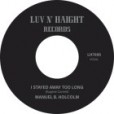
Funky mid-tempo sister soul, recorded at Dave Hamilton’s studio in Detroit. (Plus Little Ann’s tribute to the producer, on the flip.)
‘Since the mid-1960s, Jon Gibson has played a key role in the development of American avant-garde music. As a reed player, he has performed with everyone from Steve Reich and Philip Glass to Terry Riley and La Monte Young. In the 1970s, Gibson would emerge as a minimalist composer in his own right and release two exceptional albums, Visitations and Two Solo Pieces, on Glass’ Chatham Square imprint.
‘Ranging from introspective piano meditations to cerebral ensemble works, Songs & Melodies brings together recordings from 1973 to 1977 (mostly previously unreleased), featuring prominent figures in New York’s scene, including Arthur Russell and Julius Eastman.’
‘Spectacular examples across the board: mesmeric guitar playing in the Barotse style, which uses tunings from the local thumb-piano tradition; kangombia thumb-piano music; rollicking drum ensembles; and jaw-dropping performances of siyemboka, Barotseland’s national music, played on silimba — giant wooden xylophones, sometimes five metres in length, played by four or five men at once’ (The Wire).
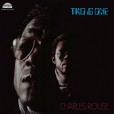
George Butler was head of A&R at Blue Note during the seventies. He co-produced Black Byrd with the Mizells; he signed Bobbi Humprey. When Blue Note closed in 1978, one of his first projects for Columbia was a disco-funk project with the legendary bebop saxophonist Benny Golson, on the cusp of his own comeback.
Golson was at high school with John Coltrane. He featured in a deadly late-fifties Jazz Messengers lineup; also Art Farmer’s Tentet. He wrote I Remember Clifford and Whisper Not.
It’s telling, how the jazz establishment has always despised this record. The title track was a humungous rare groove anthem, guaranteed to tear up a dance with its swinging, swaggering, musically-inspired upfulness, school of Walking In Rhythm and Music Is My Sanctuary.
The eagerly awaited return of Bastian Epple to Marionette, for his debut album. Fifteen richly evocative vignettes conjured up with modular synth, tape-work, synthetic sounds, percussion, guitar: captivating, scene-setting catalysts of dreams, nostalgia, and other imaginary voyages; intimate, unpredictable, and alive; full of curiosity and wonder.
Bikini Kill, Boris, Endless Boogie, New Kingdom, The Clean, ELO, Archie Shepp, Echo and the Bunnymen, Primal Scream, The Guerilla Girls, Planetary Peace…
Lou Reed, Velvet Underground, Lee Perry, Grateful Dead, Goats, Phew…
The great Mingering Mike, 75 Dollar Bill, photographer Michael Lavine, Pavement, Cindy, Irreversible Entanglements, Lea Bertucci, essayist Aisha Sabatini Sloan, Detroit punk flyers… 132 pages, full colour…
Belle and Sebastian, novelist David Gordon, Motown artist Christina Carter, Mowest group Odyssey (and its connection to CLR James), Chris Forsyth and Steve Wynn, Tony Iommi-era Black Sabbath, Buffy Saint-Marie…
A second killer Trilogy EP from DJT in Japan, advancing the legacy of Chain Reaction.
Serious, emotionally reined-in music; structurally minimal, linear and open-ended, without the puppeteering routines of most dance music… but all the more enthralling and grooving, with hefty bass. The sense of monumental, weather-distressed, darkening dread is counter-balanced by this forward momentum, and expertly dubwise light-and-shade, with layered detail.
The reverberative, gong-like tolling of the opener gives way on the flip to machines starting up in a cavernous space, like vast beating wings, with a tumping bottom end, over nine minutes.
In-between is a more atmospheric and tentative interval, with slowly roiling synths and near-and-far, morse-code percussion.
Ace.