
Your basket is empty

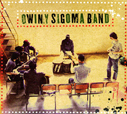
Elmore Judd in Nairobi with Joseph Nyamungo and Charles Okoko.

The eighteenth-century poetry of Shah Abdul Latif Bhittai as celebrated nightly by waee faqirs, whose penetrating lutes and high whirling voices bridge musical and mystical experience.
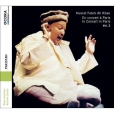
Nusrat Fateh Ali Khan.

Killer.
Fire Music, salsa-style. Dazzling, in-your-face Latin jazz from 1971, steeped in Afro-Cuban tradition, and blazing with political militancy. Palmieri’s signature hard trombone sound is augmented with baritone saxophone, organ, trap drums and electric piano, and Monk and Tyner come more to the fore in his own playing.
According to percussionist Bobby Sanabria, the opener La Libertad Lógico was ‘an anthem for young Puerto Ricans like me.’ Drummer Nicky Marrero says that Palmieri’s use of the snare drum was designed to emulate a machine gun. Freedom is the only sensible option, declares this terrific music. Revolt.
Ismael Quintana recalls that the title track, ‘of all the songs I recorded with Eddie Palmieri, this has to be the most influential. That song was played and requested everywhere we would go in Latin America… The lyrics were about trying to cope with the injustices in the world. It meant let’s get out of this crazy mess and so much negativity that we live in, and let’s go to the mountains.’
Ronnie Cuber and Charlie Palmieri are here… Quintana and Marrero… and Chocolate Armenteros, one of the greatest trumpeters ever to walk the earth.
A classic. Hotly recommended.
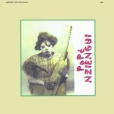
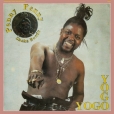
Stunningly modernised Tsogho ritual music from the interior forest of Gabon.
Beaten rattles, synths, Bwiti harp, male-female dialogical singing.
Released in 1989, to the intense consternation of purists; never before available outside Gabon.
Game-changing, and as authentic as it gets; warmly recommended.

‘Deben Bhattacharya (1921–2001) was a highly influential field recordist, poet, filmmaker, musicologist and amateur ethnomusicologist, based in Calcutta and Paris. He produced a vast number of LPs, CDs, videos and radio shows of traditional music from India, Asia, Africa, the Middle East, and Europe.
‘Never before published, Paris To Calcutta features over four hours of music and is Deben’s impressionistic account of a 1955 journey overland, in a converted milk delivery van, from France to India, collecting and exploring music along the Desert Road.
‘With four CDs of recordings, photographs, Deben’s original recording notes, musical transcriptions and more. An amazing glimpse into a time long gone and essential listening for anyone interested in folk and world music traditions.’
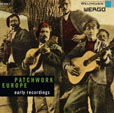
Marvellous stuff from all over Europe, 1911 to 1954. Finnish violin, English barnstorming, Sardinian triple-bagpipes, klezmer accordion from Belarus, Romanian clarinet, Ukrainian violin, for starters.
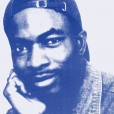
Originally self-released in 1993 by Peter Mekwunye as a small-run cassette, soon after his arrival in the US from Nigeria. Moody, personal, moving, freeform afro-pop, or DIY soul, using just a Casio keyboard and a microphone, with a rawly naked message of love, struggle, spirituality and hope, ‘dedicated to all Nigerians all over the world, and to all freedom fighters around the world.’ Strange — a bit like eavesdropping on someone talking to himself — and warmly recommended.
We got these from Mississippi.
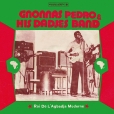
The full Analog Africa treatment at last for the star of their Legends of Benin compilation, back in 2009. A thrilling, utterly unique blend of Agbadja, Cuban fon, jerk, highlife, and other African rhythms, sung in Fon, Mina, Yoruba, French, English, and Spanish,
Warmly recommended.

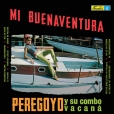
Sensational fusion of modal jazz and flamenco, with members of Tete Montoliu’s group, and the mighty Paco DeLucia, dazzling on electric guitar. Hotly recommended.

No-shame housey Tsonga-disco and hands-in-the-air rave banged out on Korgs and Ataris in 1994 South Africa. It sold tons, rocking stadiums from Liberia and Sierra Leone to Namibia and Mozambique.

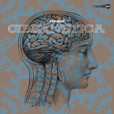
Legendary, occult musical reverie about the I Ching, psychedelically loaded with fuzz guitars, dirty percussion, Echoplex delay, and Ingmar Bergman, concocted by Italian artist Roberto Campadello and Brazilian guitarist Luis Carlini, leader of Rita Lee’s band Tutti Frutti. Originally released as a 10” in 1975, boxed with a game, candles and a magic mirror; now remastered from the original tapes, adding two tracks from a cassette-only release on the side. With a 24-page booklet containing rare graphics, photos, press clippings and Campadello’s artworks, besides extensive notes (including information about the celebrated Persona Bar which Campadello and Carmen Flores ran in the late 70s in São Paulo’s Bixiga neighbourhood); and the LP with the iconic cover as a poster.