Your basket is empty

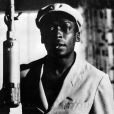
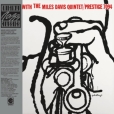
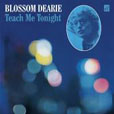
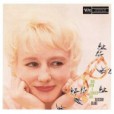
His first proper LP, recorded in 1955; with Red Garland, Oscar Pettiford, and Philly Joe Jones.
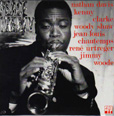
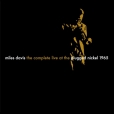
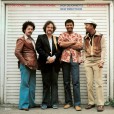
Recorded in Paris, 1965, at the time of the Vietnam peace talks. ‘Donald Byrd occasionally played with us at the Blue Note, so he came in and helped produce the record.’
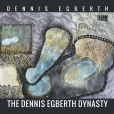
‘If you love the era in which electronic elements began to enter contemporary jazz, during the late ‘60s and ‘70s, you’ll LOVE what Sweden’s Dennis Egberth has been creating.
‘A blend of cosmic composition and chilled ambient and electronic sounds, with floating, irresistible, melodic bass lines, and long, modal build-ups that come alive with exploding lyricism.
‘The drummer is joined by Fredrik Ljungkvist on tenor sax and clarinet, Niklas Barnö on trumpet, Alexander Zethson on Wurlitzer, Linus Hillborg on electronics, and double bassist Joe Williamson.’
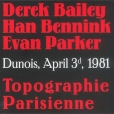
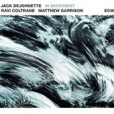
Live recordings made at Théâtre Dunois, Paris, in April, 1981.
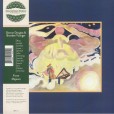
Bassist Dezron Douglas and harpist Brandee Younger doing over Alice and John Coltrane, The Stylistics, The Jackson 5, Pharoah Sanders, Kate Bush, Sting, and The Carpenters.
Douglas has worked with Pharoah Sanders and David Murray, amongst other jazz notables; Younger with Charlie Haden, Stevie Wonder, Lauryn Hill… Both are featured on Makaya McCraven’s Universal Beings.
‘It’s an uplifting suite of real, soulful comfort music — a spiritual salve.’
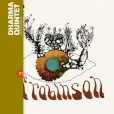
“We try to reach within free jazz the same sort of rhythmic cohesion as in bop… based not exactly on tempo, but something which feels like tempo. A kind of underlying pulse.”
This is Dharma’s first LP: from the same neck of the woods as the Cohelmec Ensemble, a mixture of spiritual jazz, free jazz and electric Miles — especially for its keyboards — infused by the anti-authoritarian politics of collectivism and anti-hierarchism.
Saxophonists Jef Sicard and Gérard Coppéré are moonlighting from Claude Delcloo’s Full Moon Ensemble.