

Your basket is empty

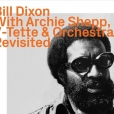
Three LPs, boldly mapping their own way through Fire Music, with elements of modern classical music and an abstraction of Mingus as their guiding stars: The Archie Shepp-Bill Dixon Quartet, originally released in 1962 on Savoy; the split Bill Dixon 7-Tette / Archie Shepp And The New York Contemporary 5 from 1964, another Savoy, with some ace Ken McIntyre; and the sombre masterpiece Intents And Purposes, by The Bill Dixon Orchestra — devised to accompany contemporary dance, and with some scorching Byard Lancaster — originally released in 1967 by RCA Victor.
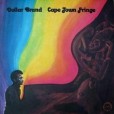
The towering jazz landmark originally issued in South Africa in 1974 under the title Mannenberg Is Where It’s Happening. Recorded with Basil Coetzee, Robbie Jansen, Monty Weber and Morris Goldberg, the music protested the evictions underway from District Six, whereby ‘coloureds’ were murderously booted out to Mannenberg township (where Coetzee was from). The LP sold by the thousands within weeks, becoming South Africans’ unofficial national anthem.
“I’d had the experience of playing dance bands, African dance bands like the Tuxedo Slickers, and we played xhosa, American swing music, mbaqanga… I also played with coloured dance bands — waltzes, quick-steps, squares, paso doble, then also the traditional Cape music…”
An upfully ravishing, hypnotically danceable, rootsily syncretic, universal call to resistance.
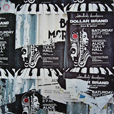
Magnificent jazz from 1977 by this nonet including Don Cherry, Johnny Dyani — both top-form — Hamiett Bluiett and Roy Brooks. The grooving, rolling, side-long Hajj — with eastern-style oboe — is knockout.
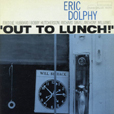
Another five-star, stone classic. Check his bass clarinet scorching into the Monk tribute, to start. Fire! The rhythm section — Anthony Williams and Richard Davis, Stravinsky’s favourite bassist — is stupendous.
‘Essential Vinyl’ series.
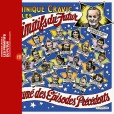
New recordings of self-styled ‘world tribal musette’ by this long-standing orchestra fronted by the ukulele of Dominique Cravic and the banjo of Robert Crumb. The valse musette of 1920s Paris, blending with Congolese rumba, gypsy jazz, Hindu waltzes, Argentine tango, blues, Paso Doble, chanson réaliste…
‘The Primitifs Du Futur travel on sound waves back in time to the early twentieth century and make the world seem like a far better place than it ever actually was. I cant get the band’s music off my turntable or out of my head. Accordion, mandolin, harmonica, saxophone, musical saw, and beautiful haunting melodies — what’s not to love? Even their sad songs make me happy’ (Art Spiegelman).
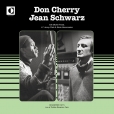
Don Cherry meets the Groupe de Recherches Musicales!
Recorded in 1977 at the Paris MIX festival organised by INA grm and hosted by François Bayle, this is a terrific, deeply congruent, soulful encounter.
Cherry plays pocket trumpet extensively and beautifully (also n’goni and whistles), with characteristically unguarded, elemental sublimity; Nana Vasconcelos is dazzlingly, hypnotically grooving. Electro-acoustic pioneer Jean Schwarz — a collaborator of Jean-Luc Godard — contributes elegant tape-work, synths, and treatments; his long-time associates Michel Portal and JF Jenny-Clark are highly accomplished European jazz legends. (Feted recently by Souffle Continu, the clarinettist is a mainstay of the Jef Gilson set-up, who recorded with Serge Gainsbourg, Karlheinz Stockhausen, and Sunny Murray; the bassist played on DC’s 1965 Blue Note classic Symphony For Improvisers… not to mention Brigitte Fontaine’s Comme à la Radio).
Remastered from the original master tapes; out here for the first time.
It’s a must.
Luminessence Series.
‘Sangam means ‘meeting place’ in Sanskrit. Don obviously knew exactly what he wanted to do, and Latif immediately understood, his fingers fizzing across the tablas at frightening speed… It was Don who suggested that Latif overdub new tabla parts to enrich and add complexity to the first takes. We could reasonably have expected to spend the night doing this because this was the first time the percussionist had done this. It took him all of five minutes to get used to listening to the first tracks over the headphones before playing them without the slightest mistake. When we got to the timpani, which he was playing for the first time, his keen sense of pitch and tone once again did miracles. During one take, just for the fun of it Latif started to play a fairly slow, disconnected duple time, moving on to three and then four… all the way up to 19 by which time his fingers were whizzing invisibly across the skins, leaving us in awe and him looking as if he didn’t know what the fuss was all about. All this just made Don even keener to impress his musical companion for a day…
‘Of course, the subtleties of this album call for greater analysis, for example the meeting between the Malian doussou n’gouni and Indian tablas, the Hammond organ taking over from the tampura, 5 1/4 time as if it were the easiest thing in the world, the reinvented Indonesian gamelan… and the lyricism of the pocket cornet.’
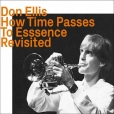
‘How Time Passes and Essence were issued at a time when jazz history was being made practically on a monthly basis. There are a few reasons why they became submerged in the tsunami of groundbreaking albums released in the first years of the 1960s. For starters, Candid and Pacific Jazz simply did not have the market clout of Atlantic, Impulse, and other labels. Furthermore, Don Ellis’ music differed significantly from that of the avatars of free jazz, occupying a space between contemporary jazz and mid-century chamber music. However, the times eventually caught up. More than sixty years after their initial release, these recordings were as prescient as they are brilliant.’
With Jaki Byard, Ron Carter and Charlie Persip, in the earlier group; then Paul Bley, Gary Peacock and Gene Stone / Nick Martinis.
Hard, rollicking soul-jazz by the Texas Twister — sideman to Ray Charles and Amos Milburn, spar of Cannonball Addereley — with Sonny Clark and Grant Green.
Dem Tambourines is for the dancers.
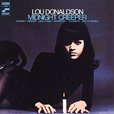
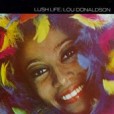
Bringing the funk in 1968, with George Benson, Lonnie Smith, Blue Mitchell, and Leo Morris (who became Idris Muhammed)... not forgetting Dapper Dan.
‘Classic Vinyl.’
With Blue Mitchell, Lonnie Smith, Jimmy Ponder and Leo Morris (aka Idris Muhammad) in 1967. Peepin’ steals the show.