

Your basket is empty

‘Classic Vinyl series.’
‘Channelling the great chordless trios of Sonny Rollins. An authoritative, belting New Cross blues, a feline Mel’s Mood and a stately, serene When You Know; all with a spontaneous immediacy that allows Ireland’s assured compositions to take unexpected directions. The closer Lips boils over in the outro, with the faders left up to capture the vibe.’

CD from Waxtime.
‘Following his ECM debut of duos with Markus Stockhausen, the pianist leads a strong cast through a programme of his compositions and sketches. Whether paying tribute to his mentor Lee Konitz on Honestlee, impressionistically conveying the glittering Melody Of A Waterfall, or generating impactful drama out of fragments of sound on Butterfly Effect, Weber continually draws fresh responses from his players.
‘The strong, grounded bass of Linda May Han Oh contrasts strikingly with Nasheet Waits’s fleet, fluid drumming, setting up new contexts for Ralph Alessi’s elegantly inventive trumpet and the leader’s highly creative piano playing.’
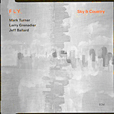
Mark Turner, tenor and soprano saxophones; Larry Grenadier, double-bass; Jeff Ballard, drums.
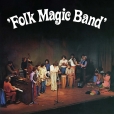
Originally released by the Folkstudio label in 1976, this is infectiously exuberant, eighteen-piece spiritual jazz in the tradition of the Arkestra, the Organic Music Society, and Mingus; strung between the post-war big bands and the Italian outernationalism of projects like Aktuala and Futuro Antico, drawing in music from Asia, Africa, and Latin America.
Iain Ballamy and Thomas Strønen, joined by Christian Fennesz. ‘Powerful grooves, evocative textures and exploratory improvisation, sometimes hypnotically insistent, sometimes turbulent.’
‘Heavier, drier, connecting more with how we actually sound live,’ says Strønen.
In 1979, just after the release of Prati Bagnati Del Monte Analogo, Messina was asked to perform at the Teatro Quartiere in Milan.
‘Due to the limited availability of key technical features, ’ he recalls, ‘it would have been too complicated to perform Prati Bagnati, and therefore I opted for these three pieces instead. We had never actually tried them all together, so I thought about renting a recording studio the previous afternoon. In that way, we could rehearse in a suitable place and use the opportunity to record the music on tape.’
The music has an unadorned, almost improvisational feel, skewered by passages of arpeggiated, meditative piano. Its chords layered and unfurled in real time via a reel-to-reel tape machine, the track Reflex recalls Steve Reich’s mesmeric phase-shifting works of the 1960s.
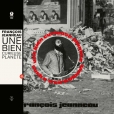
Janneau contributed to François Tusques’ 1965 landmark Free Jazz sessions. He was a stalwart of Jef Gilson’s big band in the years leading up to this first album as leader in 1975, with Jenny-Clark on bass and percussions, Bernard Lubat on drums, and Michel Grailler from Magma on spaced-out synths. The compositions are all FJ originals: check the monumental Droit d’Asile, the spooky Theme For An Unknown Island, and the homage Mr J.C. For Ever.
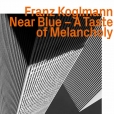
‘A soundtrack for being unstuck in time, if just for an hour. It is a glide through a rich past and present, with glimpses of a future worth reaching.’