Your basket is empty

‘Among the most influential European ensembles of the 21st century, this chamber group’s work on ECM and Hubro has redefined the boundaries between jazz, contemporary composition and folk music, developing a highly distinctive language built on restraint, timbral nuance and collective interplay…
‘Over time, the Ensemble has developed a language that is immediately recognizable — marked by reduction, clarity and a deep attention to sonic detail. While each release has its own character, the underlying aesthetic remains consistent: a focus on the inner life of sound itself. Rather than foregrounding gesture or virtuosity, the music draws the listener toward the smallest elements, where meaning emerges gradually through texture, spacing and timbre. The listening experience becomes one of concentration and proximity, where each sound carries weight, and the accumulation of detail forms a larger whole. References may be sensed — to early polyphonic music, Norwegian folk traditions, or more recent experimental practices — but these are absorbed into a singular musical language that resists categorization.
‘Non Sonett advances the group’s integration of electronics as a fundamental part of the sound world. Each musician engages with electronic elements alongside their acoustic instruments, creating a layered and dynamic sonic environment. At times, this leads into extended, exploratory passages reminiscent of analogue musique concrète; at others, electronics operate almost imperceptibly, subtly altering and extending the acoustic textures in real time.’
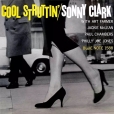
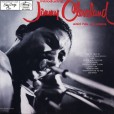
It’s a must. The bluesy, grooving title track is essential Sonny. With Art Farmer (playing superbly), Jackie McLean, Philly Joe Jones and Paul Chambers.
Blue Note Classic Vinyl series: all-analogue, mastered by Kevin Gray from the original master tapes.
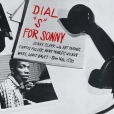
‘Classic Vinyl Series.’
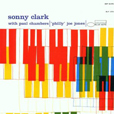
The 1957 recording with Paul Chambers and Philly Joe Jones.
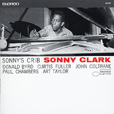
Kind of a dry run for Blue Trane, a couple of months later: with JC, Byrd, Curtis Fuller, Paul Chambers, Art Taylor; a latinized Speak Low, and SC’s own, wicked News For Lulu.
‘Classic Vinyl.’
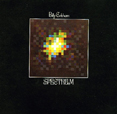
First record as leader for the Mahavishnu drummer — featuring Tommy Bolin on guitar and Jan Hammer, keys — this is heavy fusion, with some deep funk. Massive Attack sampled Stratus for Safe From Harm.
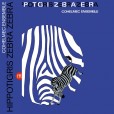
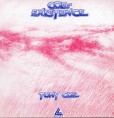
COH as in Jean Cohen (saxophones), EL as in Dominique Elbaz (piano) and MEC as in the brothers François and Jean-Louis Méchali (bass and drums) — joined by the American clarinettist and flautist Evan Chandlee for this debut album, originally released by Saravah in 1969.
“We wanted to avoid that kind of ‘free’ which is characterized by pounding drumming and a saxophonist freaking out in the high register, that type of music that kicks off suddenly then stops without us being able to sense the motivation. There is never any difference in intensity: nothing is destroyed, nothing is created, nothing is elaborated, nothing is questioned — when, even on the simple level of sound, there is so much that can be done.”
With French roots running back through the music of Jef Gilson, and pitched at the time somewhere between ESP and Actuel/BYG, with full-blooded nods to the likes of Cecil Taylor, John Coltrane and Walt Dickerson, this is expert, exuberant music-making, searching out its own way.
Ten tracks, even-handedly improvised and composed, beautifully played; intense and free-spirited but always engaging, attentive and communicative.
Top-notch sound; heavyweight gatefold sleeve with obi-strip; twelve-page booklet.
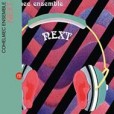
Their second LP, from 1971, with guitarist Joseph Dejean from the Full Moon Ensemble propelling the music forwards, as pianist Dominique Elbaz stands down.
The sound swells and contracts dramatically across the eleven tracks and interludes, with fresh senses of break-down and silence, and new intimacy. There is some Steve Lacy to its fierce repetition of key phrases; some Sharrock to Dejean; sparing experimentation with effects; portions of central African polyphony (Boa Constrictor), summer-breeze funk (Desert Angel), and plenty of characteristically rootsy prog and cosmic skronk.
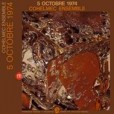
A live recording of a concert given at the Theatre de l’Est Parisien.
Stretched-out but closely textured and highly evocative, more bluesy than before, and brooding with Milesian intensity.
There is a strong spirituality to all of Cohelmec’s music ... but here they go deep.
Try Teotihuacan. Killer.
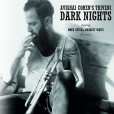
The outstanding trumpeter with Triveni cohorts Omer Avital and Nasheet Waits… also featuring his sister Anat brilliantly playing clarinet, and vocalist Keren Ann ravishingly invoking Chet Baker. A Mingus, a Strayhorn, Frank Foster’s Shiny Stockings and an Ornette tribute, in amongst the originals.
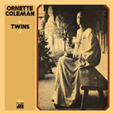
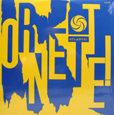
With Scott La Faro (bass), Ed Blackwell (drums), Don Cherry (trumpet), Charlie Haden (bass), Billy Higgins (drums); also Eric Dolphy (bass clarinet) and Freddie Hubbard (trumpet).
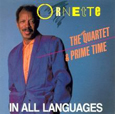
Original copies of the 1987 double-LP: OC on one record with Don Cherry, Charlie Haden and Billy Higgins; on the other with Prime Time… Bern Nix, Denardo, Jamaaladeen Tacuma and co.