Your basket is empty

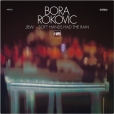
‘From the trio’s elusive Ultra Native LP, released in 1971. J.B.W. is hard-grooving fusion with dark minor chords, opening with an almighty drum break. Soft Hands Had the Rain features Peter Trunk strutting his stuff on Fender bass, as well as cello overdubs, alongside Rokovic’s brooding improvisations on electric keys.’
AAA transfers from the mastertapes; handsomely sleeved.
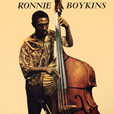
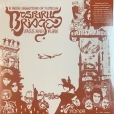
The pioneering Arkestra bassist — that’s him playing arco on Rocket No. 9. in 1959 — leading his own 1975 session, evenly grooving and improvisatory, with great tunes. Check the Middle Eastern vibes of the opener.
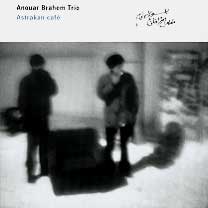
With Barbaros Erkose, clarinet; Lassad Hosni, bendir, darbouka.
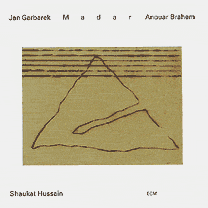
From 1990 — a trio with oud, violin and percussion.
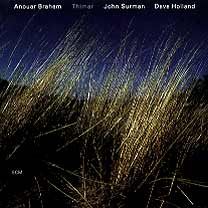
John Surman, bass clarinet and soprano saxophone; Dave Holland, double-bass.
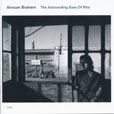
Crafted, swinging, soulful Middle Eastern jazz, led by oud and bass clarinet. Dedicated to the great Palestinian poet Mahmoud Darwish. (Why he didn’t win the Nobel Prize isn’t a mystery.)
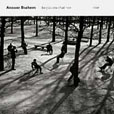
Ravishing, chilled interplay between oud, piano and accordion.
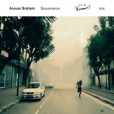
A hypnotic, at times starkly dramatic meditation on the Arab Spring by the wonderful Tunisian oud player. Persistently framed by shimmering, glowing strings, the quartet marks the return of pianist Francois Couturier — from Le Pas Du Chat — alongside Klaus Gering on bass clarinet, and bassist Bjorn Meyer.
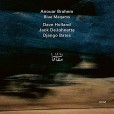
The master oudist with Jack DeJohnette, Django Bates and Dave Holland.
‘Not only one of the year’s best ECM releases; it’s a classic-in-the-making that should ultimately be considered one of the label’s very best recordings in its nearly fifty-year history’ (All About Jazz).
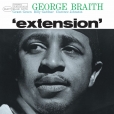
His best, most adventurous LP — reaching but carnivalesque — with George reining in his inner Roland Kirk, Grant Green keeping it real, and underrated organist Billy Gardner pushing the boat out into more unpredictable waters.
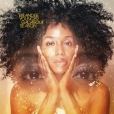
Playing Alice Coltrane’s very own, restored harp, leading her longtime trio of Rashaan Carter on bass and Alan Mednard on drums (with contributions by Shabaka, Meshell Ndegeocello, Makaya McCraven, and co).
“We’ve all spent the past two or three years on the road and so there’s a personal and musical familiarity when we come to record together. Since Rashaan also produced the album and we decided to record it all at my home, it created a comfortable intimacy that kept us honest, since there was no one else there except for us. It produced spontaneous improvisations on tracks like Reckoning and Discernment, which came about entirely in the moment. While on End Means I had the time to decide on using an extended technique on harp, which muffles the string like a kalimba. You hear those moments come through far more on this album than any others I’ve created.”
“Everyone who featured on the record came through organically and it all fed into the overall theme of the album, which is playfulness. The gadabout is someone who is looking for happiness and that’s something I’m always trying to do with my band, especially when we’re exhausted and on tour! Ultimately, this is an album about finding joy throughout the journey, which is something everyone can relate to.”
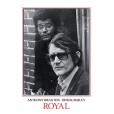
Recorded in 1974, at the Royal Hotel in Luton, with Braxton playing soprano and alto saxophones, and Bb and contrabass clarinets. Two volumes were planned; only one was issued, till now. This was an early transatlantic meeting between leading free improvisers. Many of Braxton’s signature techniques and ideas were gestated in such sessions. It still brims with inquisitive musical creativity and knockabout jazzbo allusiveness.
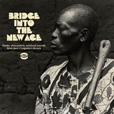
Earth-moving stuff here, of course, with Joe Henderson, Alice Coltrane, Gary Bartz, Norman Connors… but ‘forgotten’? Even as a marketing angle, you must be kidding.
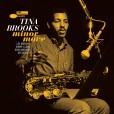
His first session for Blue Note, with a killer lineup: Sonny Clark, Lee Morgan (just nineteen), Doug Watkins and Art Blakey.
The bluesy Nutville and latinized Minor Move are Brooks originals. He takes a jacking reading of Jerome Kern’s The Way You Look Tonight for his own. Star Eyes is borrowed from Bird, showing off Lee Morgan, with a magical, inimitable solo by Sonny Clark.