
Your basket is empty

‘From 1972, the third and last album by this group formed in Johannesburg’s Alexandra township in 1968, announcing a shift away from early Memphis soul influences towards a pioneering African-driven jazz sound, and laying the foundations for the afro-fusion scene spearheaded by groups like Batsumi, The Drive, and Harari.
‘Black Soul features a who’s who of musicians from great South African bands over the decades: Zacks Nkosi, the renowned bandleader of the Jazz Maniacs and long-time member of the African Swingsters in the 1940s and 50s; kwela star Little Kid Lex Hendricks, known for his Columbia recordings of the late 1950s; Zack’s son Jabu Nkosi, who would go on to play with The Drive, Roots and Sakhile; and Banza Kgasoane later a member of The Beaters, Harari, and then Mango Groove.’
The Beaters started out amidst the Soweto Soul explosion, inspired by the music of Stax and Motown. They supported the likes of Percy Sledge and Timmy Thomas. During a three-month tour of Zimbabwe (then Rhodesia), they were inspired by the strengthening independence struggle, and musicians such as Thomas Mapfumo, drawing on African musical styles and traditions. Back home in Johannesburg, they swapped their Nehru jackets for dashikis, and grew Afros. Their new Afro-centric rock and funk transformed the SA scene. Black Power in music, to get you on the good foot. ‘During apartheid times we made people laugh and dance when things weren’t looking good,’ remembers drummer Sipho Hotstix Mabuse.
Here, Love Love Love retains the influence of US soul, whilst Harari, Inhlupeko Iphelile, Push It On and Thiba Kamoo encapsulate the new direction; with a bump-jive workout, fired up by Kippie Moeketsi and Pat Matshikiza, to close.
Brothers Nkululelo and Siyabonga Mthembu reworkimg the music of Mongezi Feza, Johnny Dyani, the Malopoets, Batsumi, and Philip Tabane.
Old wisdom in new voices, new wisdom in old voices. Tolika Mtoliki, ‘Interpret Interpreter’.
“Just brilliant,” says Gilles.

Magnificent Wolof drum music, performed by an extended griot family in the mystical setting of Lac Rose, outside Dakar.
Doudou Ndiaye Rose — who died in 2015 — is a key drummer in the musical history of the world. He developed a system of five hundred original drumming patterns, ancient and new. Amongst the modern rhythms here is Bench Mi — ‘under the Baobab tree,’ a spot where where problems get solved. Also Hibar Yi — ‘passing on information’ — the theme-tune of Senegalese TV national news for decades — and Les Rosettes, the signature rhythm of Senegal’s first ever all-female percussion group, convened by Doudou, and named after his grandmother.
These original compositions sit alongside important traditional rhythms, familiar to every Sabar player, such as Farwu Jar ( a courtship game sometimes resulting in a wedding), Ceebu Jin (also the name of the national dish of fish and rice), and Gumbé, often played after a successful harvest.
Recorded in joyful single takes, over seven consecutive days in February 2020, with no overdubs, mastered by Rashad Becker, the music is deep and thrilling, polyrhythmic to the bone, with a complex, pointillistic intensity at times evoking Jeff Mills in full flight.
‘Though one long piece, New Old Medicine moves through several unofficial chapters. It originates in the psychic depths with a pensive melody. Gradually solidifying, the organ’s first solo ushers the piece into a swaying, reverent dance. This dance nears its end with a vigorously percussive section on oud, handing it off to the violin for a climactic solo. A momentary pause, then the rhythm thickens, and the musicians ride untethered through the midnight. This frenzy is followed by a calm repose on placid water. But this calm is merely a deep inhale before the final charged ascent into cosmic rapture.’
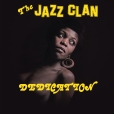
‘One of the best, rarest and most sought after South African recordings of the early 1970s, available again for the first time since its original South African release — the tough, jubilantly swinging township groove of The Jazz Clan’s 1973 debut LP, Dedication. It captures the acoustic jazz sound of the early 1970s in its pomp — a handful of tightly wound songs jostling for space, blending uptempo soul-jazz sensibilities with Latin influences and pronounced township jazz accents, the latter especially audible in Dimpie Tshabalala’s piano vamps, Jeff Mpete’s pattering hi-hat emphases, and the unmistakably South African swagger and dip of the horns on cuts like Rabothata. It is music on the brink of a transition, looking ahead but still dedicated to the sound of the golden years, and it could have been made nowhere else on earth but in Soweto.’
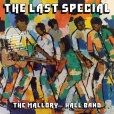
Blue Mabone!
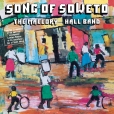
Like The Last Special, this was recorded at Johannesburg’s Video Sounds Studios in December 1974, in the depths of the apartheid era, by a twelve-piece touring band from California which immediately moved beyond the segregated hotels and ballrooms to build links with local South African players and audiences.
Featuring pianist Kirk ‘Habiba’ Lightsey, Rudolph Johnson from Black Jazz, and Billy Brooks, both records are superbly arranged slabs of peak 1970s funky big-band soul jazz, with tasteful Latin inflections and more than a nod to South Africa’s upful township jazz sound.
Try Hamba Samba!

A dazzling survey of the last, bohemian flowering of the so-called Golden Era of Ecuadorian musica national, before the oil boom and incoming musical styles — especially cumbia — swept away its achingly beautiful, phantasmagorical, utopian juggling of indigenous and mestizo traditions.
Forms like the tonada, albazo, danzante, yaravi, carnaval, and sanjuanito; the yumbo, with roots in pre-Incan ritual, and the pasillo, a take on the Viennese waltz, arriving through the Caribbean via Portugal and Spain.
Exhumations like the astoundingly out-there organist Lucho Munoz, from Panama, toying with the expressive and technical limits of his instrument; and our curtain-raiser Biluka, who travelled to Quito from Rio, naming his new band Los Canibales in honour of the late-twenties Cannibalist movement back home, dedicated to cannibalising other cultures in the fight against post-colonial, Eurocentric hegemony. He played the ficus leaf, hands-free, laying it on his tongue. One leaf was playable for ten hours. He spent long periods living on the street, in rags, when he wasn’t in the CAIFE studio recording his chamber jazz-from-space, with the swing, elegance and detail of Ellington’s small groups, crossed with the brassy energy of ska — try Cashari Shunguito — and an enthralling other-worldliness.
Utterly scintillating guitar-playing, prowling double bass, piercing dulzaina, wailing organ, rollicking gypsy violin, brass, accordion, harps, and flutes. Bangers to get drunk and dance to. Slow songs galore to drown your sorrows in, with wildly sentimental lyrics drawn from the Generacion Decapitada group of poets (who all killed themselves); expert heart-breakers, with the raw passion of the best rembetica, but reined in, like the best fado.
Fabulous music, like nothing else, exquisitely suffused with sadness and soul. Hotly recommended.
Sumptuously presented, in a gatefold sleeve and printed inners, with a full-size, full-colour booklet, with wonderful photos and excellent notes. Limpid sound, too, courtesy of original reels in Quito, and Abbey Road in London; pressed at Pallas.
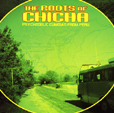
Chicha is the late-sixties, in-thing scrambling of traditionally-demented cumbia dance music. Uncouth electric guitar and organ join the mix, with other electronic debauchery.
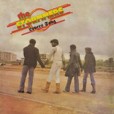
Classic early-eighties Nigerian disco, fronted by Ronnie Pearl from Aktion and Jake Sollo from the Funkees.
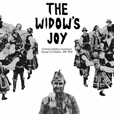
The forgotten music of the Austro-Hungarian diaspora in the mid-west of the United States. An Ian Nagoski compilation to inaugurate the label, with a cover by Eric from Mississippi Records.
Fired-up, originary African pop, conjuring the Congolese rumba from imported Latin 78s — with thumb pianos, kazoos, banjos, bottles, violins, and irresistible little songs about pimps, dope, clubbing, sex, death.
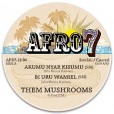
Scintillating, hard-grooving, vintage afro-funk from coastal Kenya, drawn from rare sevens and a privately pressed LP.
It opens and closes with killer forays into left-field disco, featuring limber percussion and delirious synths, and breakdowns set to liquify dancefloors. Uru Wamiel catches the double-dutch bus to Mombasa, whilst Ndogo Ndogo is irresistibly reminiscent of early eighties New York crossover funk like Monyaka, with clattering drums, rough rhythm guitar, party-down bass, burning horns and all-together-now singing.
Lovely music, beautifully presented in die-cut, silk-screened sleeves.
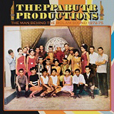
Profiling producer Theppabutr Satirodchompu — the first in a series of albums celebrating the key-players of modern molam music, from Northeast Thailand. Limited vinyl from Light In The Attic.