










Your basket is empty

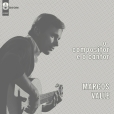
His second LP is foundational bossa. With the spotlight on acoustic guitar and his caressing voice, these are spare, intimate renditions of songs which would become much-versioned standards, severally revisited by Valle himself. Listen out for the blueprints of Astrud Gilberto’s hits The Face I Love and So Nice, for example.
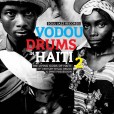
Soul Jazz back in Port-au-Prince after twenty years, to record again with the Drummers of the Société Absolument Guinin. Mesmeric rhythms and beats traditionally used to induce spirit possession in the Vodou religion — ‘dynamic and riveting in their intricacy and power,’ said the Quietus about the first volume.

Two EPs of storming, squinty Shangaan Electro to herald the European tour of Tiyiselani, the Tshetshas and producer Dog, in the summer of 2011.
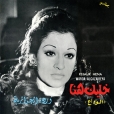
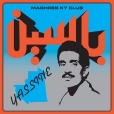
Warda Ftouki is one of the great Arab divas of the twentieth century.
Aka Warda Al-Jazairia, Warda the Algerian was forced to leave Algeria in 1956, when FLN guns were discovered in her dad’s nightclub. (Warda was a lifelong, unflinching supporter of independence.)
Aged twenty, now singing in Beirut cabarets, she became the protege of Mohammed Abdel Wahab. Returning to Algeria after independence in 1961, she took a ten year break from singing, because this was forbidden by her new husband. She left him in 1972, moving to Egypt, where she married Baligh Hamdi.
Here she is in 1973, singing a composition by Hamdi, backed by a full Egyptian orchestra, including electric guitar and organ, in front of a euphoric, adoring crowd.
Wonderful music — swirling and grooving with dazzling virtuosity; imperiously funky and giddily soulful.
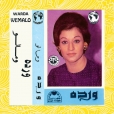
The great Algerian diva of Arab song — a Dilla favourite, incidentally — accompanied by a full-sized orchestra, augmented by electric guitar and organ, in a characteristically grooving, classy composition by her old man Baligh Hamdi. This reissue features newly remastered audio, the original cassette artwork, and a two-page insert with a new introduction by Mario Choueiry from the Institut du Monde Arabe
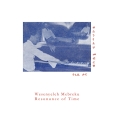
Soulful, lo-fi, Casiotone renditions of Amharic folk songs and lullabies, Tigrinya love songs, Gurage and Oromifa popular songs, and hits like Tilahun Gessesse’s Tiz Alegne Yetintu.
A landmark recording from Ethiopia’s vibrant 1980s cassette culture.
”Instrumental music, for me, is a space of reflection. Without words, the listener is invited to remember, imagine, and feel freely. In Resonance of Time, I hear my own musical philosophy: respect for Ethiopian kignit, careful dialogue with Western harmony, and a deep trust in melody as a storyteller.”
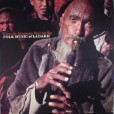
Precious witness to the dying musical traditions of Ladakh, high in the Western Himalayas, for centuries a hub of the Silk Road to India, Tibet, and Kashmir.
Summery, joyous, experimental pop; full of musical surprises and emotional twists and turns. The lush brass and woodwind arrangements are guided by Antonio Neves. Classic songwriting and cutting edge production, lit up by the beauty and chaos of Rio, and its sounds and rhythms; inspired by the pioneers of Música Popular Brasileira.