

Your basket is empty

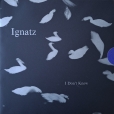
Ignatz is the alter-ego of Belgian musician Bram Devens, who has released a string of albums for labels like (K-RAA-K)³, Ultra Eczema, Fonal, Mort aux Vaches, and Okraïna, over the last twenty years.
Devens recorded this wonderful, haunted music at home in Landen, on the family piano.
There is pervasive, ambient Dub, mesmerically shifting; sometimes aghast. Somewhere in the swirling mist are the guitarist Hans Reichel, and blues pianists like Jimmy Yancey, amongst other ghosts. Time Well Spent even musters a kind of motorik energy, determinedly mis-firing.
It is quite unlike any other piano record.
Beautifully presented, too, to the customary high standards of this label.
Check it out!
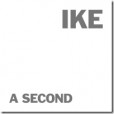
The 1982 NYC-post-punk classic, bundling together Can, DAF, PIL and Joy Division.
The sole album released by Factory US.
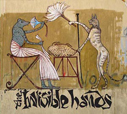
The exciting Cairo-based project of Alvarius B (Alan Bishop from Sun City Girls and Sublime Frequencies), with Cherif El Masri, Aya Hemeda and Sam Shalabi. Fully-fledged, dark, Middle-Eastern-flavoured psych-folk.
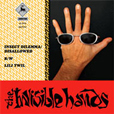
The A is a fully-orchestrated version of two Alvarius B. tracks (one from the Sun City Girls’ 330,003 Crossdressers From Beyond the Rig Veda LP); the B is a Morrocan folk cover sung in Arabic by Aya Hemeda.
‘Based in the south of France, Beduneau builds intricate self-playing installations and DIY electronics. Bringing a fresh and personal perspective to electronic and electroacoustic music, his work is intent on opening up dialogues about the social construction of disability, and other norms and conventions.
‘‘Clairon’ refers both to a medieval trumpet and to the beloved with whom this music was first shared, as a kind of impressionistic, though deeply moving sound-diary, during the stillness of the pandemic. The movement of air, pressure, resonance, and the physical properties of the trumpet are reimagined; organic ASMR tones, synthesized bird calls, and pirouetting melodies of pipes and bells score an imaginary biodome where chaos and harmony coexist.
‘Striking, singular, and boundary-pushing.’
Ravishing jazz and electronics from the same stumbling, giddy reaches as La Monte Young and Terry Riley, recorded in Texas in 1981 on multi-tracked organ and synths (with tape loops of birds and wind-chimes), and acoustic guitar.
‘My music is designed to enhance deep meditative, or altered states, to allow the listener to personally connect to the Creator of All that exists in the Universe. My music style is to first create a foundation using cyclic, polyrhythmic music, then build several layers of improvised leads and rhythms that allows you to transcend time and space… We have Memories of Past Lives that reverberate in our hearts like Echoes From Ancient Caves.’
‘To start with, disorientating; something you can’t quite grasp. Further listening discerns a futuristic, unsteady metropolis. At times, the music is soft and expansive; at others, sharp and distorted. Folk and pop sensibilities emerge, suspensively. Voices thread in melodic, indistinct, sirenic messages, guiding us through.’
The Observer raved about a recent performance of this at the Wigmore Hall: ‘Solo for Cello (and fixed audio) was the highlight, an extensive, ghostly work played by Apartment House’s indefatigable artistic director, Anton Lukoszevieze. Imagine a baroque dance suite — with the familiar figurations of arpeggios, quick finger work and string crossing — played muted and whispered a few galaxies away, and you get the idea.’
The performer of this recording, Anton himself has written that Solo is ‘an extended exploration of the resonant body of the cello, but also a kind of flickering, glitchy and incessant ‘moto perpetuo’ of extreme intensity and a delicate beauty. The cello has a particular scordatura tuning, which creates an enigmatic harmonic ‘space’ to its sounding throughout the work. As the cellist constantly bows the heavily muted cello with varied arpeggiated freneticism, the instrument emits a particular halo of harmonic resonances creating a spectral and ghostly effect, deceptive and illusory. The work gradually morphs into different sections, each with their own particular motivic identity, at times accompanied by an audio playback of various densities. The latter sections of the work have a baroque-like lightness and ornamental quality, but do not allay the dramatic incisiveness of the the work, which ends with a final enigmatic spasm of sounds.’
And the composer Sheen advised the mastering engineer that ‘the cello is muted with a very heavy metal mute which thins out the sound massively, and Anton plays a super-light bow with extreme flautando, which creates a strange thin wispy sound. I’d like it to sound as distant and liminal as possible, with a lot of bow sound and strange resonances from the harmonics of the cello. With the exception of a few obvious spots where it gets louder and fuller, there should be as little ‘core’ to the sound as possible, but as many strange resonances as possible. The words we used a lot of in rehearsals were ‘baroque’ and ‘internal’ and ‘light’. I hope this helps.’
Transfixing, and good for ears; with luminous strands of Marin Marais, Derek Bailey, and Eliane Radigue.
Check it out!
Grieving, hushed, involving music for voices, field recordings, and white noise, performed by Kantos.
A piano quintet composed for and recorded by Apartment House.
‘The instruments are muted and heavily prepared. Players are instructed to perform very quietly with an exaggerated flautando, using as much of the bow as possible while producing minimal sound. Sheen often even asks them to mime. The result is an unsettling disconnect between the intensity of physical exertion and the sound produced’ (Ed Cooper, VAN).
‘Press moves with grossly impoverished intent… trembling and stumbling on the cusp of accident… right on the edge of culture, just before language. Most of the time, it is enough simply to breathe and move: the complexity of these actions alone is astonishing… And then, through the buzz of wood, guts, and bluebottles, a piano appears—all shining lacquer, muscle, and grammar’ (Ed Atkins).
“When people play my violin pieces, I always joke with them that when you start playing them, the audience should feel like they’ve gone deaf or something. The sound is so not there that you should think there’s something wrong for a second…
“It’s so disappointing when you see a bunch of instrumentalists walk on stage and you already know how the piece is going to sound. It’s not what music is about for me…
“The word ‘liminal’ is such a cliché but it’s annoyingly pertinent for my music. Trying to find a sweet spot between states: in between presence and not presence, in between tonality and not tonality, whatever that is, between noise and pitch. I really want things to sit in an uncertain middle ground between everything.”
An oneiric, melancholic cross between ambient, soundtrack, and audio drama, conjured from recordings made in the middle of a forest in Lithuania, near the Devil Museum in Kaunas.
‘I listened to the door hinge and I recorded the river, with its small islands of ice brushing up against the banks like a pulse.’
An anti-war garage-punk onslaught from 1966, doing Bo Diddley proud.
Backed here by The Leaves (plus drummer Don Conka from Love), BJ knocked around with everyone from the Rolling Stones to Frank Zappa.
Anyway… they brought it to Jerome.
The legendary Library album by Sandro Brugnolini and Stefano Torossi, undercover in 1975 for contractual reasons.
Bad-ass headz vibes — madly sampledelic, super-funky, jazzy and widescreen — with the genies of Herbie, Barry White, Isaac Hayes and the Mizells, all in the mix.
‘A kind of musical road movie, shifting gears through time, space, and reverie, with an itinerary and cast of characters looming in and out of focus. Post-punk chanson with an ear for micro-tonality. The balance of mutant music-boxes and dewy miniatures recalls otherworldly hits from Gareth Williams’ Flaming Tunes, The Residents, and the catchier corners of the Lovely Music catalogue.’
Two fabled, previously unreleased soundtracks — hallucinogenic orchestral music for Patrick Chaput, and a waltzing, rhythmic onslaught for Robert Benayoun — complete with an extensive booklet of essays, interviews, secrets and rare images from both films.
Recorded by Jean Michel Jarre in 1972, during his work experience at G.R.M. (Groupe de Recherches Musicales), for a commission to provide sound for public spaces like airports and libraries. Fifteen tracks made with only two synthesizers (EMS VCS3 & Farfisa organ) in an experimental and very minimal style.
‘It was a crazy album, totally homemade, with rhythms that I made in my student room, with a minimum of equipment and at the same time electronic sounds that I stole from the GRM where I went at night after stealing the keys to the studios. It is a pirate record, in every sense of the word, in which we find what I did afterwards.’