


Your basket is empty

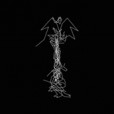
‘A whole new level of weird,’ according to Warp’s sales notes: ‘Lopatin describes Garden Of Delete as a ‘self- portrait’... Musically the album contains a plethora of ideas spliced together seamlessly: great rushes of death metal and distorted R&B pop vocals, for example, all woven together with typically OPN broken chord synths and sleek sound design.’
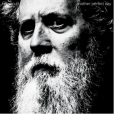
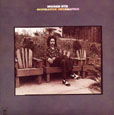
‘Boomerangs back into the slashing chords and frenzied double-picking of the Harry Pussy years, tossing the gentler melodic glow of the last few solo records into the dustbin. In other words, this may be Orcutt’s most overtly punk-rockist record since Gerty Loves Pussy, his first solo electric LP from a decade ago. It’s an affirmation that Orcutt is above all a lead player—angular runs scaling the heavens, ricocheting back to ground zero before climbing again. Orcutt builds tension with short phrases, repeated with slight variability until it seems like they’ll never stop, finally slamming into a fresh line like the dawning valley at the crest of the mountain pass. Another Perfect Day is, ultimately, something of a solo guitar Nouveau Roman, an exhilarating run through melodic reiteration, impossible crescendos (check out those ecstatic crowd hoots on For the Drainers) breaking into—a moment rarely found on an Orcutt record—soft, whisper-quiet tracer notes at the end of A Natural Death. Another Perfect Day returns Orcutt to the immediacy of his earliest records while maintaining the melodic complexity, phrasing, and flow of a player, who’s been going, what—four-plus decades now? And when he taps his roots, it’s a reminder of exactly what was so exciting about Orcutt’s playing in the first place.’
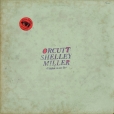
A harum-scarum bloodbath of sixties rock, seventies motorik-fusion, and eighties punk.
‘The landscape Orcutt Shelley Miller inhabits lies deep in the stoner American bedrock, fed by volcanic riffage and hypnotic phrasing with rhythmic nods to the SoCal ’60s and atonal slash piled on a mid ’80s SST punk-fusionoid substrate, ultimately blasting a ‘big rock statement’ that treads the line between good times and blown minds.’
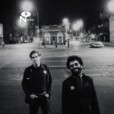
Terry Ork was an absconder from Warhol’s Factory. Starting in 1975, his label issued the debut 45s of Television and Richard Hell, as well as landmark recordings by The Feelies and Lester Bangs, not to mention Big Star’s Alex Chilton and the dBs’ Chris Stamey, and such acts as Marbles, Prix, Mick Farren, Cheetah Chrome, the Idols, the Erasers, the Revelons, Student Teachers etc etc.
The deluxe 190-page hardback book is stuffed with terrific photos. The exquisitely sleeved bonus 45 features two previously unreleased tracks by The Feelies — The Boy With The Perpetual Nervousness from 1978, and a cover of Bacharach and David’s My Little Red Book, recorded live at CBGB, late 1976.
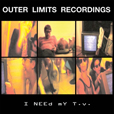
‘A Squeeze-meets-XTC vibed track that will appeal to fans of the Rangers, as it sounds like a half-remembered lost classic from an ‘80s infomercial beamed onto a thrift-store VHS.’
The basis of these works is a set of scintillating, widescreen improvisations by the Brussels-based pianist Pak Yan Lau (prepared piano, toy pianos, synth, objects and electronics) and Darin Gray (bass, preparations, objects and electronics), who has played alongside Jim O’Rourke for twenty years.
Over time Pak Yan added, layered, twisted, subtracted… including a recording of the underground tram in Albert, Brussels, for example. “I frequent this station all the time,” she says, ‘because my daughter goes to kindergarten there. One day there was an electricity problem, the whole station was humming, beautiful overtones coming out.”
“I liked the contrast between trudge (meaning you kind of move forward with difficulty and obstacles on your feet) and lightly (even in that situation doing it gracefully and lightly). The music on this record has that light/dark–ness.”
‘Mesmerising, fresh, inventive and intense,’ writes Stef Gijssels for The Free Jazz Collective.

‘Palestre is a study of higher-dimensional spaces and altered states of consciousness. It explores parallel dimensions and temporal anomalies from a perspective that blends mythology, modern physics, ADHD, transcendental music and club culture.
‘Sciogli Assurdi was recorded between art galleries, clubs, squats, and folkloric festivities in 2018.’

This is a great way into Partch, revisiting with gusto three well-known, relatively-compact works — a highly rhythmic dance piece, a cross-cutting film score, and Barstow, with HP intoning hitchhiker graffiti.