

Your basket is empty


45s and rarities — classics like Ace Of Spades — recorded for the Swan label of Philadelphia, 1963-67, at his brother Ray Vernon’s rough and ready studio in Washington DC. With younger brother, Doug, on the drums and Shorty Horton on bass, and Ray on second guitar.
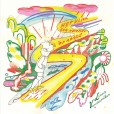
Linus plays the hommel, a forerunner of the Appalachian dulcimer, flutes and rattles; and sings.
‘The hommel has existed since the middle ages, but the earliest example still intact is from 1608. Once a staple in most households in the Low Countries, it is a true folk instrument, of the people, mainly played in the past by women who used their kitchen tables as resonating surfaces to amplify & accompany traditional religious & secular tunes. Nowadays it is seen rarely outside of museums in Brussels & other places you most likely have never heard of. It is not spectacular, its simplest version is just a long thin box with strings on top. Some of the strings are melody strings, which have frets placed underneath them, the others are drone strings that have no frets. Traditionally it was strummed with a goose feather & notes were made by sliding a hard stick with a handle, from fret to fret on the melody strings leaving the drone strings ringing openly. The constant hum of the drones is where the name of the instrument comes from: in Flemish, a bumblebee is a hommel.’
Lovely stuff from the wonderful Okraina.

Startling, exhilarating concrete music by this experimental Canadian film-maker, beloved of Stanley Kubrick and George Lucas. (A homage to him is embedded in Star Wars.)
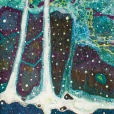
His treasurable third solo LP in three decades of collaborative work as Vilod, the Moritz Von Oswald Trio, Non Standard Institute, Sun Electric, Ambiq, and company.
‘Max at his most exhilarating, morphing through bittersweet and optimistic soundscapes to bleak moments of throbbing unease — all while maintaining a musical grace and elegance. Petrichor is a reflection of Loderbauer’s impactful trips to the mountains, and returning from these summits with an electrifying urge to paint this mighty perspective. The harmonies and melodies on the tracks simulate emotional peaks and valleys, with vibration and rhythm rooted in the foundation of the sound, as though woven into the fabric of the fauna and flora.’
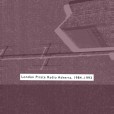
The first volume in a two-part collection of pirate radio adverts & idents, assembled from home recordings of London stations made between 1984 & 1993.
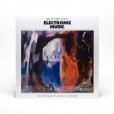
Three rare recordings by this pioneer of early Danish electronic music — compelling, often dazzling, but focussed and without bombast.
‘Electronic Music was originally released in 1987 as a retrospective album, collecting three of Bent Lorentzen’s electronic works from the 70s. These clearly demonstrate Lorentzen’s close familiarity with his equipment and his great technical proficiency regarding the creation and manipulation of all sorts of electronic and recorded acoustic sounds — typically in the form of speed changes, reversed sounds, and reverb and filter effects. The music is often quite dramatic with distinct narratives and multiple dynamic layers of sound, but still with a clear sense of disposition and restraint, possibly stemming from Lorentzen’s experience with classical instrumentation and orchestration.’
Fastidiously prepared and stylishly presented by IDL, as per.

‘Deep and haunting; a dense tapestry of layered percussion, time-warped tape loops, and spiralling drumgita figures, all underpinned by hypnotic improvisations from Brazilian pianist Rafael Dos Santos. Privately pressed in 1982, it is both ecstatic and unsettling, a landmark recording in black British experimental music.’
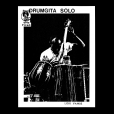
A reissue of Vambe’s privately pressed album from 1982.
‘Occasionally, you find music outside the commercial mainstream, outside of everything – the music of visionaries, eccentrics, inventors, loners. Moondog, Daphne Oram, Harry Partch are from this mould. And so too is Lori Vambe.
‘A self-taught drummer, inventor, and sonic experimentalist, who moved from Harare to London in 1959, Vambe is a unique figure in British music. The creator of his own instrument, the drumgita (pronounced ‘drum-guitar’) or string-drum, Vambe intended to create a kind of music that had never been made in order to pursue access to the fourth dimension. The album plays with time, mixing hypnotic, trance-like drumgita pieces with the same segments played backwards. You can hear echoes of African drumming traditions, minimalist repetition, and tape-manipulated musique concrète— but ultimately, the album defies genre. It is a solitary voyage, spiritual and futuristic.’
‘An extraordinarily lush, poignant collaboration… Bombscare bleeds mood, space, and texture as sounds ring out and echo into the distance. Hand So Small works like a literate lullaby as musical flourishes appear from thin air, a piano haunts the outskirts of the song, and Alan Sparhawk and Mimi Parker take turns singing about life “getting smaller.” So Easy (So Far) is perhaps the most traditional Low song, but Spring Heel Jack manages to make the band sound like they’re singing modern day Brothers Grimm tales. Way Behind is a stunning closer. It’s a truly exhilarating song that sounds like it was recorded in heaven, as Parker and Sparhawk again take turns singing angelically that they’ve left someone “way behind” over a jazzy electronic stew full of subtle found-sounds…
‘It’s too bad the collaborators didn’t compile an entire album’s worth of material, as these sixteen minutes seem magically fleeting. Bombscare couldn’t be a more superb collaboration between these innovative artists’ (AllMusic).
First reissue of the original release in 2000.
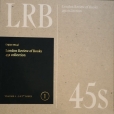
Edwin Morgan read by Dominic West, Mahmoud Darwish read by Khalid Abdalla, and Jorie Graham read by Adjoa Andoh.
A handmade box-set, with a forty-page photographic booklet, in a numbered, limited edition of just 360.
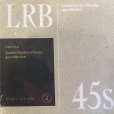
A new recording of Tony Harrison’s v., read by Maxine Peake.
A handmade box-set, with a 32-page photographic booklet, and an art print, in a numbered, limited edition of just 360.
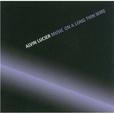
Fifty feet of wire, miked at both ends, passing through the poles of a large magnet, set vibrating four times at four different frequencies, in complex, evocative, ethereal chords.
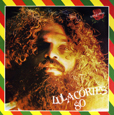
From 1980, Recife, Brazil: ‘crazed ethno folkrock; magical, gentle, jungle folk psych zones; hard-hitting, coke-dusted fuzz rock; insane mutant disco dancefloor groove; tweaked Americana; acid vocal raga trance.’