

Your basket is empty

‘Classic Vinyl Series.’
‘Classic vinyl.’
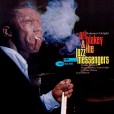
Banging, key Messengers. Blakey is on fire; Shorter is vicious.
Hubbard bows out of this line-up with a passionate tribute to the Congress of Racial Equality.
Classic Vinyl Series.
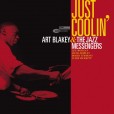
A never-before-released studio album!
Recorded on March 8 1959 in Rudy Van Gelder’s living-room studio in Hackensack, New Jersey, one month before the Birdland shows which produced the killer twin LPs Art Blakey And The Jazz Messengers At The Jazz Corner Of The World, this features the same lineup: Blakey, Lee Morgan, Hank Mobley, Bobby Timmons and Jymie Merritt. Two tunes only show up here, including Timmons’ Quick Trick; besides three Mobley compositions.
The LP is an all-analogue 180g vinyl pressing.
Cor.
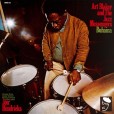
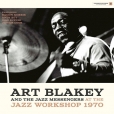
Trying out a more seventies, soulful groove, with the likes of Woody Shaw, Carter Jefferson, Cedar Walton — and Jon Hendricks, who sings on the revival of Moanin’, and Along Came Betty.
Buhaina was Blakey’s name after his conversion to Islam. Of course A Chant For Bu was sampled by A Tribe Called Quest for their almighty Excursions. Altogether now: ‘Back in the days when I was a teenager / Before I had status and before I had a pager…’
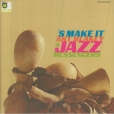
With Lee Morgan, Curtis Fuller, Victor Sproles, John Hicks, and John Gilmore.
‘It’s a shame that this was the only recording by this particular lineup of the Jazz Messengers, as Gilmore’s strong blowing complements Morgan very well (AllMusic).

‘An uninhibited sonic marvel that combines electronics, piano and drums in real time. By spontaneously recording loops grabbed on the fly and re-infusing the sonic planes with various effects, the results borne on Refract are sounds and energies rarely heard before.’
‘A thrilling mix of improvised electronica and contemporary modern jazz’ (Financial Times).
‘This is a set that constantly surprises in its sheer inventiveness and excels in its delivery (Jazz Journal).
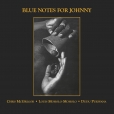
‘Recorded in mid-1987 by a trio of Blue Notes — Dudu Pukwana, Louis Moholo-Moholo, Chris McGregor — as a memorial to their former bandmate Johnny Dyani, on the group’s twenty-fifth anniversary.
‘The final Blue Notes studio recording, For Johnny shuffles in a considerably broader range of touchstones than For Mongezi, nodding toward the band’s foundations in be-bop and post-bop without forgetting their journey onwards, including modal jazz, and free improvisation.
‘It is a startling creative statement, imbued with a tension that poses an equally radical and sophisticated challenge, like a furious tide masquerading in gentler forms, slowly revealing itself.
‘A celebration and a memorial. Joyous and tragic. A real time resurrection of personal experience, Blue Notes For Johnny dodges, dances, and mutates across its two sides, refusing to be nailed down. As the three musicians push against each other, bristling tonal and rhythmic collisions suggest something is bound to explode, without ever fully letting go.’
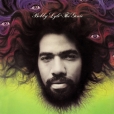
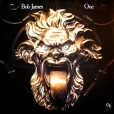
Legendary, stone-classic jazz-funk from 1977; produced by Wayne Henderson for At Home.

His unmissable debut as leader in 1960, bringing with him Sam Jones and Jimmy Cobb from the Adderleys’ set-up. Highlights include the reclamations of three mighty Timmons originals — Moanin’, already recorded by Art Blakey, and Cannonball’s This Here and Dat Dere — and a near-solo rendition of Lush Life.
Unmistakable, irresistible jazz pianism — grooving, direct, gospelised, funky.
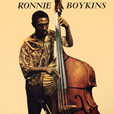
The pioneering Arkestra bassist — that’s him playing arco on Rocket No. 9. in 1959 — leading his own 1975 session, evenly grooving and improvisatory, with great tunes. Check the Middle Eastern vibes of the opener.
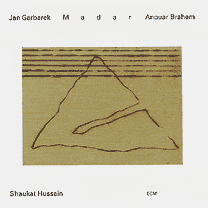
From 1990 — a trio with oud, violin and percussion.
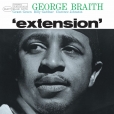
His best, most adventurous LP — reaching but carnivalesque — with George reining in his inner Roland Kirk, Grant Green keeping it real, and underrated organist Billy Gardner pushing the boat out into more unpredictable waters.

Playing Alice Coltrane’s very own, restored harp, leading her longtime trio of Rashaan Carter on bass and Alan Mednard on drums (with contributions by Shabaka, Meshell Ndegeocello, Makaya McCraven, and co).
“We’ve all spent the past two or three years on the road and so there’s a personal and musical familiarity when we come to record together. Since Rashaan also produced the album and we decided to record it all at my home, it created a comfortable intimacy that kept us honest, since there was no one else there except for us. It produced spontaneous improvisations on tracks like Reckoning and Discernment, which came about entirely in the moment. While on End Means I had the time to decide on using an extended technique on harp, which muffles the string like a kalimba. You hear those moments come through far more on this album than any others I’ve created.”
“Everyone who featured on the record came through organically and it all fed into the overall theme of the album, which is playfulness. The gadabout is someone who is looking for happiness and that’s something I’m always trying to do with my band, especially when we’re exhausted and on tour! Ultimately, this is an album about finding joy throughout the journey, which is something everyone can relate to.”