

Your basket is empty

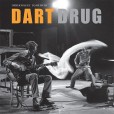
Percussionist Jamie Muir was a member of King Crimson during the recording of Larks’ Tongues In Aspic, in 1973. Staying less than a year with Robert Fripp, the Scot had already cut his teeth with another master guitarist, Derek Bailey, as part of the Music Improvisation Company, along with Evan Parker, Hugh Davies and Christine Jeffrey, whose eponymous 1970 album was one of the first releases on ECM. Muir and Bailey recorded Dart Drug eleven years later, in 1981.
There’s no shortage of great percussionists in the brief history of free improvised music but on the strength of Dart Drug alone Jamie Muir deserves a place at High Table. Unlike for example Han Bennink and John Stevens, though, you can’t hear echoes of any particular jazz drummer in Muir’s playing, even if he has expressed appreciation for Milford Graves (who himself sounded like nobody else who’d come before him).
What on earth did Muir’s kit consist of? Some instruments are clearly identifiable (bells, gongs, chimes, woodblocks); others could be… well, anything. Old suitcases thwacked with rolled up newspapers? Tin cans and hubcaps inside a washing machine? Who cares? It sounds terrific – but if you’re the kind of person who faints at the sound of nails scraping a blackboard, you might want to nip out and put the kettle on towards the end of the title track.
Dart Drug is consistently thrilling, and often very amusing – but it’s certainly not easy listening. In music we talk about playing with other musicians, whereas in sport you play against another opponent (or with your team against another team). Why not play against in music, too? That’s precisely what happens very often in improvised music, and Bailey was particularly good at it. How can a humble acoustic guitar hope to compete with a Muir in full flight? Sometimes Bailey’s content to sit on those open strings, teasing out yet another exquisite Webernian constellation of ringing harmonics and wait for the dust to settle in Muir’s junkyard, but elsewhere he sets off into uncharted territory himself.
“The way to discover the undiscovered in performing terms is to immediately reject all situations as you identify them (the cloud of unknowing) – which is to give music a future.” Bailey evidently concurred with this spoken statement by Muir, including it in his book Improvisation.
Derek Bailey is no longer with us, of course, and Muir gave up performing music back in 1989. All the more reason for seeking out this magnificent, wild album.
Very hotly recommended.

‘Minimalism is usually cool, detached, frictionless and mathematical. The music made by percussionist Bex Burch is not any of these things. What she calls ‘messy minimalism’ shares some characteristics with the music of Steve Reich and John Adams, but this is minimalism that isn’t afraid to break into a sweat and get its hands dirty (quite literally, given that Burch actually builds her own instruments from scratch). She mainly plays a gyil, a marimba-like tuned percussion instrument she learned while studying music in Ghana.
‘Burch’s first solo album lands her in Chicago, enlisting trumpeter Ben LaMar Gay and members of Tortoise. Sometimes, the results sound like an earthier Philip Glass: Dawn Blessings pairs her dreamlike, two-note gyil pattern with violinist Macie Stewart’s beautiful harmonies; Don’t Go Back to Sleep sees Burch’s gyil fractionally out of phase with a synthesiser, then spins into hypnotic but disorientating minimal techno.
‘Other tracks get wilder. There are drum circles, water drums and birdsong; tracks that exploit the acoustics of a California canyon. Pardieu turns a three-note xylophone riff into a compelling funk groove; Fruit Smoothie With Peanut Butter is a wonderfully chaotic drum circle that sounds melodic despite not featuring any tuned instruments. Best of all is You Thought You Were Free?, which layers clattering percussion over the wailing siren of a tornado warning relayed over Chicago until it sounds like a freakish fusion of the Master Musicians of Joujouka and Fela Kuti’ (The Guardian).
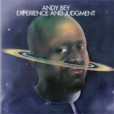
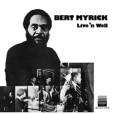
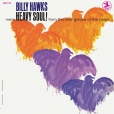
Slower and funkier than the Gary Bartz excursion a few years earlier — with Bad Wilbur Bascomb popping away on electric bass, not Ron Carter — this unmissable 1974 version of Celestial Blues was a game-changing revive in the early nineties, a cosmic crossing of Bill Withers, Sly and Brian Jackson, threading trip hop and Jazz Dance through to Madlib.
‘C’mon meditate! Let’s contemplate!’
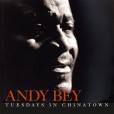
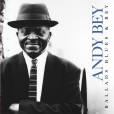
Recorded in 2000, with more or less the same lineup as Shades Of Bey, and the same richness of repertoire and textures. There are two Milton Nascimento classics, standards like I’ll Remember April and Little Girl Blue, and the sultry original Tuesdays In Chinatown. Top-notch Bey, supported by Ron Carter, Geri Allen, Mino Cinelu and Steve Turre. First time on vinyl. Warmly recommended.
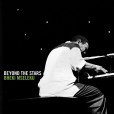
An electrifying, previously unreleased studio album, recorded in 2003, this stunning solo piano suite condenses Mseleku’s visionary overstanding of South African music into a flowing, pulsing statement in six parts. With jazzwise echoes of marabi, amahubo, maskanda and Nguni song forms binding it to the deep music of Mseleku’s Zulu heritage, Beyond The Stars provides what Blue Note recording artist Nduduzo Makhathini describes in his liner notes as ‘a divine summary’ of Bheki’s life story: ‘a sonic pilgrimage from the beautiful and organic landscapes of Durban, to the vibrant energy of London and ultimately toward the inner dimensions of one’s being.’
A magnificent start by new label Tapestry Works.
By themselves on the first record; for the second, joined by Evan Parker and Byron Wallen, harpist Tori Handsley and tabla player Sarathy Korwar, and drummer Yussef Dayes. Both sessions were recorded completely live, straight to tape, consolidating the ‘incandescent immediacy’ of the playing. The duo’s ‘soulful tenor sax sermons plus earthily funky drumming, fusing jazz, hip-hop and grime… winningly mix dark, classic Coltrane raptures, infectious hook-rooted rockers and Sonny Rollins-like calypsos. The larger group sets up thrilling rhythm textures merged from Parker’s seamless soprano lines and a chatter of snare drums and tablas; there are atmospheric guitar-like harp figures, and dramatically spontaneous two-tenor tussles’ (The Guardian).
‘CD of the year so far’ (London Jazz News).
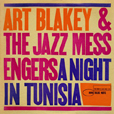
Kicking off with a definitive, thunderous, thrilling version of the title track; with Lee Morgan and Wayne Shorter.
‘Classic Vinyl’ series.
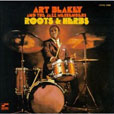
Top-notch Messengers, from the same enraged 1961 recording sessions as Freedom Rider.
Six compositions by Wayne Shorter, kicking off with the fierce jazz-dancer Ping Pong.
Bobby Timmons alternates with Walter Davis Jr.