Your basket is empty

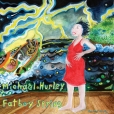
First-time-out for these early-seventies recordings — countrified drafts of some classic Hurley, with backing from Vermont mates the Fatboys, aka the Deranged Cowboys.
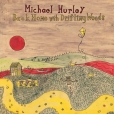
Precious 1964 recordings, top-notch though never previously released, part of the First Songs sessions for Folkways.
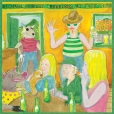
‘Pure pleasure is what it is,’ writes Byron Coley. ‘This was probably the first time Hurley brought his band out of the hills. Guitar, bass, drums, piano and trumpet, all of them beautifully in sync and swinging like the rural hippie boogie band they were — tested by long nights in halls filled with rowdy snowmobilers and the women who love them. Hurley & the Redbirds were more than ready to bowl over the city slickers who filled Folk City this hot mid-summer evening. Snock’s voice is limber and strong, flipping easily into falsetto and yodels, and the music is faultless. Something like the Platonic ideal of what ‘bar rock’ can be. They only do one tune from Have Moicy!, but nobody could have minded. The music rolls out like the sweetest-ever guzzle of maple syrup laced with Mello Corn Whiskey. So loaded, so powerful, you’re likely to shit the bed if you listen lying down.’
Recorded in NYC in 1976.
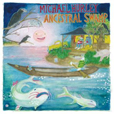
Laid-right-back — with old buddies Dave Reisch and Lewi Longmire, and Tara Jane O’Neil; a Blind Willie McTell and a Lightning Hopkins; and unmissable goes at favourites like Light Green Fellow. One of the very best Hurleys of them all.
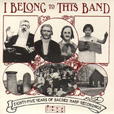
Mass, full-voice singing from the rural South of the US. A stirring, tearful, ancient, strange, kind of Gospel. Ornette called it ‘breath music. They’re changing the sound with their emotions.’
Selected and presented by Shirley Collins.
Ignatz is the alter-ego of Belgian musician Bram Devens, who has released a string of albums for labels like (K-RAA-K)³, Ultra Eczema, Fonal, Mort aux Vaches, and Okraïna, over the last twenty years.
Devens recorded this wonderful, haunted music at home in Landen, on the family piano.
There is pervasive, ambient Dub, mesmerically shifting; sometimes aghast. Somewhere in the swirling mist are the guitarist Hans Reichel, and blues pianists like Jimmy Yancey, amongst other ghosts. Time Well Spent even musters a kind of motorik energy, determinedly mis-firing.
It is quite unlike any other piano record.
Beautifully presented, too, to the customary high standards of this label.
Check it out!
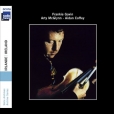
His second LP, from 1965. Mostly his own songs — including Anti Apartheid — with Roy Harper singing on A Man I’d Rather Be, and John Renbourn duetting on Lucky Thirteen. Bert swaps his steel-string for a banjo, to close with 900 Miles (the same year Terry Callier made it his own, for Prestige).
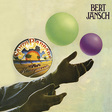
Originally released on Stefan Grossman’s Kicking Mule label in 1979, after the break-up of Pentangle. With Martin Jenkins, Nigel Portman-Smith, Luce Langridge — and Jacquie McShee on one track.
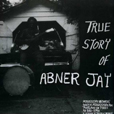
Wildly entertaining sixties outsider Americana from this one-man band out of south Georgia. With songs like I’m So Depressed, Cocaine, Vietnam and The Reason Young People Use Drugs.
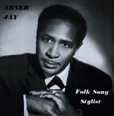
45s and LPs spanning the period 1964-1973, including his long-lost album debut. The original material here trumps the folk chestnuts. Alasdair Roberts does Lord Randall a lot better, has to be said.
Jessie Marino with Inga Margrete Aas & Pinquins
Murder Ballads Vol II: The Positive Reinforcement Campaign
Motvind Records
‘Marino uses the language of folk music traditions to witness and retell our current reality through a feminist lens, with traditional American Sacred Harp hymns and murder ballads at the core. Improvisation, experimentation and group-singing re-draw these traditional songs — populating them with new sonic languages which reflect on contemporary ravages of contempt, greed, jealousy, violence, and utter disregard.’
With the Norwegian percussion trio Pinquins, and bassist Inga Margrete Aas; plus guests
Emilia Dorr (voice), Weston Olencki (trombone), and Wendy Eisenberg (guitar).
‘A moody, atmospheric delight. Jim’s roots in composition via tape-editing have evolved into a highly musical assembly of found-and-processed sounds that achieve near-orchestral majesty as they hang in the very air of the drama that unfolds in Kyle Armstrong’s Hands That Bind.
‘Described as a ‘slow-burn prairie gothic drama’, set in the farmland of Canada’s Alberta province, and starring Will Oldham and Bruce Dern, Hands That Bind is a spellbinding trip to the existential bone of rural working life in North America. As conflict rises over hard worked patches of land to provide a mere and mean existence, a desperate air settles in, as a series of mysterious, often supernatural occurrences rock the small community.
‘O’Rourke’s vaporous, serpentine musical backdrops and atmospheres reflect the obsessions and distractions of the film’s principles; moods of all sorts seen or otherwise implied. Additionally, the music highlights cinematographer Michael Robert McLaughlin’s closely observed accounting of the farmers’ environment, as well as the striking widescreen images of the big sky country with unnerving flair.’
‘Recordings from early 2025, while Johnny was bed-bound in an assisted living facility with multiple sclerosis. He speaks into an iPhone laid gently on his chest, in remarkably tender and emotive form. Love in all its permutations. The tangled, but caring nature of familial love, to the anguish and euphoria of romantic connection. Johnny has a remarkable ability to pose questions, and answers, that reflect the truest of realities, without cliche.
‘Joel Nelson nimbly helms the nearly entirely electronic backdrop, with Buchla Music Easel bubbling up between Johnny’s stream of consciousness. At times, Broadcast’s fuzzed out ballads come to mind, while at others, early Oneohtrix Point Never’s gauzy, distant drones cast anchor beneath the slippery syntax.’