Your basket is empty

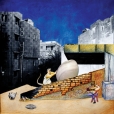
‘Oud-player with The Handover, Eissa was mentored by two legendary figures in Egyptian music: composer and multi-instrumentalist Abdo Dagher, and oud master Hazem Shahin. The music here is heavily rooted in both Egyptian classical music and a number of different folk music traditions, but it goes its own way, through expansive and intricate original compositions.
‘The epic title track, with Eissa playing oud exclusively, takes up two thirds of the album. It seamlessly transitions into heart-stopping recitation of the thirteenth century poet Baha´ al-din Zuhayr… serious, loving, tender and insistent, all at once. Visionary and virtuosic, but at the same time warm and close.
‘A future classic.’
Norway’s finest hardanger fiddle player, performing traditional tunes from her native valley Hallingdal.
Wonderful.

Microtonal folk music mixed with electronics and noise.
The first record was rave-reviewed. ‘I was transported to secluded valleys where age old traditions are the passionate expressions of a community, here re-energized by the chillingly sensitive electronic wizardry of Anders Hana and Morten Joh’ (Songlines). At home in Norway even the tabloids picked it up: ‘Gorrlaus has the same intense and monotonously suggestive sound hunt as early Kraftwerk, at the time they played Ruckzuck’ (VG).
And now II is a next step further in the same direction, more deeply attuned to diverse materials derived from field recordings and other research, with finer nuance and detail… and more fiddle.
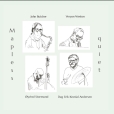
John Butcher, Veryan Weston, Oyvind Storesund, Dag Erik Knedal Andersen
Mapless quiet
Motvind Records
‘We proceed along a musical timeline in the same time as we are all making it up, the musical references being around us both in the past and the present as we share what we are doing in a new situation with others who are doing the same but differently and thus continually modifying our own continuum.’
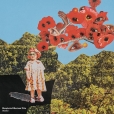
‘Warm, mysterious and alluring, the Trio’s debut album maintains a balanced interaction at once intimate and almost limitlessly expansive. The leader’s unmistakable tone and improvisational verve are naturally a focal point, but there is no doubt that we are dealing with a proper band. Cellist Joel Ring and drummer Øystein Aarnes Vik are masterfully light-footed and tight, calmly driving the music forward, filling it with colour and texture… and still there is room for the influential Norwegian pianist Jon Balke, who guests on three tracks.
‘The compositions are strong, immediate and captivating. For all its eccentricities, the music has a broad, timeless appeal, running from the distant past far into the future. It takes you by the hand, to show you that the world is still a magical and enchanted place.’

Jessie Marino with Inga Margrete Aas & Pinquins
Murder Ballads Vol II: The Positive Reinforcement Campaign
Motvind Records
‘Marino uses the language of folk music traditions to witness and retell our current reality through a feminist lens, with traditional American Sacred Harp hymns and murder ballads at the core. Improvisation, experimentation and group-singing re-draw these traditional songs — populating them with new sonic languages which reflect on contemporary ravages of contempt, greed, jealousy, violence, and utter disregard.’
With the Norwegian percussion trio Pinquins, and bassist Inga Margrete Aas; plus guests
Emilia Dorr (voice), Weston Olencki (trombone), and Wendy Eisenberg (guitar).
‘These seriously playful/playfully serious gentlemen share the same vibe: a strong sense of speed and importance, paired with a kind of childlike curiosity for what lies behind the next bend. Alternating between baritone saxophone, flutophone, slide flute, clarinet and bass clarinet, phrases are repeated and elaborated, questions, answers, rhetoric, ornamentation, criticism, and free flow, all this and more can coexist when it comes from the same source.
There is a lot of commotion in this music, a lot of pressing and panting. But there are also feelings in the brutality, a brutal finesse that leads us from one sonic landscape to another. Not like a hike, more like a run through forests and scrubs, down steep slopes and up through narrow gorges…’
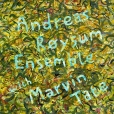
The Chicago-based poet and singer heads up a spicy gumbo of jazz, folk and soul.
‘By merging ferociously honest poetry with various black musical traditions, Tate stands as heir to Chicagoan Oscar Brown Jr., the veteran urban griot whose lyrics long have decried racism and social injustice’ (The Chicago Tribune).

‘The saxophonist leading a septet into fascinating, playful and sparky combinations of contemporary music, avant-garde jazz, techno, and improv; a kind of seance summoning the wailing fairy of Irish folklore, a shrieking harbinger of death.’

‘The French jazz magazine Citizen Jazz acclaimed Marthe’s debut album Asura, in 2021, singling out her ‘ability to hold disparate idioms together, to mix a whole bunch of influences (musical or not) in the crucible of her own personality, of her own history, to bring out a great personal and extraordinary whole, a fresh and singular music which belongs only to herself.’
‘This follow-up maintains the same life-affirming energy. It explores new nooks and crannies in the same wonderful universe. Again, it ranges widely, with the same free approach to composition. Some of the tracks make it impossible to keep your dancing feet still, while others give room for introspection and reflection.
‘Herlighetens Vei — Path of Glory — conveys a humble and respectful attitude to Life. It avers that human existence is sacred and mysterious. Keep an open and alert mind, and the mystery will naturally unfold before you.’
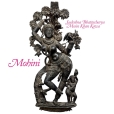
Three ravishingly soulful, wondrous ragas in the Hindustani Indian classical manner, superbly played on sarod and tabla.
Mohini is an enchantress, sometime slayer of demons.

Jonas Cambien, Magnus Skavhaug Nergaard, Dag Erik Knedal Andersen
The Ear Behind the Airport
Motvind Records
‘Strung between Cambien’s razor-sharp prepared piano, and drummer Andersen’s surgical pointillism, Nergaard grounds the music in fresh bass science. The trio transitions fluently from enveloping drones — drawing from British improv — to ecstatic grooves that nod towards free jazz.
‘Though a debut album, the sound is exceptionally well-balanced. An energised calm fills the music with nerve and momentum, combining contemplativeness and expressivity. An extraordinary sense of consonance and texture creates an inviting tactility; something you can dive deep inside. The music sounds mature, but not remotely complacent. Rough and direct, yet eloquent and generous; both patient and restless, it stands firm.’
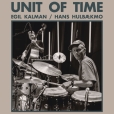
‘Hans Hulbækmo and Egil Kalman have long been a playful and creative rhythm section, with one foot in free jazz and the other in folk music. They’ve played together in the Marthe Lea Band and other projects, and since last year they’ve delved into the folk music of Norway and Sweden — all set in an experimental duo format. Drums and jaw harp (Hans) meet modular synth and double bass (Egil).
‘Unit of Time draws from the rhythmic details of folk music, as the basis for minimalist compositions full of improvisation. It’s not all about the groove, though. Some melodies are interpreted straightforwardly enough, but the unconventional instruments give the music a new depth. Unusual timbres and sonic phenomena emerge, mesemerizingly.’
We ship worldwide. The postage rates for your order are displayed before payment, which is processed using Paypal. You can pay using your Paypal account or any of the following cards. No need to join Paypal.