

Your basket is empty

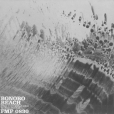
‘Subtitled ‘some more guitar solos’; his fourth and final record of solo guitar works. Next Reichel would turn much of his attention to the bowed wooden-tongued instrument he created called the daxophone. Reichel recorded the six tracks at his home in Wuppertal in April, 1981, and in the process made what might be his masterpiece. These are not just some more guitar solos. Concentrating largely on acoustic guitar with no frets as well as his electric pick-behind-the-bridge guitar, he transforms tones into crystalline formations — patience with resonances, attention to silence, formation of symmetries around a common sonic point, jetting notes that arc and spread and then hover. One might look for other references to describe what Reichel is up to — the magic of Terje Rypdal, the aura of early William Ackerman, the eccentric multiple pickups of Fred Frith — but really this is unique in guitar repertoire. Reichel built his instruments as tools for improvised exploration, and then he dove deep into them, never so far as on tracks like Could Be Nice or the quivering Southern Monologue, or the two brilliant versions of the title track, Bonobo Beach. On Two Small Pieces Announced by a Cigar-Box, the titular box is bowed in a vocal manner that portends Reichel’s development of the daxophone.
‘A beautiful, essential document from one of the great outsider guitarists of all time.’
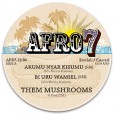
Scintillating, hard-grooving, vintage afro-funk from coastal Kenya, drawn from rare sevens and a privately pressed LP.
It opens and closes with killer forays into left-field disco, featuring limber percussion and delirious synths, and breakdowns set to liquify dancefloors. Uru Wamiel catches the double-dutch bus to Mombasa, whilst Ndogo Ndogo is irresistibly reminiscent of early eighties New York crossover funk like Monyaka, with clattering drums, rough rhythm guitar, party-down bass, burning horns and all-together-now singing.
Lovely music, beautifully presented in die-cut, silk-screened sleeves.
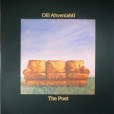
Ace jazz-funk — somewhere between Herbie and RTF — originally released in Finland in 1976, on Love. Featuring the almighty jazz-dance classic Grandma’s Rocking Chair (later revisited by Kenny Dope and Ol’ Dirty Bastard), with Olli soloing on Fender Rhodes.
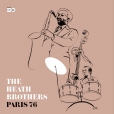
The recording of a performance at Studio 104, Maison de la Radio, recycling One for Juan from Jimmy Heath’s Love And Understanding LP for Muse, and Watergate Blues and Smilin’ Billy, both from the Bros’ recent Marchin’ On LP.
‘That was the first Heath Brothers album. Stanley Cowell had started the Strata-East label with Charles Tolliver, and they engaged us to do a record. It was a family affair, and we adopted Stanley because we thought he was amazing. That was a different type of record for us. We recorded it while we were on tour in Oslo, Norway. We used to get on the train and travel around Europe, and we’d be playing in these cabins on the train. Percy played a bass with a cello body that Ray Brown created, Tootie and I played flutes, and Stanley played a chromatic African thumb piano. People would stop and listen to us on these trains going from one country to the next, and it was something that they liked. It was like a chamber-music group. So we decided to include that sound on the record.’
The version of Smilin’ Billy is a show-stopper.

This is a blast — a tremendously entertaining survey, centred in the Basque country, uproariously mangling together everything from Suicide to dub, Surf to tribal-style chanting, Satanism to toothpaste, with zinging wit, energy and intelligence, and knockabout anti-authoritarianism.
Well-presented; warmly recommended.
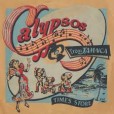
Irresistible 1950s mento — singalong tunes, ebulliently performed, over-spilling with scandal, smut and impudence, sex, dancing and booze, word-play, jokes and up-to-the minute social commentary, and general love for life.
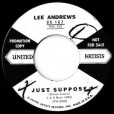
Two fine sides of expert, Curtis-inflected soul-reggae.
This classy lovers was Sharon’s breakthrough, fronting the Now Generation band for Geoffrey Chung in 1973, in an achingly regretful Armstead / Ashford / Simpson song about female disillusionment (laid waste by Cilla Black the previous year).
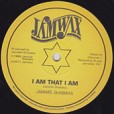
Two excellent, righteous vocal cuts to a tough, downtempo, rootical rhythm, in a brief respite from dancehall at Tubby’s HQ.
Latest in Dub Store’s lip-smacking series of Firehouse dub plates.