Your basket is empty

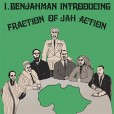
Strikingly original UK reggae from 1983, self-produced by West Londoner Alex Robertson aka I Benjahman, for his own Lion Kingdom label. With contributions from legends like Rico Rodriguez and Horsemouth Wallace, Studio One and King Tubby engineers Sid Bucknor and Tony Asher, Zabandis crew and Dennis Bovell. Still, the music retains a kind of vibesing outsider idiosyncrasy descended from Keith Hudson.
Kicks off with the Shaka selection Give Love A Try.
This LP offering adds dubs; the CD adds 12” versions, dubplate mixes, dubs and other unreleased material.
An outstanding reissue. Vinyl back in; last copies.
Heavy, meditative Tuareg rock.
‘If you listen long enough, and make yourself open enough, it is possible to reach a kind of holy place’ (The New Yorker).

A kind of intimate scrapbook of the startling collaboration between the techno maestro and this long-standing musical collective based in Bishkek, devoted to the roots music of Kyrgyzstan. Loose-leaved but balanced, lucid and intimate, it sets out from stunning a cappella and virtuosic komuz and kylak, mouth harp and traditional percussion: not field, but expert studio recordings, using marvellous vintage microphones, made over several days in Berlin. Further, a few of these are deftly treated by Moritz, using Reichian de-synced double-tracking, and discreet effects. Also two ten-minute dubs: a deadly, signature Berlin steppers, plus its version; and an echoing, mystical drum session, recorded live on stage in Bishkek. And a side-long, dream-like summation: the locomotive, oceanic, clangorous, dread Facets.
Ravishing, rooted, searching music; beautifully presented.
Excellent remixes by Burnt Friedman and Ricardo Villalobos: upfully clopping; deep and extended.
His second LP, originally released by FMP in 1976. ‘Microtonal string investigations still beguiling and fresh four decades later.’
‘Originally released on FMP in 1973, the debut album by this legendary German guitar improviser and instrument inventor is a resonant and hilarious document of the nascent genius recording his peculiar and wondrous music alone in a studio. Acoustic and unfiltered electric guitars turned back into the supremely malleable instruments they were before they’d been firmly encoded as tools for rock or pop or jazz. Reichel uses a homemade 11-string guitar (with three pickups) for all the tunes except the first one. Reichel is like an improvising Harry Partch, investigating the genesis of lute music.’
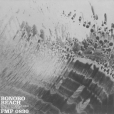
‘Subtitled ‘some more guitar solos’; his fourth and final record of solo guitar works. Next Reichel would turn much of his attention to the bowed wooden-tongued instrument he created called the daxophone. Reichel recorded the six tracks at his home in Wuppertal in April, 1981, and in the process made what might be his masterpiece. These are not just some more guitar solos. Concentrating largely on acoustic guitar with no frets as well as his electric pick-behind-the-bridge guitar, he transforms tones into crystalline formations — patience with resonances, attention to silence, formation of symmetries around a common sonic point, jetting notes that arc and spread and then hover. One might look for other references to describe what Reichel is up to — the magic of Terje Rypdal, the aura of early William Ackerman, the eccentric multiple pickups of Fred Frith — but really this is unique in guitar repertoire. Reichel built his instruments as tools for improvised exploration, and then he dove deep into them, never so far as on tracks like Could Be Nice or the quivering Southern Monologue, or the two brilliant versions of the title track, Bonobo Beach. On Two Small Pieces Announced by a Cigar-Box, the titular box is bowed in a vocal manner that portends Reichel’s development of the daxophone.
‘A beautiful, essential document from one of the great outsider guitarists of all time.’
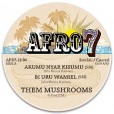
Scintillating, hard-grooving, vintage afro-funk from coastal Kenya, drawn from rare sevens and a privately pressed LP.
It opens and closes with killer forays into left-field disco, featuring limber percussion and delirious synths, and breakdowns set to liquify dancefloors. Uru Wamiel catches the double-dutch bus to Mombasa, whilst Ndogo Ndogo is irresistibly reminiscent of early eighties New York crossover funk like Monyaka, with clattering drums, rough rhythm guitar, party-down bass, burning horns and all-together-now singing.
Lovely music, beautifully presented in die-cut, silk-screened sleeves.
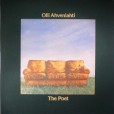
Ace jazz-funk — somewhere between Herbie and RTF — originally released in Finland in 1976, on Love. Featuring the almighty jazz-dance classic Grandma’s Rocking Chair (later revisited by Kenny Dope and Ol’ Dirty Bastard), with Olli soloing on Fender Rhodes.
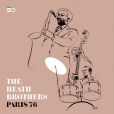
The recording of a performance at Studio 104, Maison de la Radio, recycling One for Juan from Jimmy Heath’s Love And Understanding LP for Muse, and Watergate Blues and Smilin’ Billy, both from the Bros’ recent Marchin’ On LP.
‘That was the first Heath Brothers album. Stanley Cowell had started the Strata-East label with Charles Tolliver, and they engaged us to do a record. It was a family affair, and we adopted Stanley because we thought he was amazing. That was a different type of record for us. We recorded it while we were on tour in Oslo, Norway. We used to get on the train and travel around Europe, and we’d be playing in these cabins on the train. Percy played a bass with a cello body that Ray Brown created, Tootie and I played flutes, and Stanley played a chromatic African thumb piano. People would stop and listen to us on these trains going from one country to the next, and it was something that they liked. It was like a chamber-music group. So we decided to include that sound on the record.’
The version of Smilin’ Billy is a show-stopper.