
Your basket is empty

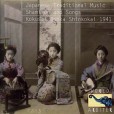
A magical, poignant selection from sixty 78s issued in 1942. Featuring Noh theatre musicians, many trained by artists active before the Meiji period, prior to 1868.
Imai Keisho playing koto and Yamase Shoin shamisen, amongst others. Historic recordings by Kokusai Bunka Shinkokai. Excellent label.
Gong, angklung and gender wayang under the direction of Anak Agung Gede Mandera.
‘Anutha ho (bites the dust)...’ Classic rap diss, elbowing in on the Roxanne Shante - Sparky D blow-up.
Legendary, no-nonsense, masterful finger-picking, with ethereal harmonics reminiscent of Washington Phillips. Reissuing a private-press LP recorded in Arkansas in the early 1960s. Notes by John Renbourn.
The forgotten music of the Austro-Hungarian diaspora in the mid-west of the United States. An Ian Nagoski compilation to inaugurate the label, with a cover by Eric from Mississippi Records.
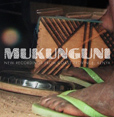
Stefan Schneider and Sven Kacirek’s scintillating recordings of the Mijikenda tribes, made in different spots in and around Mukunguni village, coastal Kenya: spiritual and healing music, and love-songs.
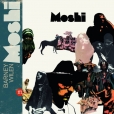
Inspired, free, luminous music-making. An outernational holy grail and a stiff tonic for all citizens of nowhere.
Already the great French jazz saxophonist had made monumental records alongside all-time legends like Monk, Blakey, Bud Powell and Miles — that’s Wilen on Lift To The Scaffold — before cutting loose at the end of the sixties on a two-year journey through Morocco, Algeria, Niger, Mali, Upper Volta (now Burkina Faso) and Senegal, with a team of film-makers, technicians and musicians.
Moshi means trance utterance — the moshi is a demon invoked by the Fulani Borogi of Niger, to chase away angst and depression — and this is a shamanistic bricolage of smoky musical spells and scraps of intimate, outdoors ambience, full of love, good vibes and gritty musical wonder, drawn from more than fifty tape reels recorded en route: desert blues, space-jazz, street-funk, acid rock, polyphonic rhythms and new-thing influences like Shepp and Sanders; buzzing, extended ensemble sessions, like alternative Bitches Brews, crossed with diverse snippets of magic grabbed on the wing, like Algerian gnawa, or solo mbira, or just people laughing together, or a Bamako griot…
Beautifully presented, with a twenty-page booklet, and the DVD of Caroline de Bendern’s vivid, freewheeling film A L’Intention De Mlle Issoufou A Bilma, about the trip.
Fervently recommended.
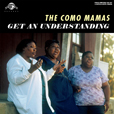
Precious sister-roots.
Dreadnought rhythm, with fiery horns; gorgeous, softly imploring vocal.
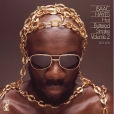
The first volume was a must, and on we go, from Hayes’ final 45 of 1972 through to 1976 — by which time Stax was defunct, and he was on his own Hot Buttered Soul label via ABC Records.
Including eight US R&B chart hits including the much-sampled Hung Up On My Baby and Chocolate Chip, Hayes’ biggest hit of this period Joy, and the ever-popular 1976 instrumental Disco Connection, which finally gave Hayes’ his second UK Top 20 hit after Shaft.