









Your basket is empty


‘As deeply rooted in soul’s past as you’d expect, but it never feels self-consciously retro… strikingly raw, racked with very real emotion’ (The Guardian).
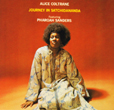
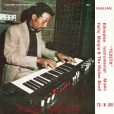
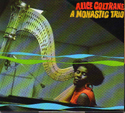
On harp and piano — with Pharoah Sanders (soprano sax), Vishnu Wood (oud), Rashied Ali (drums), Cecil McBee (bass), Charlie Haden (bass), Majid Shabazz (bells, tambourine), Tulsi (tamboura).
Transcendent jazz from 1970; full fathom five deep but compellingly accessible. Our favourite of all her records, and over the decades our first recommendation as an introduction to her work.
According to AC’s sleeve note, ‘Anyone listening to this selection should try to envision himself floating on an ocean of Satchinandaji’s love, which is literally carrying countless devotees across the vicissitudes and stormy blasts of life to the other shore.’
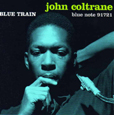
Hard-blowing bop classic from 1958, when Trane was with Monk. A crack sextet rounded out by the richly soulful trombone of youngster Curtis Fuller. Next stop, Giant Steps.
The cheaper LP is in the Blue Note ‘Essential Vinyl’ series.
‘A new album of category-scrambling song-craft by the elusive and shape-shifting Thomas Bush; the latest stage in a wayward path between everything from murky dirges to head-nodding laments to crystalline synths that hang precariously in the air over your new-favourite bass line.
‘Critical responses along the way have focussed on a predilection for the folkey-dokey, but judging from releases like 2026’s guld, Bush’s definition of ‘folk’ has as much to do with A Guy Called Gerald as it does with Shirley Collins or John Martyn.
‘For all its diversity, what unites Bush’s ever-expanding body of work is its dual commitment to experimentation and a job well done.’
“Random Constraint Satisfaction Problems was recorded at Vista Studio 1, Malmö, between 2022 and 2025. After creating an account at academia.edu for the purpose of reading a text now forgotten, I began to get emails asking me questions such as ‘Thomas Bush, did you write Brucellosis and Sacroiliitis: A Common Presentation of an Uncommon Pathogen?’, and ‘Are you the Thomas Bush who wrote ATR-dependent Phosphorylation of FANCA on Serine 1449 after DNA Damage is Important for FA Pathway Function?’, which began to make me wonder if I was, or if I wasn’t, perhaps I should be.
“The resulting work is an attempt to find meaning in this, and other chaotic and ambiguous situations through analysis using materials and equipment to hand. Being sensitive to signs and following them up with enthusiasm. Both source material and evaluation are presented.”
Her debut as leader, a year after John’s death, with Pharoah Sanders, Jimmy Garrison, Ben Riley and Rashied Ali steeply conjuring an ecstatic blend of JC and Bud Powell, blues, gospel and free jazz, trained unflinchingly on Nature and Truth, witches and devils, the Mystical and the Divine.
Tremendous music — deeply rooted, rawly searching, still thrillingly uplifting.
‘Verve By Request.’